Why Is It Important to Promote Independence to Our Learners? How Can We Do This Effectively?
21 October, 2025, Lucy Binns
As teachers of A level, we want our learners to be independent to prepare them for their next steps in studying, however, we also want to do whatever we can to support them to feel we deserve our pay at the end of the month. A common mistake is to think we must go to one extreme or another with either helping them ‘too much’ or leaving them to their own devices.
Middle Ground
Finding the middle ground is key to support our learners and I have found some useful ways of establishing these as routines. Many of these ideas are not revolutionary, but after some insightful and reflective CPD led by Martin Griffin on the VESPA model (highly recommended), it allowed me to change my attitude towards independent learning and how best to support my students.
Supporting independence
The most important aspect of independent learning that I have found is that we need to encourage our learners to put aside time each week to plan what they are going to do. This will help to support our well-known procrastinators in setting out their week ahead, what work they need to do, what deadlines they need to meet and when they are going to do it. My students are setting aside 1 hour a week, usually at the start of the week to work out these plans.
Providing Structure
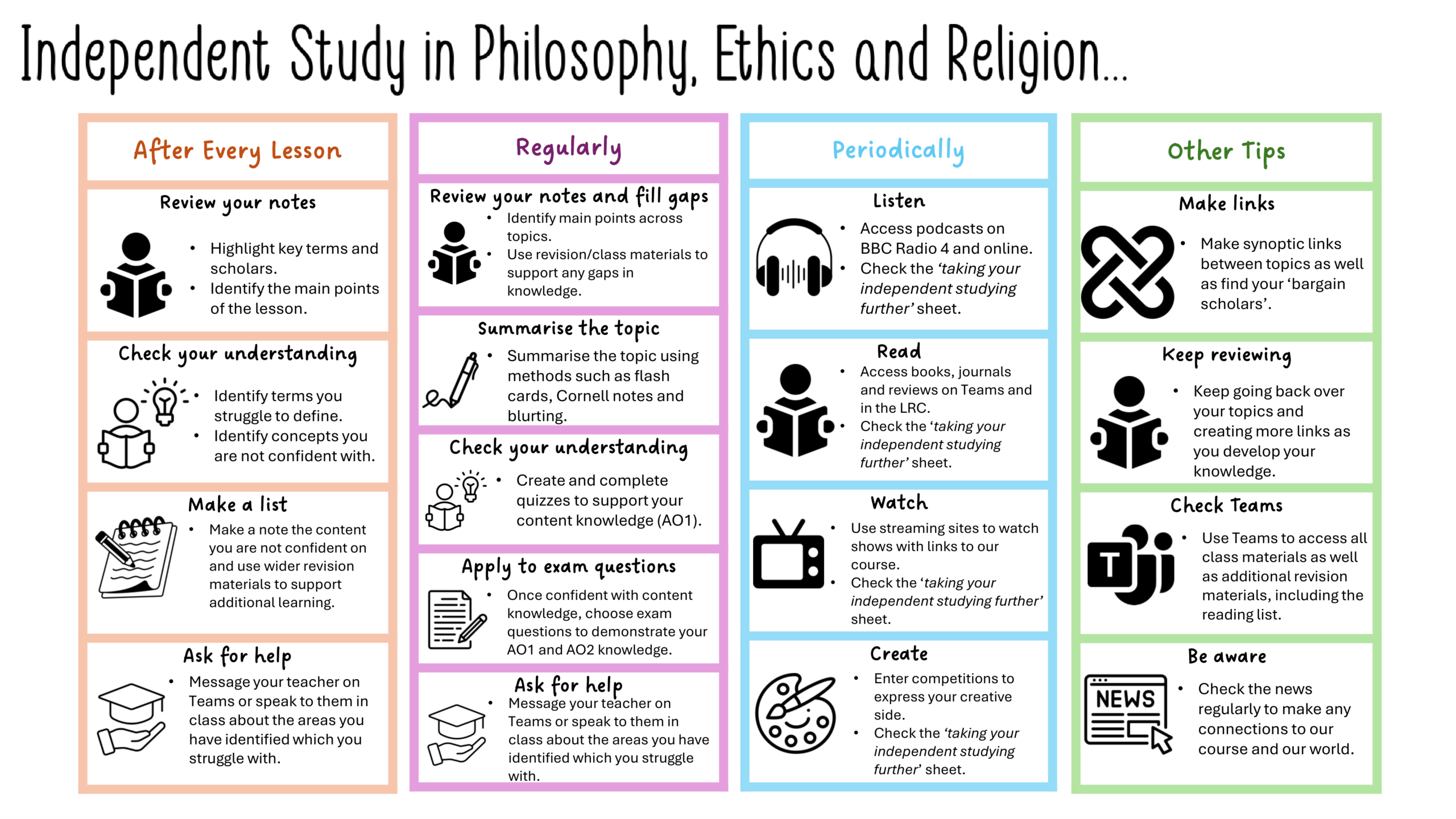
What students do in the classroom is not always enough and we want them to be prepared for their exams. Providing them with structure helps with this and offering tips and advice will start them on this journey of consolidating knowledge. In my classroom I am hinting at their independent learning constantly, whether that is having this four part poster on the wall, attaching it to their home-learning tasks or putting it at the end of all my lessons – they will get the hint eventually! It is constantly reminding them of what they are expected to be doing as a committed and successful A-Level student, as it is suggested that they should be completing up to 20 hours of independent study a week, which for some may be a shock. Students do sometimes forget that they need to be doing ‘stuff’ to help them consolidate their learning. Many fall foul to the ideas of just revising content and forgetting about skill, or just revise a mark scheme in the hope that this will help with all exam questions on topic X.
Using a skills matrix
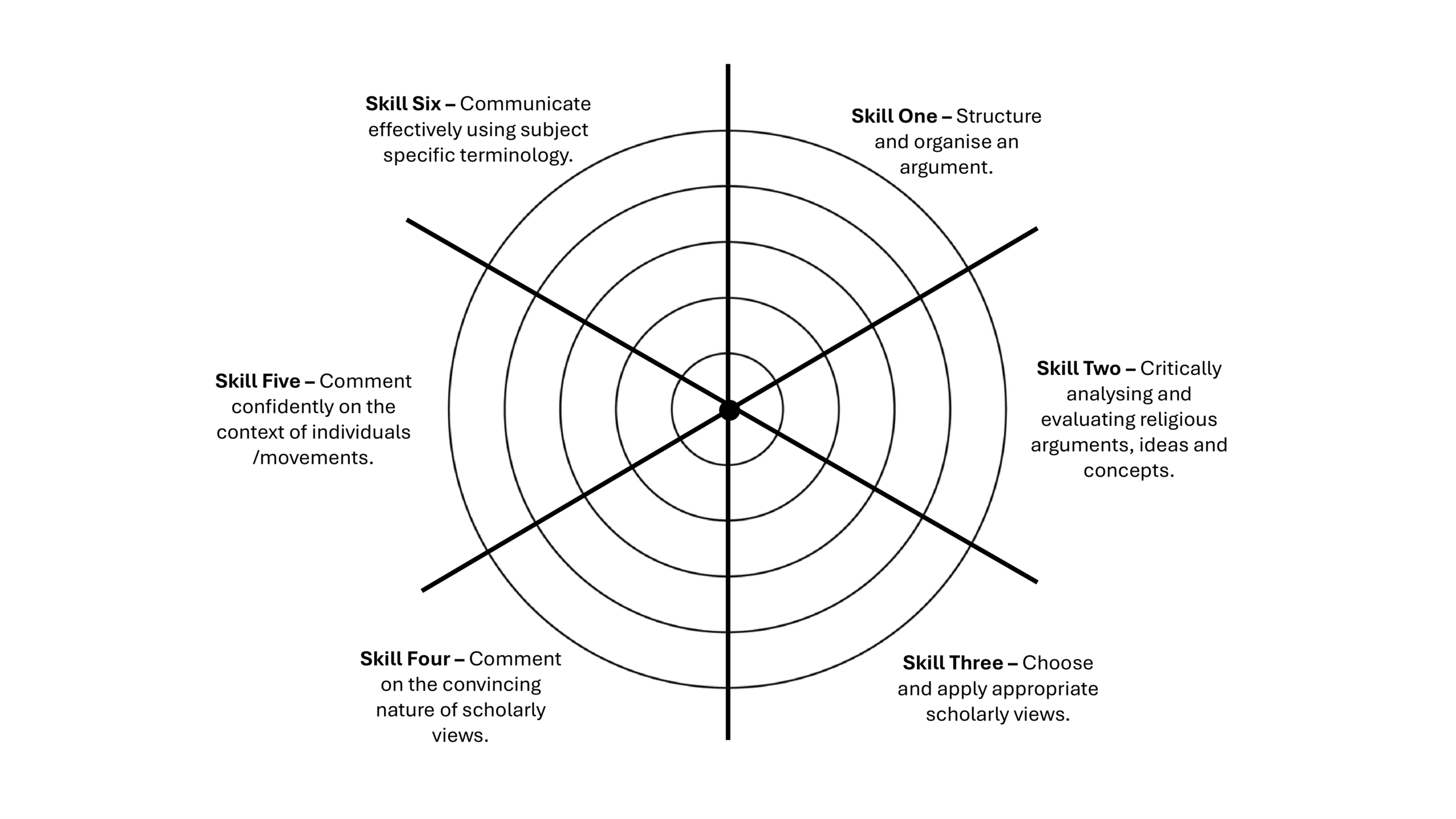
I encourage my students to complete a skills matrix, alongside their content revision, where they are showing the progression of their skill development and can see how knowledge and exam skills work hand in hand. Visually they can see the areas that they are progressing in and the areas where they might need to work a little more. This can help inform their independent learning tasks for the week ahead.
Don’t give too much freedom
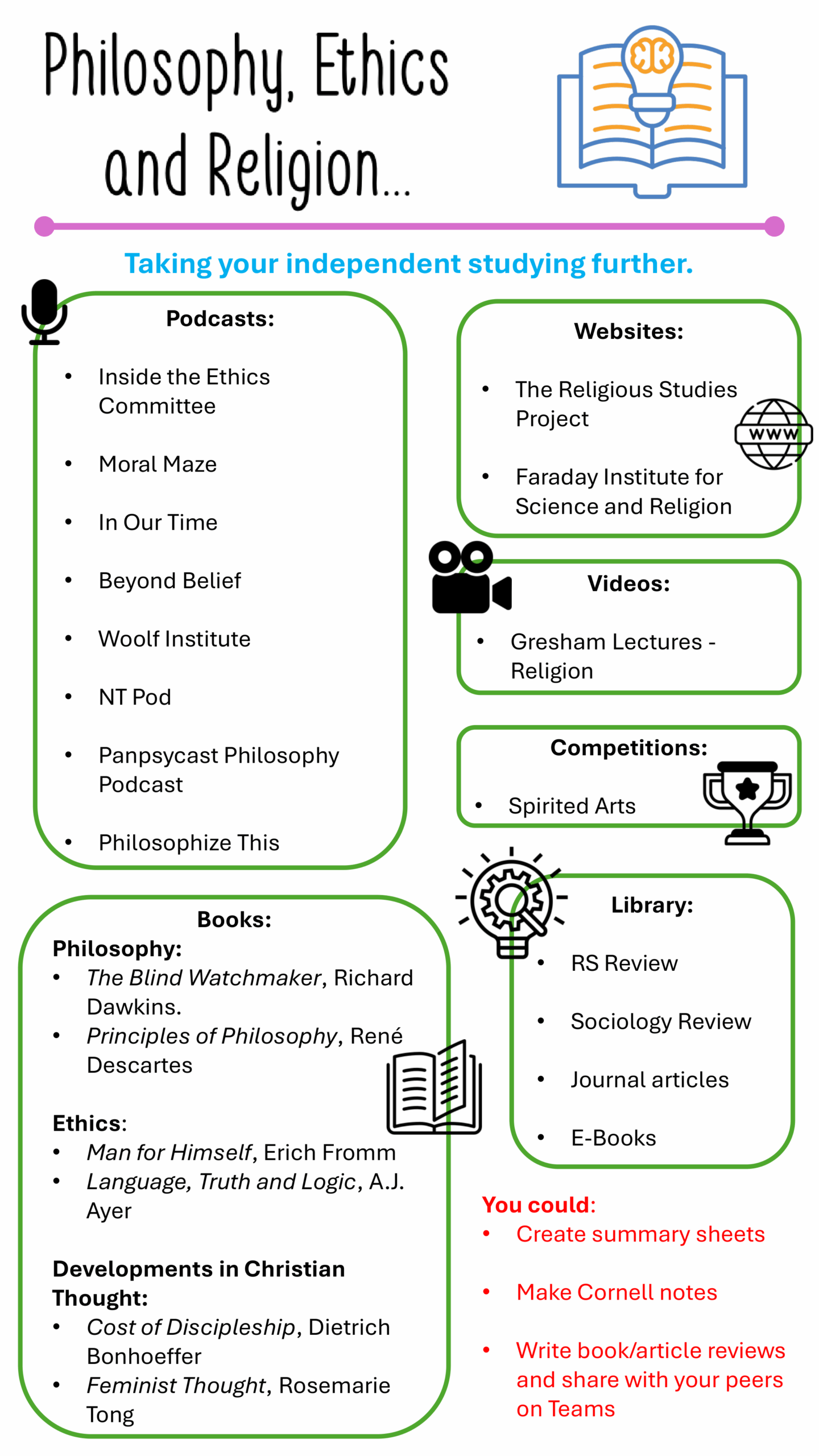
I have found that giving students too much freedom can result in lacklustre work being completed. Instead, providing them with options to make their own choices seems to work the best. For my A-Level learners I want them to be inquisitive and inspired by not only their specification content but wider knowledge, so I make them go find out more. By providing examples of podcasts, books, videos, students can make their choices and find out more. For us, it is a win, win scenario as the students feel they have autonomy in their learning, but we are still offering a level of control over what they are doing whilst enabling them to ignite a possible passion.
There is nothing groundbreaking here, but sometimes a reset in how we approach our pedagogy can be helpful to us as teachers in our own practices, but also and more importantly to our students. We are supporting them in becoming confident, insightful and independent learners which are pivotal skills for higher education, but also for life in general.