Viewing archives for Blog

Engagement, likes, views and follows have become an everyday vernacular for most. Willingly or not, you probably know the meaning behind these terms; and perhaps even try to play the numbers game yourself. No doubt your students are a part of this world, too. So much so, that phones and other devices have taken to adopting “wellbeing” monitors, in order to keep your eyes safe and focused away from the screen (every now and then).

As educators of RE, we are more acutely aware of using terms such as wellbeing, mindfulness and so forth. We will immediately make the links and jumps to dharma and ahimsa, and how yoga has had its own wash and rinse through popularism. However; who is to say that these terms, amongst many other extremely important terms, can’t have a relationship with social media?

I, for one, have found myself swirling down the rabbit hole of tiktok only to find myself faced with religious connotations, iconography and debate all in the space of 30 seconds.

Hear me out. As a preface, religion at its core is a set of belief systems and rituals followed by a number of people. If I were to present it in a modern context, it might look something like the following:

The profile: Buddha (Siddhārtha Gautama to friends)

The followers: Buddhists (376 million)

Likes: Probably over the follower count – Buddha makes a guest appearance in every quotable ornament available.

Engagement: I’d imagine a line graph where the trend over time increases as it expands from South Asia, to the rest of the world.

If Buddha were to have a social media account in present day, there’s also no forgetting the amount of trolling he would receive; on top of the heated comment section under all of his posts. And that’s just it. Even with all of the followers, discussions and viral posts; how is one to fact check this all? It’s rather like one of life’s big questions: who IS God?

Having said that, the relationship between user and the internet has become a distinguished yet also important link. The rise of the Social Media Imams, Pastors and Yogis has transcended trendy to genuine normality. Believers and non-believers alike follow these individuals for daily, usually 30 second doses of inspiration, foods for thought and sometimes even comedy. With the on-the-go lifestyle many have no choice but to adopt, the instant gratification of a duaa on your fyp (for you page), or a quick yogic stretch reminder may actually play into your rounded and organised daily routine. There’s always a but though, isn’t there.

How is this impacting the perspectives of our students, as well as non-students of RE?

Well firstly, they’re viewing it. Some even actively engaging and creating their content for the world to see. More exposure to RE, great! However, fact checking, references and reliable sources go straight out of the window. It’s based on cultural experiences, shared languages and lived experiences. More so, it transcends the language barrier, dismantling the idea that regardless of background, we can’t understand one another. Can this help us as teachers, though? In my opinion, yes. It’s a bridge to forming a relationship with students based on something they are familiar with; on top of the fact that it is a part of their learning. On face value, it might just appear to be a clip of a popular song laced with some imagery here and there, but truly creators have exceeded expectations and used knowledge of worldviews and religions in clever, and funny ways.

Now of course, it won’t all be prudentially appropriate; however, what you may find is your students fact checking it themselves, critiquing or even evaluating the effectiveness of these clips.

Take these as examples:

https://vm.tiktok.com/ZMefQe99N/

Have your students gained a sound enough understanding of the old testament to see the humour in this one?

https://vm.tiktok.com/ZMefxc4Y1/

As we encourage debate and discussion, ultimately every worldview, at its core, believes they are the right path. Even if they do have shared commonalities.

Faith is often personal, embedding within it religion and spirituality. Thus, the binary of a mobile phone, also a personal device holds the same structure of expression as that of personal faith. Prayer times could be observed by a religious person in private, and accompanying scripture shared publicly via an Instagram story. This act invites other people to partake of a private experience and make meaning of it for themselves, and can it infiltrate the classroom? I don’t see why not.

So the next time you scroll past a mantra on TikTok, the user uploading it probably had personal intentions behind it, too.
The recent Ofsted Research Review has sparked much debate and discussion particularly on social media. The review sets out what it understands by a quality education in RE. In terms of the curriculum this is defined in terms of three types of knowledge:

  • Substantive
  • Ways of knowing
  • Personal

One of the questions which struck me as I read the review, was how we theorise the relationship between these three types of knowledge. This is illuded to in the report (see Interplay of knowledge in the RE curriculum), but I felt I needed to think about it creatively. I like to think in pictures. So, what I offer here is an analogy. It is not perfect, but I hope it will help us to understand a little more about the interdependence of different types of knowledge.

Let us weave a knowledge tapestry….

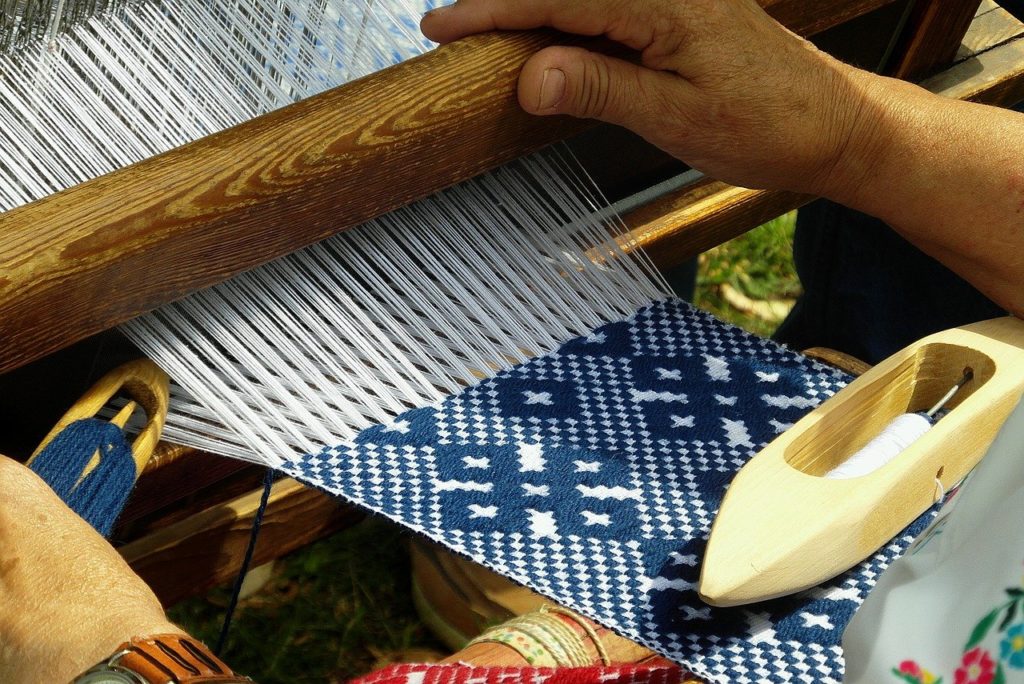
Image of a hand waving loom with a blue and white fabric being created

The curriculum– this is like a developing tapestry. In theory it may have an ‘end point’ (i.e., end of formal education) but in my opinion it continues through our lifetime as we develop the three different types of knowledge.  Therefore, it might be described as an unfinished tapestry. This emphasises the flexible nature of curricula. Yet this fluidity still enables the tapestry or knowledge to build over time into a beautiful masterpiece….

Substantive Knowledge – this is the warp. These are the threads on the loom over and under which other threads are passed to make the tapestry. Without this there would be no tapestry! The warp is laid out at the beginning with a clear sense of what you are going to produce. There is some intent here. Choices must be made about how many threads, how wide the tapestry will be and so on. This is like the choices that must be made in relation to the substantive content. Ofsted talks about illustrative content that leads to an end goal.

Ways of Knowing or Disciplinary Knowledge – these are threads of the weft. They are woven in and out of the substantive content. This is important. Unless they are woven into the content, they will not contribute to the overall tapestry.  This means that as pupils’ journey through the substantive content they learn about and use a range of tools and methods such as interpretation, observation, analysing data and so on.

Personal Knowledge– these are also threads of the weft. They are also woven in and out of the substantive content. Our own positionality, our own worldview is woven into what it is we learn about. This means being self-aware, recognising and reflecting on how we relate to the ‘warp’ or content. This is a process of reflexivity.

So, now is the time to think about the tapestry you are creating, what choices will you make to build towards and create a masterpiece….


References:

https://www.gov.uk/government/publications/research-review-series-religious-education

When I think of my most used sentence of 2021, it is oddly not ‘you’re on mute’ it is ‘this is a really exciting time for RE’. After years of being the underdog, we are finally able to show our academic rigor. From the exam reform to having an OFSTED lead for RE, everything is starting to come together. Whilst all this is happening the wonderful Dawn Cox and Louise Hutton come out with ‘Making Every RE Lesson Count’ as though by magic.

Since reading the book, I have waved it in every ITT, SACRE and Network meeting I have been a part of. Such an exciting book, released at the perfect time. These are (a few of the many) reasons why I loved it so much:

The sections make the book easy to navigate. As someone who must read a book cover to cover and not jump around, it has taken me a while to adapt to edu-books but ‘Make Every RE Lesson Count’ has helped with this change. If you are heading to a meeting, or considering your department’s priorities, then you can choose the aspect such as modelling or feedback and read it with ease.

The layout of chapters make it so clear why that aspect is needed. As opposed to other edu-books, it is lovely to be walked through a concept. The pattern of anecdote, why does it matter?, practical applications and reflection questions, will have you nodding and agreeing instantly. The anecdotes set the scene brilliantly. We have all been there, and they are not placed there to make people feel bad, but rather to consider ‘well now what?’. With the practical applications, there are examples that you can put directly into your lessons. Examples like how to use Frayer models in the chapter on Challenge and timelines in the chapter on Explanation, are wonderful for showing how the theories can be done in the classroom.

It is all about RE. If you are someone who thinks ‘I have read everything about teaching ever’, well you have not! Cox and Hutton pull together various aspects of research and teaching and applies them directly to RE itself. As someone who is sometimes overwhelmed by research, I loved being told exactly how it would fit in to my classroom.

It is not just for secondary teachers. A question I receive a lot about research, books and activities is ‘is it only for secondary?’. This is for RE Classrooms. If that’s EYFS, primary, secondary, or even ITT, it’s full of hints and tips that will develop Religious Education holistically. My SACRE has just bought a copy for every primary RE lead in our catchment area.

Overall, what Louise and Dawn have created here is an excellent foundation to what an RE lesson needs to look like!

Voices of children and young people.

This was the question that many teachers posed to their pupils last term for our inaugural Blog Competition. We had an amazing number of entries and it is clear that everyone has a view on Religion and Worldviews (or Religious Education). At the end of this blog you can see the names of all the winners, but here I want to draw out some of the key themes and creative ways in which pupils want to advocate for our incredible subject.

An education in Religion and Worldviews enables us to understand diversity in our world.

The diversity of our complex world was a recurrent theme. Bloggers spoke of everyone being different, having different worldviews and the importance of appreciating this. Many felt that studying Religion and Worldviews brought a genuine, real and authentic understanding of the lived experience of being a religious or non-religious believer. For many blog writers, Religion and Worldviews is about the nature of humanity; understanding who and what we are as human beings with all the complexity and divergence that this brings.

An education in Religion and Worldviews increases our knowledge, providing global and historical perspectives.

The importance of knowing about and understanding religious and non-religious worldviews came through very strongly in many of the blogs. Young people spoke about the importance of understanding historical contexts to comprehend the way things are today. They highlighted the interweaving of history with religion. Many felt that knowledge acquisition led to respect and to challenging some of the media stereotypes of some worldviews.

An education in Religion and Worldviews supports development of positive values.

Bloggers talked about the many values they felt an education in Religion and Worldviews promoted. These included peace, respect and empathy. A number talked about the way in which this was modelled in their schools by safe spaces being created to talk about controversial issues.

An education in Religion and Worldviews helps you with your future career.

From the youngest to the oldest, bloggers highlighted the value of Religion and Worldviews in terms of future career paths; professions highlighted included law, international development work, counselling, mental health services, diplomatic roles and journalism. Many more spoke about the importance of the subject for simple daily interactions with people they meet.

An education in Religion and Worldviews offers something more…..

For many of our bloggers though the subject offers something more…. It sparks the imagination and curiosity, it empowers and opens doors of communication, it unlocks a tapestry of ideas and enables young people to develop their own patchwork of views. It gives each one of them confidence to talk about religious and non-religious worldviews in the public sphere.

For our bloggers, an education in Religion and Worldviews is considered vital so they are prepared for the real, complex society in which we all live. They want to be able to navigate this world and begin to make sense of it. They want to have knowledge, understanding and skills, but also values and attitudes which will enable them to be confident, free- thinking participants in this ever-changing global landscape.

CONGRATULATIONS TO ALL OUR WINNERS!!

Key Stage 1

Winners

Areilla, Newbold and Tredington Primary School

Abhijot, Clifton Primary School

Harnoor, Clifton Primary School

Highly Commended

Namanpreet, Clifton Primary School

Ishana, St Andrews (Barnsbury) Church of England Primary School

Key Stage 2

Winners

Soha, Old Trafford Community Academy

Catherine, Lythe Church of England Primary School

Nancy, Newbold and Tredington Primary School

Emily, St Andrews (Barnsbury) Church of England Primary School

Highly Commended:

Sohani, Clifton Primary School

Farzad and Idris, Old Trafford Community Academy

Avineet, Clifton Primary School

Hunter, Pickhurst Junior Academy

Key Stage 3

Winners

Matthew, Thomas Gainsborough School

Abby, Saint Francis Xavier School

Arwen, St James’  Senior Girls School

Maxwell, The Bishops’ Blue Coat Church of England School

Cara, King’s Rochester Preparatory School

Highly Commended

Skye, Prenton High School for Girls

Maisie, The Morley Academy

Brooke, Prenton High School for Girls

Niamh, The Bishops’ Blue Coat Church of England High School

Vanessa, Goldington Academy

Ella, Lincoln Christ’s Hospital School

Olivia, St Mary’s Catholic School

Key Stage 4

Winners

Scarlett, Fulston Manor School

Caitlin, Goldington Academy

Lucy, Cox Green School

Maisy, Hagley Catholic High School

Highly Commended

Meadow, Saltash Community School

Jordan, Saint Francis Xavier School

Lily, Albany Academy

Pennie, St Hild’s Church of England School

Zama, Bradford Academy

Key Stage 5

Winners

Ashton, Old Hulme Grammar School

Ella, Highworth Grammar School

Jessica, Highworth Grammar School

Anna, Hagley Catholic High School

Megha, Langley Grammar School

Highly Commended

Reva, Langley Grammar School

Philippa, Old Hulme Grammar School


You can read all of the winning blogs on RE:ONLINE


Kathryn Wright, on behalf of the Judging Team 2021

“O you who believe, fasting is prescribed for you as it was prescribed for those before you, that you may develop God-consciousness.” (Quran 2:183)

Every now and then, a notification will pop up on our phones. It will ask us to complete a software update so that the applications, functionality and performance of our devices will work to its optimum level. I would like to think that the month of Ramadan is the ‘software update’ for our souls where the one who fasts, once the month is over, can perform to his or her optimum level for the rest of the year.

Contrary to what many may perceive, both within and outside the Muslim community, Ramadan is not about food and drink. The aim of Ramadan, as the Quran verse mentions, is God-consciousness. If I don’t feed my pet for a day, it has fasted. If I do similar, I would ask myself if I am better than this pet of mine when in reality, Islam teaches me that the human being is the highest of God’s creation. When I fast, I am aiming to defeat my animal nature and tap into the divine nature that God breathed into us. This is what fasting aims for – defeating the animalistic desires (food, drink, sex, anger etc.) and realising the divine nature through becoming God conscious.

Here I will explain 3 levels of fasting using familiar language:

Grade E Fast

If I was to get an E grade for one of my A-Levels, I would have passed but in all honesty, it may not open the door to many opportunities. An ‘E-grade fast’ is where I simply abstain from food and drink for a day. However, I may not change any vices I may have such as anger, bad language etc.

Grade C Fast

If I was to get a C grade for one of my A-Levels, I have more than passed and it will open the door to some opportunities. A ‘C-grade fast’ is where I do not just abstain from food and drink for a day but my ethics become virtuous too. Whilst usually I may road rage when someone is driving slow in front of me, whilst fasting I remain calm. I remove my vices and transform them into virtues.

Grade A* Fast

If I was to get an A* grade for one of my A-Levels, I have reached the peak of my subject area and it will open any door for me. An ‘A*-grade fast’ is where I quash my animalistic desires, become virtuous but also activate my divine nature in some form of union with God. Union with God means that I would do everything that God is pleased with and avoid what He is displeased with. My will becomes the same as His where He is pleased with me and I am always pleased with Him.

Imam Ali, the first Shia Imam (whose death anniversary is also mourned by Shia Muslims this month), summarises these levels of fasting well: “Some people get nothing from fasting except hunger and thirst.” Every Ramadan I always aim to achieve an A* with my fasting. It is a struggle and there are days where I achieve an E or C grade. However, I know that if I do achieve the A* one day, I will have the best of software upgrade for my soul that will help me function properly all year around.

We all know that it can be challenging to encourage our students to access beyond what they need to know and to stretch their understanding on content and concepts within their specification. So many of the students that I have taught have a default mode that is often activated when they reach a certain point in their learning. This default mode comes into play when their perception of learning is complete. This can be when a series of questions is complete, when something becomes too challenging or when the last line of an exam question response has been written. My concern in this instance raises the question of how much potential is stifled prematurely and how many students could go further in their learning.

Originally inspired by Doug Lemov in Teach Like a Champion I wanted to create a culture where students realised that the reward for right answers in lessons is higher challenge that takes the form of harder questions and more challenging material. That completion of work translates to the setting and eventual completion of more demanding concepts. What I can say is that this is easier said than done but when my students started thinking like scholars they were taken to places in their learning which was beyond their wildest dreams! In this blog, I will take you on the journey that I went on with my GCSE and A Level classes in getting them to think like scholars in their RE lessons by discussing the implementation and outcome of the scholarship reading programme.

What is it?

The Scholarship reading program is a tool that encourages students to read beyond the revision guide or core text. It works alongside lessons and introduces students to material that is challenging, a primary text and is designed to create that ‘out of your depth’ feeling until the students come to terms with the reading and start to gain a steady footing of mastery. The material that is selected has been anything from extracts of undergraduate journal articles, scholarly texts or scripture.

Implementation

As in any case when you are establishing routines and rituals, the scholarship reading programme is easier to embed from the outset of meeting a new class. This way, students will be accustomed to your way of working and it is something that can be filtered into the lesson, rather than becoming a bolt on at the end of the lesson. In this sense, the teacher can also use it in a flipped learning way. In this instance, the teacher will set the material in advance of a lesson and then the discussion of the scholarly material can be unpicked and analysed when teaching that theme. This works particularly well when teaching the themes because there is a lot of material available, but likewise can be utilised when teaching the study of religions. In the case of the latter, this high challenge material can be pitched by the teacher to the students as material that would not usually be taught until A Level. The advantages of this method are twofold. Firstly, it empowers the student because their teacher has faith in their capability of understanding the material but implementing it in a flipped learning approach allows for higher level of engagement as the students know that the material will feature during an integral part of the lesson.

Lockdown 2.0

Initially, this article was going to be purely based on the physical classroom with face to face teaching being the focus. However, the rapid developments in technology and more specifically, teaching with technology has transcended limits beyond our imaginations. With this in mind, I wanted to share with you how this reading programme could be implemented within a digital setting. During the start of remote learning, my school set up Google Classrooms for students to be able to work remotely. This was the ideal platform to be able to continue the Scholarship Reading Program. In this case a new article was scheduled every week and had a blank document to go alongside it. After the students had read, listened or watched the material, they evidenced their engagement on the document and handed it in for me to check. At the end of each half term, I awarded virtual certificates of engagement to the students and this was something that was also celebrated during our live lessons together.

Outcome

This is the part of the blog where I share the impact of the reading programme and in doing so I’m going to be brutally honest after running this with KS4 and 5 classes for two years. The honest truth is that different classes will take it to different places and more specifically, different individuals within the class will take it to different places. Year 10 and 12 classes have had the highest engagement and have got the most out of it (presumably because I have taught them from the start of the course and this is all they know their GCSE or A Level to be). Year 11 has been mixed with one class not engaging in a single piece of reading despite my best efforts in encouraging them to do so remotely! Despite this, my message is clear and that is to stick with the program and see it for what it is; that being a tool that exposes students to a deeper understanding of their course and something that acts as a yardstick by introducing students to content in RE that will be covered in A Levels and beyond.

Saturday 6th March 2021. A date that, for many, will go down in religious history forever. During his visit to Iraq, Pope Francis, Head of the Catholic Church, sat with Grand Ayatollah Ali Sistani in his home and they both had a conversation. It was the first time in history that a Pontiff had met his equivalent in the Shia world [1]. It does not matter that we did not hear the contents of their conversation. It was private (although Francis revealed some brief areas they spoke about). It does not matter that there was no joint statement made by both following their 45-minute encounter. What matters is the world was able to witness on this date two people of faith who possess possibly some of the largest followings on the planet making a symbolic gesture; they had a chat about how the world can get better. This is inspiring.

In my opinion, the Shia and Catholic traditions have a natural affinity. I am lucky enough to experience in my personal life too with people close to me. Catholics believe that Jesus has divinely mandated successors who lead the Church. The Shia believe that Muhammad had divinely appointed successors who lead the Ummah. Catholics believe in the Immaculate Conception of Mary and Shia Muslims believe Fatima, daughter of Muhammad, is too born sinless and pure. Both are also intercessors and a means towards the Divine. Mary is the mother figure of redemption in Catholicism as is Fatima in Shi’ism, foreshadowing the later tragedies of their respective sons (the crucifixion of Jesus and the killing of Hussain). The focus on the suffering of Jesus emphasised by Catholics and the passion of mourning the tragedy of Hussain by the Shia cannot be ignored either. It is not uncommon to see Iraqi Catholics visit the shrine of Hussain in Karbala to pay respect to his martyrdom.

Those who witnessed the brief news clips and images would have been struck by what they saw. For me it was a powerful moment that will stay imprinted in my mind. The contrast of Sistani in his black robes and Francis in his white locked in eye contact with awe was a wonderful sight. The images of them both holding hands bidding each other farewell, somewhat in a joint prayer, brought a tear to the eye. It is reported by those present that Francis, before leaving the building, took one last look at the room. Perhaps he was taken aback by the run-down alley Sistani lives in contrasted with the grandeur of the Vatican. Both hold the equivalent positions in their own faith traditions but their surroundings very much differ. Ayatollah Sistani is peacemaker with a love for justice. His actions contributed to the extremist Sunni group ISIS being defeated. He asked his office to make a statement asking the Iraqi people to protect their lives and religious heritage when the assault of ISIS became unbearable. Most of the Iraqi people unflinchingly obeyed him. He is a man with such global influence, yet he shuns photograph opportunities (with only handful on the internet), high profile meetings and lives in the most basic home.

Although contrasting in lifestyle, appearance and some beliefs, I believe Francis and Sistani have the exact same mindset. They believe just structures make peace and this doesn’t happen by itself. This meeting was a symbolic gesture of two men of faith with huge following in the world meeting on the same level because they have the same worldview – you need justice to create peace. Although Catholic-Shia dialogue has been happening for a very long time, this brought them even closer together. Ayatollah Sistani, due to his old age, is a very frail person physically. I have witnessed this in the times I have had the privilege to share an audience with him. He even needs support lifting his hand in order for him to shake someone’s hand. The fact that he stood up twice, once to greet and once to bid farewell, for the Pope demonstrates the respect he had and an example to me the manner I must conduct myself with others too. In my view, Pope Francis chose the absolute right person to meet in his first dialogue with a Shia authority.

Sistani lives right opposite the shrine of Imam Ali, the first Shia Imam. Imam Ali told his governor once: “People are of two kinds: either your brother in faith or your equal in humanity” [2]. It is a wisdom I live by in my whole life and it dictates my professional life too. When Pope Francis landed in Baghdad, a large banner with this wisdom was displayed for him to see. The meeting between the minarets and bells was inspiring to me because the ethos of Imam Ali was epitomised through this. It gave me hope that if two global faith leaders can humble themselves to each other’s level to make the world a better place, then maybe we can do this as well. In a tough year for everyone, this moment gave me a further spring in my step as a RE practitioner and be able to say I was alive when this happened.


[1] Most Shia Muslims, during the occultation of the 12th Imam, adhere to the institution of Marja’iyyah (religious authority) where they follow a high ranking Shia authority in matters of religious practice. The authority believed to have largest following in the Shia world is Grand Ayatollah Sistani. Other well-known authorities include the late Grand Ayatollah Khomeini and his successor Grand Ayatollah Ali Khamenei, known as the Supreme Leader of Iran. More information on this concept can be found in Bdaiwi, Ahab and Hussain, Zameer (2017), 3.6 Marja Taqlid. In GCSE Religious Studies Shi′a Islam: Beliefs and Practices. Al Khoei Foundation.

[2] Nahjul Balagha (Peak of Eloquence), Letter 53

Heading in to my second year as HOD, we suddenly had a year 12, AS Religious Studies class. Cue frantic reading, watching, chatting and planning to pull these lessons together. There were lessons for the students, the content was covered, they were interested, but I felt that something was missing.

Out of my eight students, only two have a GCSE in Religious Studies, that’s a lot of missing knowledge. My plan to teach to the exam had gone out of the window. My lessons were fine and allowed for students to gain the understanding needed to achieve in learning (note. Not the exam).

Coming in to 2021, I’ve realised that it’s already February, and it’s time to start planning. I’ve done what I do best, scrapped everything and started again. And this was my process:

  1. What are the specification headings? – I still have an exam to prepare them for, so what does the exam board expect them to know. These were the overall headings of ‘Birth Narratives’, there are nine in total for my AS.
  2. What can that be broken down to? – e.g., birth narratives – kenosis, demythologising, redaction.
  3. What questions can we ask about it? – What are the enquiry questions? How can I get to the bottom of this?
  4. What hinterland knowledge do they need? – e.g., before they do the resurrection, I need to recap Holy Week. When teaching the course this year, I launched in to teaching the resurrection and students admitted that they didn’t know about Holy Week. My students had the confidence to tell me, but that isn’t always the case. I need to prepare for a lack of understanding.

In order to do this, I used sticky notes. One colour per topic, another set for concepts, bigger ones for sections and then a fourth type for hinterland. I stuck these on my living room wall (my husband was delighted) and took a step back. I then had a full conversation with myself about how it would flow. The use of sticky notes meant that at each stage I could make changes and shuffle things around.

My saviour with regards to content has been the textbook. It has allowed me to see how a topic should split up. It also summarised the topics well. Someone once said that ‘textbooks are made for students not teachers’ and it is something that has stuck with me, it is very much the basis for the schemes of learning, but it is not the entirety.
The exam board I have chosen, has a huge PDF with supporting links. These range from articles to videos to books. This list helped me expand my knowledge during lockdown one. If I understand it better, then the students will be able to access it too.

Speaking with other RE colleagues on twitter has helped massively. From sharing resources, to discussing books to almost standardising our marking together. This collaboration makes for a very exciting future for RE.

It may not be perfect, but I now have a module that I’m very excited to teach in September.

For many years now I have engaged with research as this is something that has transformed, enriched and enhanced my teaching. Indeed, it empowers me as a professional and has greatly improved my practise. However, the ways in which I have done this have been varied.

One way has been to read short summaries of work produced on sites like RE:ONLINE or in magazines such as Professional Reflections in RE today. These have been particularly useful in enabling me to have an overall grasp of an area so that I can work out what I am interested in. I then investigate this further by downloading full journal papers, contacting those involved in the work or attending feedback sessions if these have been provided.

Another way that I have engaged with research has been through enrolling on free courses delivered by various universities (Open Learn, Future Learn and HarvardEx). These have been invaluable for increasing my subject knowledge within RE. For example, I have completed courses on exploring Buddhism through their sacred texts, Shariah law and Religious Literacy. In addition, I have also enrolled on ones which focus on pedagogical research such as how the brain works and effective assessment. These courses vary in length and require different levels of engagement but they all fit easily around the busy life of a teacher. However, if you prefer to submit work and gain individual feedback, I would recommend the courses offered by Teach:RE from Culham St Gabriel’s.

Participating in funded projects led by various universities is a third way I have been involved in research. Some of the projects I have enjoyed include: the relationship between Science and Religion; using a hermeneutical approach in RE; and fostering better community relations in the classroom. There tends to be a lot of support when you participate in these projects from those working in academia and also from the other teachers involved. I would advise though that you select one which you and your school are interested in as this will make it a more rewarding exercise and also it means you will have support from senior leadership if you need to have time out of work.

A final way that I have been involved in research is through enrolling on paid courses at university. In particular, undertaking and completing a doctorate has been by far the most time consuming and nerve-wracking but also the most rewarding of all of the initiatives I have engaged in. I cannot recommend this enough if it is an area you wish to explore. Indeed, it has provided me with the means of being able to navigate the research community more effectively and also to have the tools to critically analyse and evaluate my own practise. It has shaped me into the teacher that I am today and contributes to the sheer fascination and joy I have in my subject.

No change in change

I’ve been a religious studies practitioner for over two decades. Nearing three, if truth be told. And those years have seen much change in the context of the subject, with much to be excited about. Each change seems to have reinvigorated my passion for the subject and, I hope, lead to me being a more effective classroom teacher and subject lead.

When the 2018 Commission on Religious Education provided a new framing of the subject – as “Religion & Worldviews” rather than Religion – it was accompanied by a fresh wave of informed conversation that will have lasting impact on the subject and the pupils who are studying it.

And this conversation has a number of important new terms in it, terms that those participating in it need to be clear about. What is a ‘worldview’ and what sets it apart from a ‘religion’? What is ‘religious literacy’? And quite how many ‘multidisciplinary lenses’ are there?

A worldview

The report describes a worldview as ‘a person’s way of understanding, experiencing and responding to the world … as a philosophy of life or an approach to life’. (CofRE P8) Whilst this definition could cover the six principle religions of the United Kingdom (although I know this is contested), it does allow an individual who considers themselves not to be ‘religious’ to use terminology that places value and coherence upon their specific framework. And it allows others to place value upon it too.

No longer is a considerable proportion of our population defined by a negative – ‘not-religious’ or ‘not believing in God’ – but instead acknowledged as being a community drawn together by shared values and beliefs.

Multi-disciplinary Lenses

However many you might consider there to be, ‘multi-disciplinary lenses’ refers to using different academic disciplines or approaches or methodologies to study an aspect of a worldview. In Norfolk, the latest Locally Agreed Syllabus (Norfolk Agreed Syllabus 2019, P5) has settled on three – theology, philosophy and human/social sciences. In practical terms this might mean approaching the topic of pilgrimage by asking three different questions; “what does this pilgrimage teach the pilgrims about their deity?” (theology – thinking about and thinking through believing), “is it right that one place is more significant than another?” (philosophy – thinking about and thinking through thinking) and “what significant acts do the pilgrims carry out?” (human/social sciences – thinking about and thinking through living).

Serving religious literacy

No term has done more to reinvigorate my passion for RE than ‘religious literacy’.

The Norfolk Locally Agreed Syllabus defines religious literacy is ‘how well pupils are able to hold balanced and well-informed conversations about religion and worldviews.’ (P5) It advocates equipping the pupils to go beyond – whilst still embracing – personal reflection and academic excellence, becoming significant, independent, participants in the world in which they find themselves.

And in order to hold these ‘balanced and well-informed conversations’ with the wide-ranging worldviews they will encounter our pupils must engage with the unique beliefs, wrestle with the unique questions and negotiate the unique expressions of each. They will bring the lenses to bear on the worldviews in their journey to religious literacy.

And after nearly three decades, I’m still excited to be on the journey too.