Viewing archives for Blog

Glancing out of the staffroom window, you notice three of your students approach the playground fence just as a woman in a hijab is walking by. They say something to her and the only words you can clearly make out are “burka” and “go home”. The students laugh as the woman quickly walks away with her head down looking upset.

As a teacher, what are your options here? Storm outside, chastise the students, and dole out an appropriate punishment? Schedule an assembly? Escalate it to the head? Undertake outreach to the local mosque? Book in a RE session on Islamophobia? Do nothing?

But what if the students were themselves Muslim? Does this change how you act next? What if you know those students are Hindu? What if, instead of a woman wearing a hijab (a Muslim head covering for women), it was a man wearing a kippah/yarmulke (a Jewish head covering for men) and the students were Muslim? How do various denominations, schools and branches of religions come into conflict and how do these layers of complexity – potentially involving race or status too – influence how we respond?

The key here question is not just: Would you know how to approach this incident? But more widely: Do you feel adequately resourced and supported to address faith-based harm in your school? Do you feel that your school has developed systems that offer pathways for learning about faith-based harm?

Harm related to faith often feels like a minefield of sensitivities; there can be so much fear of “getting it wrong” that we often end up doing nothing. Not from a lack of sympathy for the harmed, but out of fear of igniting wider tension that you do not feel confident to navigate. Global and historical conflicts feel more present than ever in UK societies – from conflict in Israel/Palestine, and tension between India and Pakistan, to division between Catholics and Protestants. And how do recent riots against asylum seekers and immigrants relate to faith?

Interfaith restorative justice

This gap in understanding and confidence in how to approach faith-based harm led to the inception of the Interfaith Restorative Justice Project. This work, a partnership between the Faith & Belief Forum, Interfaith Glasgow and Why me? – and funded by the National Lottery Community Fund – explores how Restorative Justice (RJ) processes can address hostility against and between faith communities in Solihull and Glasgow. We have trained local people of faith as RJ Community Facilitators and support them to take on cases where they facilitate repair or moving forward after harm has occurred. And whilst this project isn’t targeted at schools, as integral parts of communities, we’re liaising with Solihull and Glasgow education institutions as potential sources of referrals and casework partners where harm has been identified.

Restorative practices and Interfaith

There are loads of fantastic resources and initiatives to bring Restorative practices into schools, and there are projects across the country (including our own F&BF schools work) which can help staff and students better understand and navigate faith and worldviews. RJ in schools can be simplified as a “culture that identifies strong, mutually respectful relationships and a cohesive community as the foundations on which good teaching and learning can flourish”[1]. Interfaith can be described as “all forms of intentional engagement between individuals from different faith and belief backgrounds, who come together specifically because of their religious diversity”[2]. The crucial overlap between RJ and interfaith approaches: Both invite learning new ways of being.

“Learning new ways of being” may sound like another new term or initiative on top of many others that offer a distraction to an already packed Personal, Social, Health Education (PSHE) and religious education or religion and worldviews curriculum. But both RJ and interfaith work give us frameworks to be able to navigate the most difficult parts of life – relationships, conflict, disagreement, mistakes, offense and division. So, when we talk about new ways of being, we can see that this approach brings together many strands of the work of ‘developing the whole child’ that we all strive to encourage in our classrooms.

Learning how to live alongside one another

Learning (by studying and practising established processes) how to live alongside each other across difference and to navigate harm is essential to a well-functioning society (and, dare I say, conspicuously absent in many communities up and down the UK today). And learning, not just how we look after ourselves and each other when we are harmed, but how we take accountability when we are the one doing the harming, are skills that can be taught and learned. If we want schools to produce well-balanced, self-aware, caring and emotionally intelligent young people who can build relationships in their communities and respect others despite differences, then learning new ways of being should be well and truly on the agenda.

For more information on how a Restorative approach might be applied to the case study above, RJ expert Anika Cosgrove from Why me? has a blog post coming soon

[1] Restorative Approaches in Schools in the UK , University of Cambridge, https://www.educ.cam.ac.uk/research/programmes/restorativeapproaches/RA-in-the-UK.pdf

[2] UK Summer Riots 2024: Restorative Responses and Interfaith Instincts, Faith & Belief Forum, available at: https://faithbeliefforum.org/report/uk-summer-riots-restorative-responses-and-interfaith-instincts-report/

One would assume that being based in Leicester – the most plural city in the UK, would provide St Philip’s Centre (SPC) with the ‘cheat sheet’ for how to live well together. Whilst that remains a journey not a destination, our interactive programmes of religious and worldviews education are increasingly requested geographically with schools engaged from the East Midlands, West Midlands, South Yorkshire and the East of England.

Why Interfaith education matters more than ever

Why is this the case? Collectively whilst we operate in different contexts, we are all connected by mutual desires to upskill our children so that they can confidently and glowingly contribute as active citizens in any part of the world let alone the UK. In a febrile national and global atmosphere where perspective and fair play has been recalibrated to create imbalance and distrust, we encourage children, carers and teachers to engage with a range of different views and opinions about all manner of topical subjects. Our team of community faith practitioners who are integral to our delivery, provide us with originality, authenticity and a human face. Our work intends to build a resilient future through education and openness by allowing children and young people to express themselves through adventure and the promotion of kindness.

Creating safe space for big questions

We go beyond the textbook and make the subject FUN! We do not claim representative status but instead our team amplify lived religion and belief under a democratic apparatus. We encourage free and frank dialogue where disagreement is accepted as part of life within a framework of peaceful coexistence. Children, carers and teachers often ask questions about gender rights, religious obligations versus the rule of law and exclusivism in belief. We highlight the presence of different traditions or intra-faith. Looking over the garden fence to our neighbours may be pain-free but when one needs to turn in and accept divergent beliefs when under the same label, it can be harder to digest.

Dialogue in action: bringing lived religion into the classroom

From foundation to lower secondary, our offer is age appropriate. Our programmes include assemblies, workshops, visits to places of worship, tours of cultural sites such as our famous ‘Golden Mile’ and our flagship ‘Religion & Belief Roadshow’ which brings up to ten different religions and beliefs into a school as part of a fun-packed festival using stalls, clothing, music, artefacts and food – the currency of interfaith! Over the years, this pioneering endeavour has engaged thousands of children across the nation.

One of the most pressing challenges facing school leaders is how to prepare children and young people for life. It is commonly assumed that rural areas are isolated and removed from the wealth of plurality but the same can be said of some towns and cities. Day to day or meaningful engagement with difference is rare and forces pupils to play ‘catch-up’ later on in life at college, university or work – by then it is often too late. The demands of school life means that it is often only possible to provide one-off encounters and so the sustainability of a child’s journey must be a collective responsibility with friends, families and communities all playing their role outside of the classroom.

Building blocks for a resilient future

At SPC, our programme recipe is appetising and colourful – there is something for almost everyone! We have up to ten religions and beliefs under our umbrella which connects classrooms with communities. High quality religious and worldviews education must be relevant and applicable to today’s world. Schools operate on the frontline and we very much see our role as being one where we help them, to help themselves. We energise and equip schools to connect meaningfully with their children and families in this area of work. The building blocks of responsible citizenship and community resiliency cannot be left to chance. Our collaborative efforts with schools have increased pupil and teacher confidence and knowledge.

As a classroom teacher, every year I would get excited about “Interfaith Week”. I would want to do something fun to celebrate diversity and inclusion. However what often happened, was that my best intentions were overtaken by other priorities, and I ended up feeling guilty because I had run out of time. I want to encourage you this year too do something, even a small activity can make a big difference. My hope is that this blog will help to take away some of the guilt and provide some small easily accessible ideas to begin to use with your pupils to help them engage and learn more from each other

Story

My work as a researcher has highlighted the potential for using stories to help pupils to understand the values of others who hold different worldviews. Stories from sacred texts carry significant meaning across time and place and can offer a safe space to talk about matters of faith and belief. The meaning is nuanced and requires the reader to go exploring for what is hidden in the text. You do not need to be a theologian to be able to share a story and explain why it is important to you. It is something everyone can do, be they pupils, staff, or members of local faith communities.
I would like to suggest that it is these very connections that could be a rich source of knowledge to tap into during interfaith week.

Could you find some time in the classroom to explore stories that carry meaning for your own pupils?

Could you ask members of staff, volunteers or parents to come in and share stories that are important to them as representatives of different faith community?

Sharing stories in their own right is helpful and interesting, but I would argue that the most interesting conversations can be developed when we bring stories together from different perspectives and begin to look for the similarities and differences in how they are perceived. This year Interfaith Week highlights the theme of “Community: Together We Serve”.

Could you invite three people from different faith perspectives to share a story that illustrates something of what it looks like to serve?

Are there trusted members of the school community who might be willing to talk about their beliefs through story telling?

Dialogue

It is important to recognise that for these interfaith encounters to be positive, setting a space for dialogue is important. There is a famous American psychologist called Gordon Allport (Allport, 1954) who has suggests that prejudice can be reduced through positive contact. He argues that for this to be effective it needs to be conducted within a safe environment. His contact theory, also known as the intergroup contact hypothesis, suggests that encounters are most effective when all members of the group have equal status, shared objectives, active collaboration and these encounters should be supported by recognised authority structures. When these conditions are in place, he suggests encounters can lead to more positive attitudes and better intergroup relations.

The Story Tent

At the heart of my interfaith work has been the concept of a Story Tent. My research and subsequent classroom-based practice have highlighted the potential of creating spaces, to share our stories and build friendships across divides. My logo illustrates a tent shape with a space for dialogue underneath. It could also represent a bridge that connects different starting points. In this space I encourage pupils to consider themselves as both a guest and a host. The space is shared, and all participants have equal status.

You may find that there is somewhere in the school that you dedicate to creating such an interfaith story telling space. I have used a gazebo to create a temporary space, but you may have a book corner or space in the library which could be set aside for interfaith week.

Guidelines for dialogue

Using guidelines for dialogue in this space enables open respectful conversations to emerge but it is important to remember that this space needs to have some authority figure around to oversee the activities. I have attached below some guidelines for dialogue which I have used in primary schools, a PDF is available on my website. There are also guidelines which can be used in secondary school which have been developed by “The Feast”, an interfaith networking organisation, more details available on their website listed below.

Download guidelines for dialogue here.

The Faith and Belief forum have recently produced a report May 2025 – highlighting the positive impact and importance of this Interfaith Week initiative which was started in 2009. But Interfaith Week does not need to be the end of an interest in this aspect of important work. Rather it can be the start of developing an interest in the lived experiences of people of different faiths and worldviews.

My challenge to you today is to go away and plan to do at least one story related activity during Interfaith Week (or afterwards) and see where it leads. Begin to explore a dialogical space where it is safe for pupils to talk about their perceptions. This type of learning can help reframe attitudes and help pupils to not only discover more about what others believe but also refine their own beliefs, values and sense of identity.

 Bibliography:

Allport, G.W. (1954) The nature of prejudice. Cambridge, Mass: Addison-Wesley.

Interfaith week consultation report, 2005, Faith &Belief Forum,

https://faithbeliefforum.org/report/report-inter-faith-week-consultation/

[accessed 18th October 2025]

Resources:

Faith and Belief Forum

https://www.ifw4schools.co.uk/ [accessed – 12th Oct 2025]

Interfaith week resources

https://www.interfaithweek.org/resources [accessed – 12th Oct 2025]

Story Tent resources

https://www.storytent.concordant.online/ [accessed – 12th October 2025]

Story Tent @ Coventry Cathedral video

https://www.youtube.com/watch?v=WolsaClLHPg [accessed 12th October 2025]

The feast guidelines for dialogue:

https://thefeast.org.uk/resources [accessed 12th October 2025]

The Curriculum and Assessment Review’s recommendation to embed Religious Education (RE) in a new national curriculum marks a watershed moment for education. Culham St Gabriel’s Trust celebrates this bold step toward equity, coherence, and justice. Over the last few years, we’ve championed a statutory national benchmark for RE- one that guarantees every pupil, in every school, access to high-quality, inclusive, and meaningful learning about religion and worldviews.

Why This Matters

I have often used this scenario in our advocacy over the last year…

Imagine being a 14-year-old student deciding whether to do RE as a GCSE option. Your experience of the subject has been fragmented – repeating content due to curriculum variations between local areas, missing key topics as you moved schools, or being taught by non-specialist teachers. You’re curious about how people live and view the world, but you feel unprepared and uncertain. This is the reality for many pupils across England.

The current system, with many different agreed syllabi and inconsistent provision, has led to widespread inequity. Some pupils receive rich, engaging RE; others receive none. This disparity is not just unfair – it’s educationally and socially unjust.

The report says:

‘Provision for RE is many schools is not good enough and does not prepare pupils adequately for life beyond school’ p. 108

The Case for Change

The Curriculum and Assessment Review recommendation affirms what those of us working this this field have long known: the status quo is untenable. At the recent Confederation of School Trusts Annual Conference 95% of those voting in our informal poll agreed that RE should go into a new National Curriculum. This included chief executives, headteachers, trustees, curriculum leads, inclusion leads, journalists, Diocesan Directors of Education and Year 10 pupils. This should encourage both the review panel, and the government as recommendations are taken forward. I believe the education world strongly supports this move as it will:

  • Restore Equity: All pupils deserve access to a coherent and inclusive RE curriculum, regardless of their school’s governance or location.
  • Ensure Consistent Standards: A national benchmark will help raise expectations, improve outcomes, and support accountability.
  • Improve Provision: Schools will be required to allocate appropriate time and resources to RE, ensuring it is no longer sidelined.
  • Modernise Content: A religion and worldviews approach will reflect the lived experiences of diverse communities, moving beyond outdated paradigms.

A Vision for the Future

The Curriculum and Assessment Review recommend a staged process, building on the National Content Standard for RE in England (2023) which could serve as the foundation for this new curriculum. I wholeheartedly support this approach. It offers a framework on which to develop further consensus and unite the education community. I am delighted that the report recommends Dr Vanessa Ogden chair a Task and Finish Group to lead this next stage.

This is a once-in-a-generation opportunity. I urge the religion and worldviews community-educators, faith and belief groups and policymakers – to come together for the common good. Let us work through the challenges together, be open to compromise where needed, take a humble approach and listen to one another.  I hope that we can build a curriculum that reflects the richness of human belief and experience, and ensures every child receives the education they deserve.

Six reasons why RE should be in a new National Curriculum https://www.cstg.org.uk/campaigns/religion-and-worldviews/

Culham St Gabriel’s warmly welcomes the Curriculum and Assessment Review’s bold recommendation to embed Religious Education (RE) within a new national curriculum through a staged process. This marks a pivotal moment for education in England. We are proud to have championed this change throughout the last year through our advocacy and submission of evidence.

The Report states:

The Review believes that RE should be moved to the national curriculum to improve access to high-quality provision and prevent further diminishment… We believe a staged approach to reform is the most appropriate way forward’. P.109

We believe this move is essential to ensuring every pupil, in every school, receives equitable access to high-quality RE. It’s a vital step toward a more inclusive and informed society.

As this transformative vision takes shape through dialogue and negotiation with stakeholders, Culham St Gabriel’s stands ready to support policymakers and officials with our expertise and resources. We are committed to helping realise this once-in-a-generation opportunity. We strongly support the next steps and future approach set out in the report which seeks to create consensus, building on what has already been achieved through the establishing of the National Content Standard for RE in England.

We welcome the report’s recommendation that Dr Vanessa Ogden chairs a task and finish group to build on the constructive and collaborative work already undertaken as part of the review.

Our vision is clear: a broad-based, critical and reflective religion and worldviews education that fosters respect, understanding and openness. This recommendation brings us closer than ever to making this vision a reality.

Kathryn Wright, Chief Executive
Linda Whitworth, Chair of Trustees

To read more about our reasoning regarding RE taking its place in a National Curriculum  please see: https://www.cstg.org.uk/campaigns/religion-and-worldviews/

For further information about our position contact Kathryn Wright, CEO, Culham St Gabriel’s Trust ceo@cstg.org.uk

Culham St Gabriel’s applauds proposed landmark RE curriculum reform

Ed. Karal Van Nieuwenhuyse, John Maiden, Stefanie Sinclair

Palgrave 2024

In this impressive new volume, key documents drawn up at different times over the last 600 years are presented to show how societies have sought to deal with religious diversity and to promote peace and toleration. In doing so, the authors have created a valuable resource for teachers – particularly of RE, Citizenship, History and PSHE – with approaches for talking about religious difference in the classroom.

My journey to the Religion and Worldviews world began, strangely enough, in an International Relations lecture theatre. Having worked for interfaith and community cohesion organisations for many years, I decided to begin an International Relations Masters at SOAS where I hoped to apply my experiences into a new context. However, as I sat in lecture after lecture I found myself becoming more and more dismayed by the gap I saw between my experience of working with and through religion and religious communities, and the way in which religion was understood and described by contemporary scholars of International Relations. And it was in that context which I first engaged with the Treaties of Westphalia (a set of treaties which ended the Thirty Years War in Europe) and which are the focus of one of the chapters in this book.
Many scholars, as well as those with an interest in the history of Europe during the early Modern period, see Westphalia as the birth of the modern State System (in other words, the way in which sovereign nation states relate and engage with one another). However, what caught my imagination was the way in which Westphalia sought to make sense of the religious diversity of Europe which had played a part in fueling that War.

For me, engaging with the Treaty through a lens of thinking about how societies tried to navigate religious diversity so as to prevent conflict and violence was a real light-bulb moment. Here, however imperfect to my 21st century mind their attempts might have been, was a point of contact and connection. I found it enlightening to think about how people in a different time, tried to resolve challenges which we continue to grapple with today.

And it is that which is at the heart of this book. Each chapter takes a different example and encourages the reader to consider how different people at different times have sought to come up with the language and frameworks for cooperation and peaceful relations in their diverse communities. By presenting the nine examples in the same volume, from places as diverse as 16th century Poland, 18th century France and 21st century Turkey, the reader is actively supported to think about the different approaches people have taken and to think about what these approaches might say about their own communities and contexts. What is particularly exciting is the way in which the authors have included links to diverse primary and secondary sources and guiding questions which can be used in the classroom to stimulate and enrich discussion and learning. The addition of a chapter which explores, in broad terms, approaches to religious diversity in different eras, recognising the relationship and influences between Christianity, Islam and Judaism, as well as other religious traditions, is helpful for framing all nine case studies.

This is a really excellent book, full of surprising insights and nuggets (having spent a year as an undergrad in Granada I was fascinated by the description of the annual Toma de Granada celebration which made me both nostalgic and anxious to see the ceremony one year) and I can clearly picture how it could be used to enrich the teaching of RE/ RME/RVE/Religion and worldviews. Moreover, I think this book makes an important and timely contribution to wider conversations about the place of religion in society.


In response to the abolishing of the bursary for secondary beginner teachers of RE, and the continued lack of funding for subject knowledge enhancement, this thought piece explores the deeper moral and ethical questions government and the education world need to ask themselves about the vital role RE plays in our society. 

A Crisis Hidden Behind Numbers

The Department for Education recently announced that trainee numbers in Religious Education have gone up[1]. On the surface, that sounds like progress. In truth, it masks a deeper crisis. The modest rise was driven almost entirely by a temporary £10,000 bursary re-introduced last year, a short-term fix for a long-term problem. Prior to that, recruitment targets for new secondary RE teachers had been missed in 11 of the last 12 years[2]. With the bursary now removed, along with funding for Subject Knowledge Enhancement courses, the structural gap remains unaddressed.

The consequences are immediate and far-reaching. Without that support, smaller university programmes will struggle to survive, fewer people from underrepresented backgrounds will train to teach, and schools will find it even harder to fill a subject that every pupil is legally required to study. The Catholic Education Service, which oversees more than 2,000 schools, has emphasised that RE is “the core of the core curriculum”[3]. Yet without sustained investment, schools are being set up to fail in providing the critical and reflective education that RE can offer.

A Space for Critical Thinking

RE is not just about religion. At its best, it helps young people think deeply about ethics, identity, and responsibility. It teaches empathy and opens up conversations about how we live together in a diverse society. When properly supported, RE can also challenge the narrow frameworks that have historically shaped how “religion” is understood in education, creating space for multiple ways of knowing and living. It can be one of the few places in school where students learn to question their assumptions and to see the world through other perspectives.

Who Is Most Affected

These possibilities depend on teachers who can hold that space with care and confidence and those who reflect the diversity of their pupils and understand the complexity of the communities they serve. Cutting bursaries and training support directly undermines this. The consequences fall most heavily on those already underrepresented in teaching, particularly candidates from minority, faith-based, and lower-income backgrounds who already face structural barriers to entering the profession[4].

In 2024–25, 83.2% of teachers in state-funded schools were White British, compared with 71.8% of the working-age population[5]. Restricting access to RE training only widens that gap, narrowing the range of voices students encounter and limiting their exposure to teachers who reflect the diversity of their own experiences. In a country still grappling with questions of representation and belonging, these are the very voices that bring depth, understanding, and lived experience into the classroom. However, when classrooms cease to reflect the society they serve, education itself is weakened, stripping it of the moral depth that gives it purpose.

The Narrowing of Moral Imagination

These cuts are not isolated, nor are they neutral or accidental; they form part of a broader pattern in which the state determines what knowledge is valued and who is permitted to teach it. Limiting access to subjects like RE and narrowing diversity in the teaching workforce shapes whose voices are heard, which ideas are legitimised, and how society understands itself. The withdrawal of support for RE teachers is a clear example of this narrowing of moral imagination. In this systematic pattern, public narratives around minority communities are carefully managed, allowing social tensions to fester while shaping wider perceptions of these groups. As a result, subjects that encourage critical thought, ethical reasoning, and engagement with difference are systematically deprioritised. Education, in this context, ceases to nurture enquiry and becomes a mechanism for controlling thought.

Overall, every closed course, every lost bursary, and every teacher prevented from entering the profession reduces the space for curiosity, ethical reflection, and engagement with difference. When moral reasoning and critical engagement are systematically deprioritised, young people are denied the opportunity to fully develop the capacity to think ethically, act responsibly, and understand perspectives beyond their own.

Protecting RE and the teachers who deliver it is therefore more than defending a subject; it is about safeguarding the kind of thinking that allows a society to understand itself and supporting it remains essential to ensuring that our schools reflect the plural realities of modern Britain.

The Impact of Narrative Control

The timing of these cuts is particularly alarming. In a country increasingly marked by religious and race-related tensions, the logic to invest in teachers who can help students understand difference, question prejudice, and build bridges of understanding would seem clear. Instead, the government has withdrawn the very supports that makes such work possible.

This decision signals that developing empathy and moral awareness is less important than controlling which narratives are permitted. The opportunity to expand these critical skills is not only being missed, but also being deliberately foreclosed with the government sending a clear message that engaging with difference is optional. Instead, uniformity and control are privileged over curiosity and ethical reflection. The consequences are far-reaching and extend beyond schools as it shapes the society that students will grow into and will one day lead.

Every teacher who holds space for honest discussion about justice and humanity resists the idea that education exists only to reproduce the status quo. Defunding RE undermines that work and represents an act of narrative control. It limits not only what children learn, but how they learn to see one another, affecting what the next generation will know, question, and care about. The question is not simply whether we can afford to fund RE, but whether we can afford to lose the moral vocabulary that helps us see each other as human.

A Call to Responsibility

The stakes are clear. Education is not simply a matter of filling jobs or meeting targets. It is about shaping the values, understanding, and ethical capacities of the next generation. Policies that limit access to key subjects and restrict diversity in teaching are not neutral decisions. They determine whose voices are heard, whose stories are told, and how society itself will understand itself in the years to come. If we care about the future, we cannot ignore these choices. Protecting subjects like Religious Education and supporting the teachers who deliver them is essential not just for schools, but for the kind of society we want to live in.

The government must recognise that cutting bursaries for RE is a choice with profound consequences for the moral and ethical development of young people. Investment in RE teachers is an investment in the ability of young people to think critically, engage ethically, and navigate a diverse world with empathy. Beyond financial support, there must be a commitment to valuing RE as a core part of the curriculum: protecting smaller university programs, incentivising recruitment, and creating pathways that encourage diverse candidates to enter the profession. The future of social cohesion, understanding, and moral reasoning in our schools depends on these actions. Supporting RE is not optional; the choices made today in education will define the citizens of tomorrow and our collective moral future.

[1] https://explore-education-statistics.service.gov.uk/find-statistics/initial-teacher-training-census/2024-25

[2] https://ctlc.blogs.bristol.ac.uk/2024/09/25/where-will-the-religious-education-re-teachers-come-from-supporting-a-new-generation-of-re-twos/

[3] https://www.catholicnewsagency.com/news/267135/religious-education-experts-bursary-cut-is-huge-blow-to-catholic-schools-in-uk

[4] Ethnic diversity in the teaching workforce: evidence review – NFER

[5] School teacher workforce – GOV.UK Ethnicity facts and figures

As teachers of A level, we want our learners to be independent to prepare them for their next steps in studying, however, we also want to do whatever we can to support them to feel we deserve our pay at the end of the month. A common mistake is to think we must go to one extreme or another with either helping them ‘too much’ or leaving them to their own devices.

Middle Ground

Finding the middle ground is key to support our learners and I have found some useful ways of establishing these as routines. Many of these ideas are not revolutionary, but after some insightful and reflective CPD led by Martin Griffin on the VESPA model (highly recommended), it allowed me to change my attitude towards independent learning and how best to support my students.

Supporting independence

The most important aspect of independent learning that I have found is that we need to encourage our learners to put aside time each week to plan what they are going to do. This will help to support our well-known procrastinators in setting out their week ahead, what work they need to do, what deadlines they need to meet and when they are going to do it. My students are setting aside 1 hour a week, usually at the start of the week to work out these plans.

Providing Structure

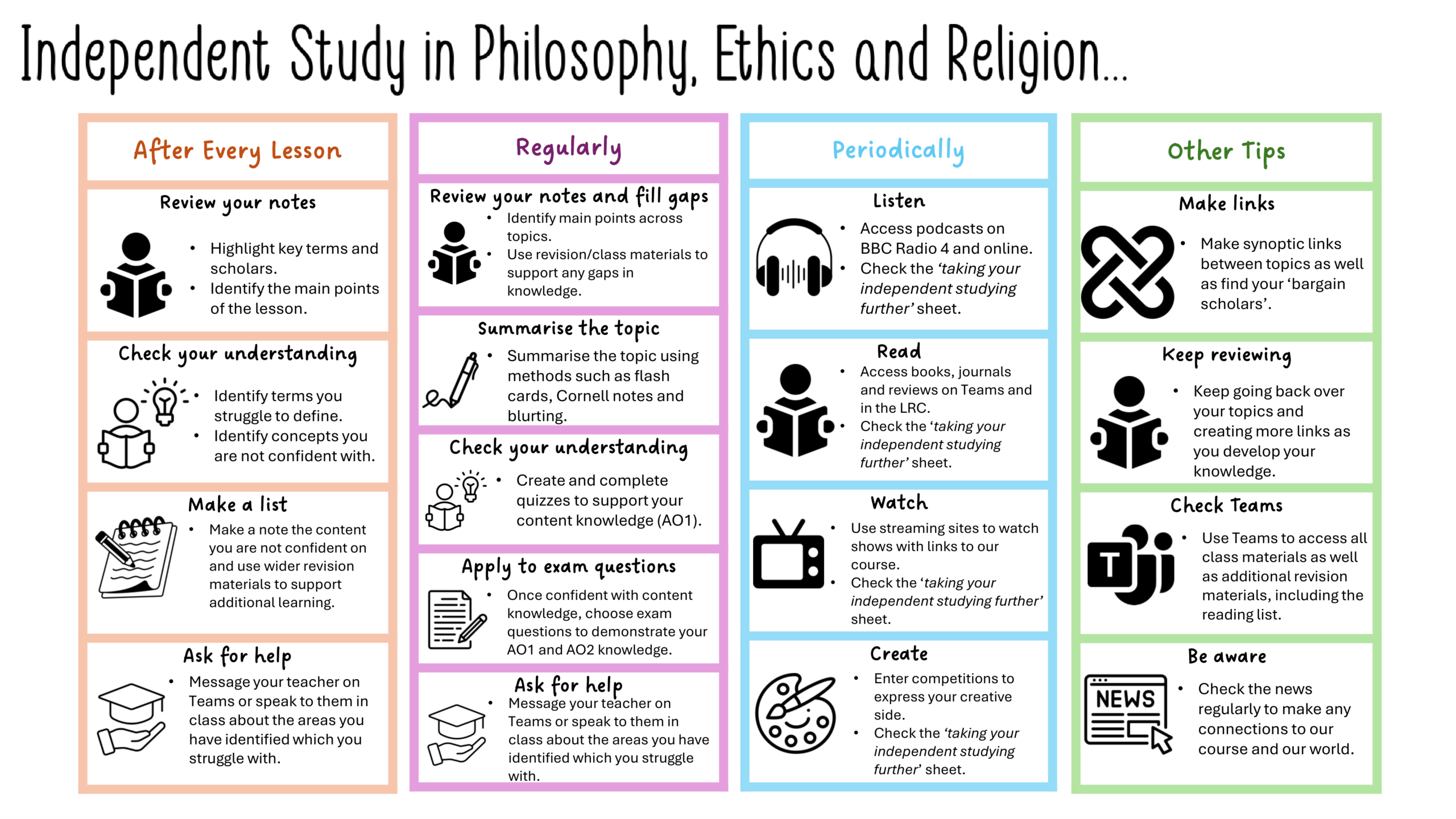
What students do in the classroom is not always enough and we want them to be prepared for their exams. Providing them with structure helps with this and offering tips and advice will start them on this journey of consolidating knowledge. In my classroom I am hinting at their independent learning constantly, whether that is having this four part poster on the wall, attaching it to their home-learning tasks or putting it at the end of all my lessons – they will get the hint eventually! It is constantly reminding them of what they are expected to be doing as a committed and successful A-Level student, as it is suggested that they should be completing up to 20 hours of independent study a week, which for some may be a shock. Students do sometimes forget that they need to be doing ‘stuff’ to help them consolidate their learning. Many fall foul to the ideas of just revising content and forgetting about skill, or just revise a mark scheme in the hope that this will help with all exam questions on topic X.

Using a skills matrix

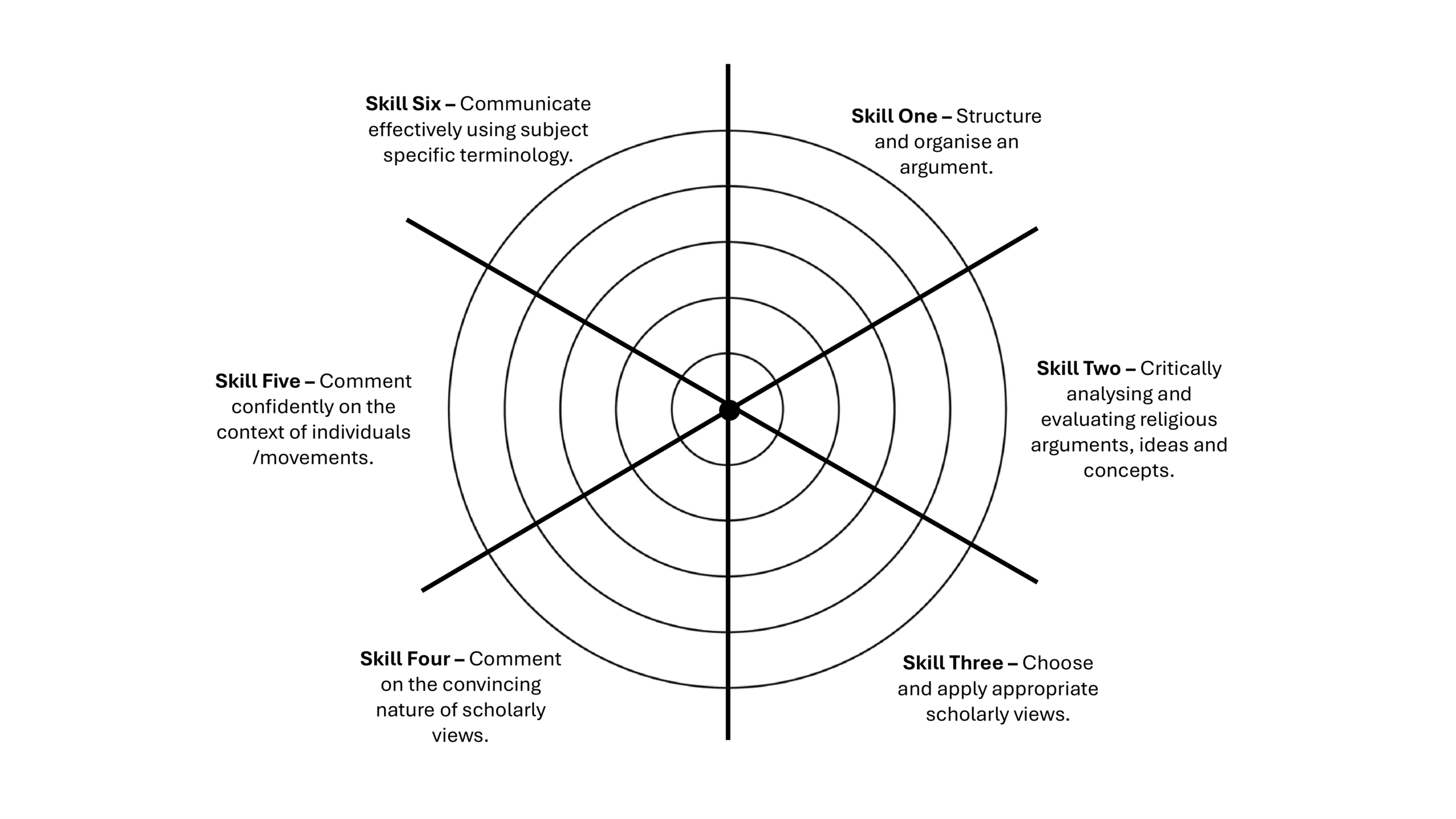
I encourage my students to complete a skills matrix, alongside their content revision, where they are showing the progression of their skill development and can see how knowledge and exam skills work hand in hand. Visually they can see the areas that they are progressing in and the areas where they might need to work a little more. This can help inform their independent learning tasks for the week ahead.

Don’t give too much freedom

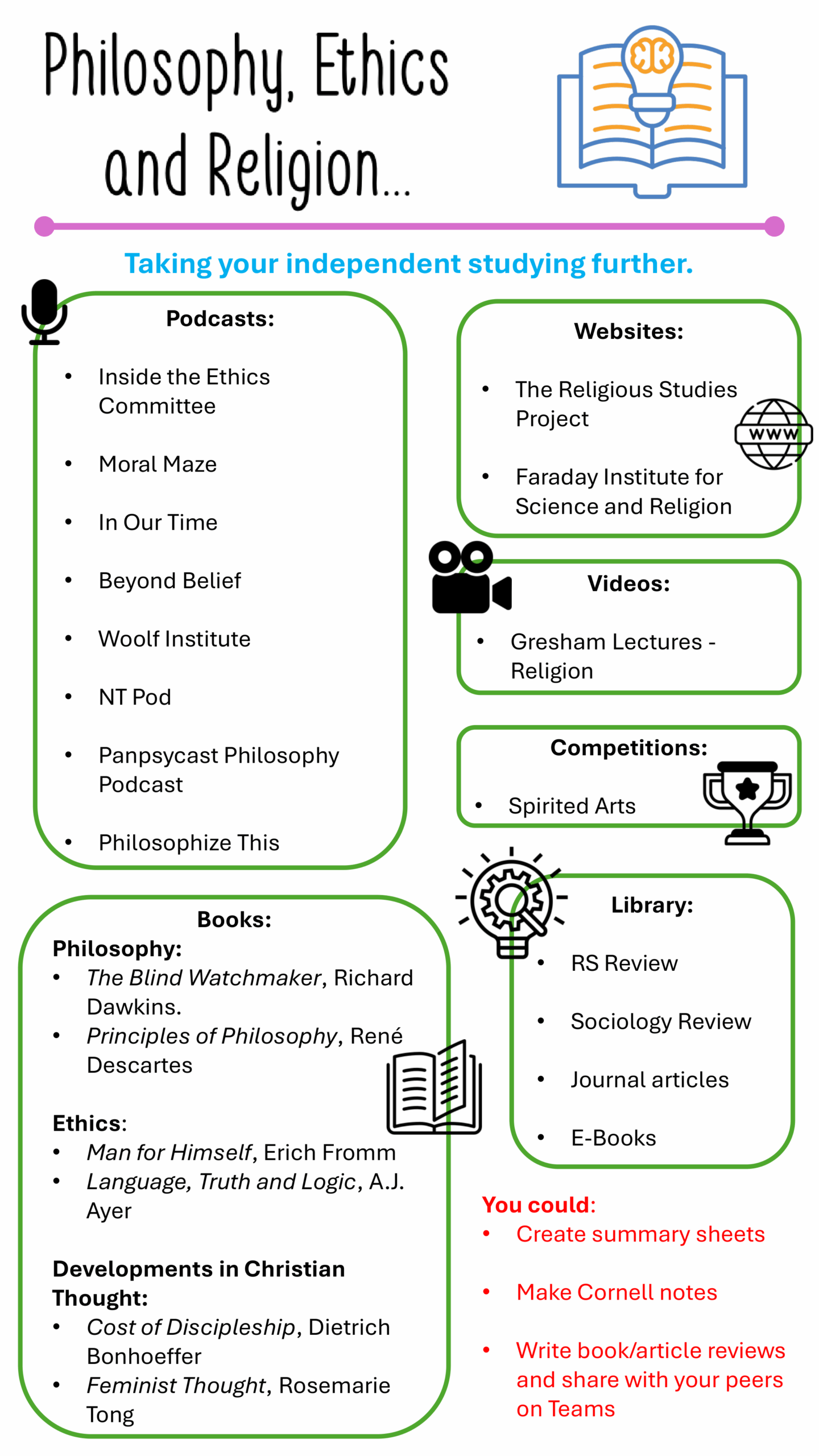
I have found that giving students too much freedom can result in lacklustre work being completed. Instead, providing them with options to make their own choices seems to work the best. For my A-Level learners I want them to be inquisitive and inspired by not only their specification content but wider knowledge, so I make them go find out more. By providing examples of podcasts, books, videos, students can make their choices and find out more. For us, it is a win, win scenario as the students feel they have autonomy in their learning, but we are still offering a level of control over what they are doing whilst enabling them to ignite a possible passion.

There is nothing groundbreaking here, but sometimes a reset in how we approach our pedagogy can be helpful to us as teachers in our own practices, but also and more importantly to our students. We are supporting them in becoming confident, insightful and independent learners which are pivotal skills for higher education, but also for life in general.


Watching eyes widen, jaws drop and students mouth “Wow!” to one another. I am filled with pride as one of the quietest girls in the year belts out a prayer in Arabic. We are standing in the prayer hall of a nearby mosque, and she has volunteered to share this part of her lived faith during our visit.

“Bob, it’s Bob! Bob we have a question…”
Break duty is made all the more enjoyable as I watch 13–14-year-old students chase “Bob the Humanist” around the school grounds as if he is a major celebrity; their interest has bubbled over following his talk about what being a humanist means to him.

Raising the Profile of RE: Starting from Scratch

As I stepped into my current leadership role I was faced with secondary schools which had no discrete Religious Education (RE) lessons and no specialist teachers. Whilst building the subject from the ground up, it soon became apparent that there was some heavy lifting to do in order to raise the profile of the subject with all stakeholders. To impart, within our school communities, an understanding of the value of good quality RE, my approach has been multifaceted, however, something that has proved very beneficial in this campaign has been the inclusion of encounters with the lived experience of different worldviews.

The Ofsted Deep and Meaningful Report (2024) states: ‘Through the RE curriculum, pupils should build knowledge of the religious and non-religious traditions that have shaped the world…this knowledge includes…the diverse lived experiences of individuals who are part of living traditions…high-quality RE curriculums should accurately portray the diversity and complexity of religion and non-religion.’

One Trust, Many Contexts: Responding to Demographic Diversity

Although many of our trust schools are within the same local authority it became clear that the student experience within our RE lessons was very different due to the individual demographics of our sites. For instance, one school has a very rich cultural diversity, with fifty-two different first languages spoken, 48% of the student population having English as an additional language (EAL) and 21% declaring their worldview as non-religious. Whereas, another site has 7% of its student population denoted as EAL and 54% declaring their worldview as non-religious. During lesson observations this contrast was often readily apparent, with some students immersed into a classroom dialogue involving a variety of lived experiences, whilst others resembled an echo chamber in which only the teacher could try to utilise classroom resources to depict a range of worldviews. Having the privileged position of being able to see RE lessons across this range of settings made it clear to me that engaging with the lived experiences of those outside our individual school communities was going to be a vital part of the curriculum I was building.

From Virtual Panels to Real-World Encounters

So just as we were emerging from the pandemic and putting “bubble teaching” behind us, I harnessed everyone’s newfound skills for video calls and organised our first encounter with visiting speakers. The format was a worldviews panel that was, due to Covid restrictions, delivered virtually to students across several schools simultaneously. There were some real positives to come out of this event and student feedback indicated that they enjoyed interacting with a diverse group of people. However, it became clear that to make a real success of this, face to face encounters were going to be preferred and students wanted to hear voices from their own local community (the virtual format had meant the speakers had represented communities from up and down the country).

Since this we have worked hard as a team to build an entitlement curriculum in which all students are given the opportunity to visit local places of worship and engage with talks from visiting speakers. This has been bolstered by a supportive CEO who ensured curriculum time and school budgets would enable us to enact our plans. At present all Year 7 and 8 students are given the opportunity to visit a mosque and gurdwara, Year 9 students engage with a worldviews panel and Year 10 students experience a workshop delivered by the National Holocaust Centre.

Helpful hints for embedding lived experience in RE:

  • Dream big (but start small). From the outset we thought carefully about the types of experiences that would deepen student learning beyond the classroom and when they would complement our curriculum. Although we were aiming for equity across all sites we started by rolling out the program at a couple of school sites, enabling us to iron out any issues before running it across all schools.
  • Think local. We have found the experiences to be much more impactful when students see the worldviews reflected from their own communities, whilst being mindful of avoiding echo chambers which meant a trip to the nearest city for some of our schools.
  • It’s all in the planning. Personally, I think this can be easily overlooked once you are bogged down in risk assessments and coach bookings. But taking the time to carefully select appropriate speakers and places to visit can truly be the making of your event. From recceing the place in advance to meeting the speakers ahead of time (it is important they are clear in your aims of the experience). Some examples of preparation I’ve done that paid off in the long-term include:
  1. Established clear boundaries i.e. students will not partake in worship activities during the visit
  2. Meeting with a speaker ahead of time to plan and tailor a session, I could then confidently share with parents/carers the aim of the session and it removed any on the day nerves of not knowing what would be presented
  3. Working with class teachers to build into lesson time an explanation of what students could expect during an upcoming visit and provide an opportunity to plan questions for students to ask to encourage dialogue rather than tumbleweed silence
  4. Sending specific topics ahead of time helps provide structure to the session and affords the worldview panel members thinking time
  5. Creating a contract all visiting speakers sign and adhere to, this has proved useful as a tool to provide constructive feedback for subsequent interactions.
  • Explain why. I’ve found it beneficial to engage with all stakeholders to share an understanding of why an event is happening; making sure that staff, students and parents understand the aims of the event. Be prepared for parent/student pushback and consider how you are going to tackle this. Some strategies we have found beneficial include:
  1. Inviting the senior leadership team to the events so they can see first-hand the benefits
  2. Providing discussion questions for at home
  3. Getting the students to write up their experience of the event and share this on the school websites/social media.
  • Collaborate. Utilise the experience of others around you, for instance, sharing the contact details of effective speakers. We also took the opportunity to collaborate with the Geography department, spending the morning completing our places of worship visit and in the afternoon completing an urban field study. This allowed us to share the coach fare but also allowed students to see that we can share interest and skills across our subject specialisms.

Developing these experiences has afforded us much more than raising the profile of the subject within our school communities. We have seen a deepening of student understanding of different worldviews, the development of their interpersonal skills (considering how to interact with others, how to prepare to visit an unfamiliar space, etc.) but also fostered relationships across communities.

“Flourishing” is fast becoming a popular term in education – but what does it really mean in the context of Religious Education (RE)? And more importantly, are we creating the conditions for children and young people to truly flourish through RE in our schools?

The word flourish comes from the Latin florere – to bloom, blossom, or flower. And just like a garden, flourishing doesn’t happen by accident. It requires the right soil, sunlight, water, nutrients, and care.

So, is your school’s RE a well-tended RHS-quality garden, or a dry, neglected patch of ground?

In some schools, RE is thriving-rich, vibrant, and deeply rooted in the life of the community. In others, it’s struggling for attention, under-resourced and undervalued. This disparity raises serious questions about equity and justice – questions we hope the Curriculum and Assessment Review will address. But beyond policy, there’s a practical question for school leaders:

What does flourishing in RE look like, and how can I nurture it in my school?

To support this, Culham St Gabriel’s has partnered with the National Society for Education to develop a new guidance document based on Flourishing Togethera collective vision for education. It explores how the ten “seeds” of flourishing can grow through high-quality religion and worldviews education, and offers self-evaluation questions for leaders, teachers, and the wider school community.

Although designed with the English context in mind, we hope it will also resonate with colleagues in Wales, Scotland, and Northern Ireland.

What Does Flourishing RE Look Like?

We believe flourishing RE:

  • Is rooted in relationships – fostering genuine understanding and connection.
  • Seeks wisdom – through listening, learning, and critical reflection.
  • Offers hope – promoting peace, dialogue, and positive community relations.
  • Prioritises the margins – amplifying under-represented voices and supporting the vulnerable.
  • Contributes to spiritual flourishing – for all, whether religious or non-religious.
  • Provides knowledge – enriching pupils’ understanding across the curriculum.

Through RE, pupils can discover their voice, understand their place in the world, and grow into confident citizens ready to navigate a complex, multi-religious and multi-secular society.

So… is it time to give your RE some love?

Download the Flourishing Together guidance document here.