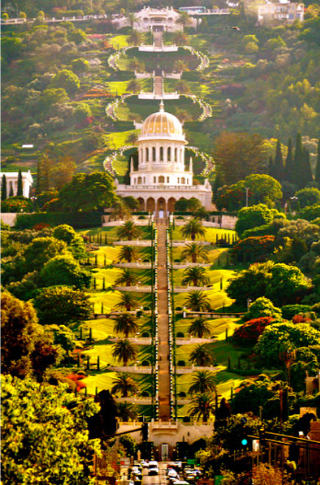
Viewing archives for Bahai

In an attempt to answer some questions on the nature of evil from the point-of-view of the Bahá’i Faith, I have looked to the writings of ‘Abdu’l-Bahá, and Shoghi Effendi, key figures in the Faith.

Perhaps the simplest way to explain the Bahá’i teaching about evil is to compare it to light and dark. Light is a physical reality, whereas darkness is the absence of light; it does not exist as an entity itself. In the same way, the Bahá’i Writings refer to evil as the absence of good:

Evil is non-existent; it is the absence of good; sickness is the loss of health; poverty the lack of riches. When wealth disappears, you are poor; you look within the treasure box but find nothing there. Without knowledge there is ignorance; therefore, ignorance is simply the lack of knowledge. Death is the absence of life. Therefore, on the one hand we have existence; on the other, nonexistence, negation or absence of existence.1

One of the questions asked whether an act of evil can be categorised as both natural and moral – which I understand as asking whether, if we act upon our natural impulses, we can still be judged in a moral way. Emotions such as anger are not ‘evil’ in themselves – we have the ability to feel them for a reason – but how we choose to use them determines whether our actions are ‘evil’ or not.

The answer to this is that desire, which is to ask for something more, is a praiseworthy quality provided that it is used suitably. So, if a man has the desire to acquire science and knowledge, or to become compassionate, generous and just, it is most praiseworthy. If he exercises his anger and wrath against the bloodthirsty tyrants who are like ferocious beasts, it is very praiseworthy; but if he does not use these qualities in a right way, they are blameworthy. … It is the same with all the natural qualities of man… if they be used and displayed in an unlawful way, they become blameworthy. 2

Sometimes people consider natural phenomena – earthquakes, floods and so on – as evil, asking why, if God is good, He would allow such things to happen. ‘Abdu’l-Bahá’s explanation can also be extended to the natural world: these phenomena are not evil in their own right but can cause untold pain and suffering to us. They are ‘evil’ in relation to us, but are not in themselves: if a volcano blows but injures no-one, is it a ‘good’ volcano in comparison to the one which erupts and destroys a village? It is our challenge as humans sharing this planet to increasingly understand natural forces and phenomena and help each other to be safe. So too, perhaps, with the damaging behaviours of some people.

Suffering is both a reminder and a guide. It stimulates us better to adapt ourselves to our environmental conditions, and thus leads the way to self-improvement. In every suffering one can find a meaning and a wisdom. But it is not always easy to find the secret of that wisdom. It is sometimes only when all our suffering has passed that we become aware of its usefulness. What man considers to be evil turns often to be a cause of infinite blessings. 3

One final question I have been asked is whether it is possible to gain true happiness without natural evil. This is a thread which runs throughout religion, and the following passage seems appropriate:

‘’The mind and spirit of man advance when he is tried by suffering. The more the ground is ploughed the better the seed will grow, the better the harvest will be. Just as the plough furrows the earth deeply, purifying it of weeds and thistles, so suffering and tribulation free man from the petty affairs of this worldly life until he arrives at a state of complete detachment. His attitude in this world will be that of divine happiness. Man is, so to speak, unripe: the heat of the fire of suffering will mature him. Look back to the times past and you will find that the greatest men have suffered most.’ 4

Perhaps ultimately, it is how we react to the actions of others, the choices we make and the situations in which we find ourselves that define evil for each of us throughout our lives.

Sources:

1‘Abdu’l-Bahá, Foundations of World Unity, p. 76-79

2‘Abdu’l-Bahá, Some Answered Questions, pp. 250- 251

3 Shoghi Effendi, Unfolding Destiny, p. 434

4 ‘Abdu’l-Bahá, Paris Talks, p. 178


Some classroom ideas

Tasks

Look at these quotes and consider what Baha’is might believe about evil, suffering and human behaviour

  1. ‘Evil is non-existent; it is the absence of good’
  2. ‘If he exercises his anger and wrath against the bloodthirsty tyrants who are like ferocious beasts, it is very praiseworthy;’
  3. ‘Suffering is both a reminder and a guide.’
  4. ‘The mind and spirit of man advance when he is tried by suffering.’


This resource was written by Debbie Tibbey, one of RE:ONLINE’s Email a Believer team. 
© Bahá’í International Community

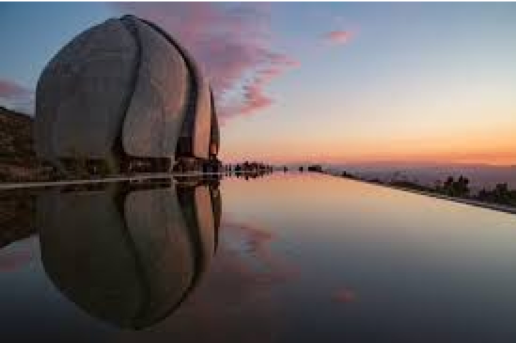
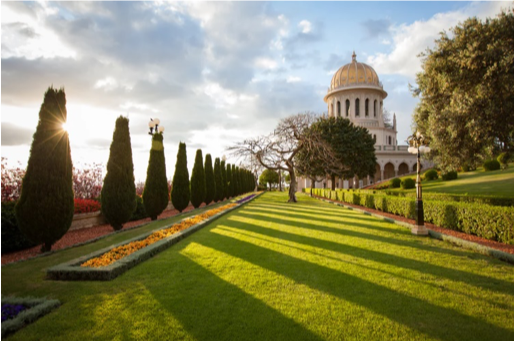
One of the things which continues to amaze me about the digital age is the way we get news from the world over within hours of it happening, and can ‘see’ the world from our computer screens. Without travelling from home, I know what the new House of Worship in Chile looks like, I have a beautiful picture in mind of the terraced gardens of the Shrine of the Báb on Mount Carmel in Haifa, and I could follow events of last year’s International Convention as they happened.

Bahá’í House of Worship, Chile © Bahá’í International Community

The Shrine of the Báb and gardens, Haifa, Israel © Bahá’í International Community

It’s easy to forget that it wasn’t always like this. In 1982, when I was a new adherent of the Bahá’í Faith, news of the British community came through the monthly British Bahá’í Journal; messages from the Universal House of Justice (our world administrative body) came printed on golden-yellow paper, mailed through the letterbox; urgent messages (the passing of a much-loved and respected fellow Bahá’í, for example) came as telegrams to the British National Spiritual Assembly to be included as mail-outs to the Bahá’is of the country or announced at Feasts and gatherings.

We are so much more closely connected these days, and at a time when society feels increasingly fragmented, these connections are a lifeline.

The events currently dominating the Bahá’i networks are centred around the celebrations for the bicentenary of the Birth of the Báb on October 28th this year. The Báb, Divine Educator and Prophet-Herald to Bahá’u’lláh, was born in 1819 in Shiraz, Persia. ‘Báb’ is a title which means ‘Gate’. Whilst calling the peoples of the world to spiritual reformation, The Báb was preparing the way for a new Manifestation of God: Bahá’u’lláh.

The Báb’s story is one of dignity, heroism, and ultimately sacrifice. His short life (He was just 31 when He was excecuted) was characterised by an innate wisdom, sharp perception and such sweetness of character that people were prepared to give their lives to spread His teachings. He was sentenced to death by the Persian authorities who were unsettled by His demand for a high standard of personal and public behaviour, and by the devotion of rapidly growing numbers of His followers. Several thousands of His followers were put to death in the ensuing years, and yet from these beginnings the Bahá’í Faith was ultimately to grow and be carried around the world.

“It was His own mission, the Báb declared, to herald the coming of this promised Manifestation of God. The Báb explained that the new Manifestation would usher in an age of peace and justice that was the hope of every longing heart and the promise of every religion. The Báb instructed His followers to spread this message throughout the country and to prepare people for this long-awaited day.” [1]

A newly-launched website, https://bicentenary.bahai.org/the-bab/  dedicated to celebrating this special Holy day, carries videos, articles and photos, and will be added to over the coming weeks as events happen. The Báb’s story can be read in full detail (including accounts from foreign ambassadors and chroniclers of the time who met Him, and who witnessed His execution.) News from every part of the globe of communities gathering to pray, share food and celebrate together feature alongside artworks inspired by the life of the Báb, His teachings and stories of His followers.

The following prayer is one of many revealed by the Báb:

O Lord! Unto Thee I repair for refuge and toward all Thy signs I set my heart. O Lord! Whether travelling or at home, and in my occupation or in my work, I place my whole trust in Thee.

Grant me then Thy sufficing help so as to make me independent of all things, O Thou Who art unsurpassed in Thy mercy! Bestow upon me my portion, O Lord, as Thou pleasest, and cause me to be satisfied with whatsoever Thou hast ordained for me.

Thine is the absolute authority to command.[2]


1 Photos and Bicentenary Logo all “Copyright © Bahá’í International Community” .

See https://media.bahai.org/ for photos and videos of Bahá’í Holy Places and the world-wide Bahá’í community. “The Bahá’í Media Bank provides photographs for download, intended for non-commercial purposes only. Copyright and terms of use can be found on the Legal Information page.”

2 The Báb, Selections from the Writings of The Báb. Hear this prayer put to music at: https://www.youtube.com/watch?v=1I-QXlILQqQ


Further Reading

RE:ONLINE resource Táhirih -The Pure One (1817 – 1852)  speaks about the Táhirih, the Báb’s first female disciple

RE:ONLINE resource Bahá’i Holy Day in July: The Martyrdom of the Báb

For a comprehensive account of the early history of the Bábi and Bahá’í Faith:

Nabil, The Dawn-Breakers: Nabíl’s Narrative of the Early Days of the Bahá’í Revelation, 

Bahá’i Publishing Trust, 1932 Edition   

https://www.bahai.org/the-bab/life-the-bab

https://www.bahai.org has lots more information

This resource was written by Debbie Tibbey, one of RE:ONLINE’s Email a Believer team. 
 

© Bahá’í International Community

The Bahá’i year, in common with most religions, has certain days which are regarded as Holy days, commemorated or celebrated by the Bahá’i community.

One of these special days falls in July each year, on either 9th or 10th depending on the solstice. On this day Bahá’is commemorate the Martyrdom of The Báb, (which means “the Gate” in Arabic), an event so shocking that were it not independently documented it would seem more legend than true story.

The Báb is regarded by Bahá’is as both a Messenger of God and the Herald of Bahá’u’lláh. Born in Shiraz, Persia, in 1819, His given name was Siyyid ‘Ali- Muhammad. He was a direct descendant of the Prophet Muhammad, and was known for His gentle nature, keen perception and wisdom even from a very young age. In 1844 He declared His mission to begin the spiritual and moral renewal of the peoples of the world, a process which would see the emancipation of women, and unite the peoples of the world. He also taught that another Messenger of God, the fulfilment of the world’s great religions, was soon to appear.

The Báb’s teachings, His call for a return to moral rectitude, His claim that He was a divinely inspired ‘Educator’, and the following which grew around Him, were huge challenges for the clerics and authorities of the time. Eventually, in 1850, a decree was made for His execution. The Báb was arrested and sentenced to death by firing squad. The following account is from Hassan Balyuzi’s book, The Báb: The Herald of the Day of Days[1]:

Sam Khan (Commander of the firing squad) approached the Bab: ‘I profess the Christian Faith and entertain no ill will against you. If your Cause be the Cause of truth, enable me to free myself from the obligation to shed your blood.’ To this the Báb replied: ‘Follow your instructions, and if your intention be sincere, the Almighty is surely able to relieve you from your perplexity.’

The Báb and His disciple were suspended by ropes from a nail in the wall, the head of Mirza Muhammad-‘Ali, Anis, resting on the breast of the Báb. Seven hundred and fifty soldiers were positioned in three files. Roofs of the buildings around teemed with spectators.

Each row of soldiers fired in turn. The smoke from so many rifles clouded the scene. When it lifted the Báb was not there. Only His disciple could be seen, standing under the nail in the wall, smiling and unconcerned. Bullets had only severed the ropes with which they were suspended. Cries rang out from the onlookers: ‘The Siyyid-i-Báb has gone from our sight!’

A frantic search followed. The Báb was found, sitting in the same room where He had been lodged the night before, in conversation with His amanuensis. That conversation had been interrupted earlier in the day. Now it was finished and He told the farrash-bashi to carry out his duty. But the farrash-bashi was terror-stricken and ran away, nor did he ever return to his post. Sam Khan, for his part, told his superiors that he had carried out the task given to him; he would not attempt it a second time. So Aqa Jan Khan-i-Khamsih and his Nasiri regiment replaced the Armenians, and the Báb and His disciple were suspended once again at the same spot. The Nasiri regiment fired. The bodies of the Báb and His disciple were shattered, and their flesh was united.

Further accounts exist from contemporary foreign journalists and officials who witnessed or were told of the event, including one from Sir Justin Shiel, Queen Victoria’s Envoy Extraordinary and Minister Plenipotentiary in Tehran to Lord Palmerston, the British Secretary of State for Foreign Affairs, July 22, 1850.

The remains of the Báb and Anis were retrieved at night by the Báb’s friends and eventually interred on Mount Carmel in Israel, a place of pilgrimage for Bahá’is across the world today.


1 Balyuzi, H.M. (1973). The Báb: The Herald of the Day of Days. Oxford, UK: George Ronald. pp. 154–161. ISBN 0853980489.


Further reading:
Nabíl-i-Zarandí (1932). Shoghi Effendi (Translator), ed. The Dawn-Breakers: Nabíl’s Narrative (Hardcover ed.). Wilmette, Illinois, USA: Bahá’í Publishing Trust. ISBN 0900125225.


See also:
https://bahaikipedia.org/Martyrdom_of_the_Báb


This resource was written by Debbie Tibbey, one of RE:ONLINE’s Email a Believer team.
 

The Bahá’i year, in common with most religions, has certain days which are regarded as Holy days, commemorated or celebrated by the Bahá’i community.

One of these special days falls in July each year, on either 9th or 10th depending on the solstice. On this day Bahá’is commemorate the Martyrdom of The Báb, (which means “the Gate” in Arabic), an event so shocking that were it not independently documented it would seem more legend than true story.

The Báb is regarded by Bahá’is as both a Messenger of God and the Herald of Bahá’u’lláh. Born in Shiraz, Persia, in 1819, His given name was Siyyid ‘Ali- Muhammad. He was a direct descendant of the Prophet Muhammad, and was known for His gentle nature, keen perception and wisdom even from a very young age. In 1844 He declared His mission to begin the spiritual and moral renewal of the peoples of the world, a process which would see the emancipation of women, and unite the peoples of the world. He also taught that another Messenger of God, the fulfilment of the world’s great religions, was soon to appear.

The Báb’s teachings, His call for a return to moral rectitude, His claim that He was a divinely inspired ‘Educator’, and the following which grew around Him, were huge challenges for the clerics and authorities of the time. Eventually, in 1850, a decree was made for His execution. The Báb was arrested and sentenced to death by firing squad. The following account is from Hassan Balyuzi’s book, The Báb: The Herald of the Day of Days[1]:

Sam Khan (Commander of the firing squad) approached the Bab: ‘I profess the Christian Faith and entertain no ill will against you. If your Cause be the Cause of truth, enable me to free myself from the obligation to shed your blood.’ To this the Báb replied: ‘Follow your instructions, and if your intention be sincere, the Almighty is surely able to relieve you from your perplexity.’

The Báb and His disciple were suspended by ropes from a nail in the wall, the head of Mirza Muhammad-‘Ali, Anis, resting on the breast of the Báb. Seven hundred and fifty soldiers were positioned in three files. Roofs of the buildings around teemed with spectators.

Each row of soldiers fired in turn. The smoke from so many rifles clouded the scene. When it lifted the Báb was not there. Only His disciple could be seen, standing under the nail in the wall, smiling and unconcerned. Bullets had only severed the ropes with which they were suspended. Cries rang out from the onlookers: ‘The Siyyid-i-Báb has gone from our sight!’

A frantic search followed. The Báb was found, sitting in the same room where He had been lodged the night before, in conversation with His amanuensis. That conversation had been interrupted earlier in the day. Now it was finished and He told the farrash-bashi to carry out his duty. But the farrash-bashi was terror-stricken and ran away, nor did he ever return to his post. Sam Khan, for his part, told his superiors that he had carried out the task given to him; he would not attempt it a second time. So Aqa Jan Khan-i-Khamsih and his Nasiri regiment replaced the Armenians, and the Báb and His disciple were suspended once again at the same spot. The Nasiri regiment fired. The bodies of the Báb and His disciple were shattered, and their flesh was united.

Further accounts exist from contemporary foreign journalists and officials who witnessed or were told of the event, including one from Sir Justin Shiel, Queen Victoria’s Envoy Extraordinary and Minister Plenipotentiary in Tehran to Lord Palmerston, the British Secretary of State for Foreign Affairs, July 22, 1850.

The remains of the Báb and Anis were retrieved at night by the Báb’s friends and eventually interred on Mount Carmel in Israel, a place of pilgrimage for Bahá’is across the world today.


The Shrine of The Báb,
Haifa, Israel © Bahá’í International Community


1 Balyuzi, H.M. (1973). The Báb: The Herald of the Day of Days. Oxford, UK: George Ronald. pp. 154–161. ISBN 0853980489.


Further reading:
Nabíl-i-Zarandí (1932). Shoghi Effendi (Translator), ed. The Dawn-Breakers: Nabíl’s Narrative (Hardcover ed.). Wilmette, Illinois, USA: Bahá’í Publishing Trust. ISBN 0900125225.


See also:
https://bahaikipedia.org/Martyrdom_of_the_Báb


This resource was written by Debbie Tibbey, one of RE:ONLINE’s Email a Believer team. 

This presentation aims to introduce children at KS2 and children with special needs to the concept of unity, one world and equality in Baha’i beliefs.

18th January 2026

Baha’i and other faiths

This day promotes interfaith understanding by emphasizing factors common to all faiths. It was first introduced among Baha’i communities in the 1950s, and is now celebrated by a wider spread of communities, including the Baha’i, on the third Sunday of January.

21st March 2026

Baha’i

Naw-Ruz is the Baha’i New Year’s Day and coincides with the spring equinox. It is an ancient Persian festival celebrating the ‘New Day’ and it marks the end of the annual nineteen day fast that concludes the old year. Celebrations start at sunset on the day before the festival, often with gatherings for prayer, followed by a festive meal. For this the table is decorated with fruit, cakes, coloured eggs and other treats, as well as symbolic objects such as a holy book and a mirror.

Among the best known customs of Naw-Ruz is the haft-sin — the `seven S’s’. These are seven objects beginning – in Persian – with the letter `S’, namely hyacinths, apples, lilies, silver coins, garlic, vinegar and rue, all decoratively arranged on a table. A great deal of time is spent exchanging visits with friends and relations. The celebrations end on the thirteenth day of Naw-Ruz with a picnic in the country. Lentils that have sprouted are thrown into running water, carrying away the bad luck of the previous year.

Naw-Ruz is observed wherever Iranian culture has penetrated, notably among the Zoroastrians of India and in the emigré Iranian communities around the world. It is one of only two festivals mentioned by Zoroaster in the Avesta, the holy Zoroastrian scriptures written by Zoroaster himself. It is celebrated as a holy day by these two religions: Zoroastrianism and the Baha’i Faith.

This is one of the nine Baha’i holy days on which work should be suspended, and is generally observed with a gathering for prayer and celebration – often combined with a dinner, since the sunset on which Naw-Ruz begins ends the last day of the Baha’i fast. As with all Baha’i holy days, there are few fixed rules for observing Naw-Ruz, although Iranian Baha’is often follow Iranian traditions. Many Baha’is use Naw-Ruz as a day when gifts are given.

At its most basic, Naw-Ruz is a celebration of renewal and the coming of spring, as is common for festivals at this time of year. Some believe that their actions on Naw-Ruz will affect their lives throughout the rest of the coming year. Baha’is see it (and the fast that precedes it) as a time of renewal, meant to focus believers on their spiritual development. It is also a time for physical ‘spring cleaning’, clearing the home of old and unneeded items to make room for items that are new.

21st April – 2nd May 2025

Baha’i

The most important Baha’i festival. It was in these 12 days that Baha’u’llah declared himself as the Promised One prophesied by the Bab. The festival is named after the garden outside Baghdad in which he was staying. The first, ninth and twelfth days are especially significant and are celebrated as holy days, when no work is done. (This is also true of other Baha’i festival dates.) It is during this period that Baha’is elect their local, national and international governing bodies.

24th May 2026

Baha’i

The Bab heralded the arrival of Baha’ullah and was co-founder of the Baha’i faith. He first declared his mission in Persia in 1844. He inaugurated the Baha’i calendar which is numbered from the year of this declaration.

29th May 2026

Baha’i

This day commemorates the death of Baha’u’llah at Bahji, near Acre, in northern Israel in 1892. His shrine there is the holiest place on earth for Baha’is and is the focus towards which all Baha’is face when praying.