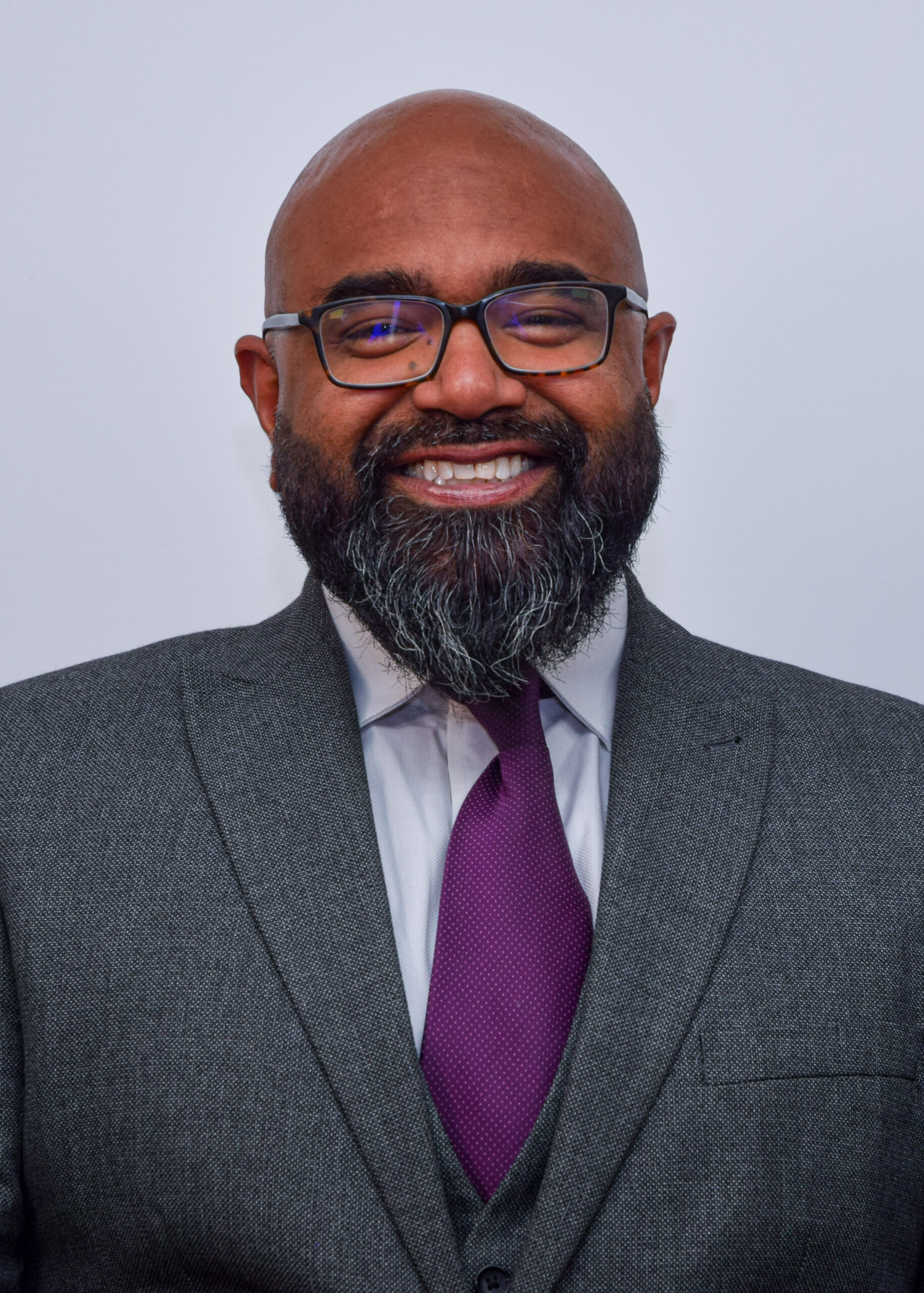
I work at a Pupil Referral Unit (PRU) in Southwest Hertfordshire, collaborating with 15 secondary and 69 primary schools. Our dual focus is on preventative intervention and supporting students who have been permanently excluded from mainstream education, offering them a vital second chance at success.
I have always felt Religious Education (RE) could be a subject area that could bring so much interest and inspiration to my students in the PRU. As a history educator I have actively immersed myself in the local RE community in order to develop specialism in this subject area. I joined the Hertfordshire Standing Advisory Council for Religious Education (SACRE) to offer a unique perspective from the alternative provision sector, while simultaneously forging strong collaborative links with local Heads of RE.
While local networking and my work on SACRE gave me a solid regional overview, I applied for the Culham St Gabriel’s (CSTG) Leadership Programme to gain a broader national perspective and deepen my subject knowledge. Ultimately, I wanted to transition from feeling like an outsider to becoming a confident, informed advocate for the subject.
Discovering the Power of a Religion and Worldviews Approach
The initial phase of the leadership scholarship programme focused heavily on the paradigm shift to a religion and worldviews approach. Guided by my mentor and the excellent e-learning modules on the Culham St Gabriel e-learning website, I began planning a new curriculum using a trial class. As a History teacher, I love bringing the past to life, and as a Personal, Social, Health Education (PSHE) teacher, I thrive on connecting topics to real-world issues. A Religion and Worldviews approach perfectly marries these two passions.
A religion and worldviews approach offered me the professional freedom to teach in a way that truly aligns with my instructional style. More importantly, it provided a powerful hook to re-engage the often disillusioned and vulnerable students I work with, making the subject matter deeply personal and relevant to them.
Bringing Religion and Worldviews to Life Through Malcolm X
In my history classes, Malcolm X was always a figure who captivated students; he was charismatic, flawed, deeply inspirational, and naturally polarising. By blending historical inquiry with RE, I created a scheme of work exploring Malcolm X’s complex spiritual journey against the backdrop of the turbulent American Civil Rights movement.
Testing the Approach: Staff Engagement and Professional Learning
Before introducing the resources to students, I trialled them with staff during CPD. I wanted both teaching and non-teaching staff to appreciate the vital role of religion in modern society and to experience a religion and worldviews approach first-hand.
I admit I was apprehensive; I worried a 1-hour-and-45-minute session on religion might face a room of unenthusiastic faces. I couldn’t have been more wrong. The staff were utterly spellbound by the narrative. Questions poured in, and we actually ran out of time! In 21 years of delivering CPD, I have never experienced such an overwhelming wave of positive emails and hallway conversations in the days that followed.
When Students Don’t Want the Lesson to End
Armed with staff approval, the next step was the classroom. I introduced Malcolm X to a group of students who had never heard of him. In doing so, I accidentally created a wonderful problem for myself: our lessons are strictly 40 minutes long, but when the bell rang, the students refused to move. They actively demanded that we skip their next lesson so they could find out what happened next!
I am currently mapping out our Key Stage 3 and 4 curricula alongside other non-specialists in my department, collaboratively planning and upskilling them to deliver these lessons. Looking ahead, we are researching how to interweave broader humanities themes; such as geography, sociology, and politics to create a truly multidisciplinary religion and worldviews curriculum.
What Has Worked in Alternative Provision
For students in Alternative Provision I have found the ideas below to be useful
- Engage through relevance: A religion and worldviews approach connects with students’ lived experiences and supports re-engagement.
- Use powerful narratives: Story-led enquiries, such as Malcolm X, draw students in through character and real-world context.
- Stay flexible: Adapting content and pedagogy helps meet diverse needs in alternative provision.
- Think across subjects: Linking RE with history, PSHE and humanities deepens understanding and relevance.
- Build staff confidence: CPD and collaboration are vital where non-specialists teach RE.
- Share the perspective: Alternative provision offers valuable insights into inclusive and innovative RE.
Becoming a Leader of RE
While I have held leadership roles for some time, this first year of the programme has helped me embrace my identity specifically as a leader of RE. It has been a powerful reminder that no matter how experienced you are, true leadership requires continuous learning and daily experimentation. Moving forward, the network of peers I have met on this programme; with whom I regularly collaborate, debate, and share resources—will continue to be a vital sounding board, driving my practice forward.
About
Nish Sabur is the Centre Lead for Humanities and Personal Development at Chessbrook ESC in Watford. A passionate advocate for inclusive, high-quality education, Nish sits on the Hertfordshire SACRE, where he expertly advises schools on how to deliver meaningful Religious Education (RE) within alternative provision (AP) and Pupil Referral Unit (PRU) settings. Nish has completed Year 1 of the CSTG Leadership Scholarship Programme and next year is working on an alternative provision project with CSTG.