Religious Education (RE) is often presented as a subject that promotes understanding, yet for many Muslim pupils and teachers it can also be a space where misunderstanding is reproduced. Too often, Islam is presented through narrow narratives, cultural assumptions and deficit-based perspectives that fail to reflect the diversity of Muslim lived experience.
A classroom memory
I remember one lesson from my own schooling that I still return to when I think about Religious Education. During an RE lesson, a discussion about Muslim women and dress was framed around the idea that they suffered from vitamin D deficiency because they were “forced” to cover. I remember the discomfort in the room, the quick glances from classmates, and the silent expectation that we should not interrupt the lesson. What stayed with me was not only the comment itself, but the atmosphere that followed. The message felt clear: do not challenge, do not question, and do not disrupt the planned learning.
Visible but unheard
I experienced a strong sense of both visibility and invisibility. I was visible as one of the Muslim girls in the room, yet invisible in terms of whose voice or lived experience was valued. I left the lesson with more questions about why we study RE and who it was actually for. Was it simply about absorbing information and repeating it in assessments, or was it intended to develop deeper understanding, critical thinking and empathy?
From pupil to teacher
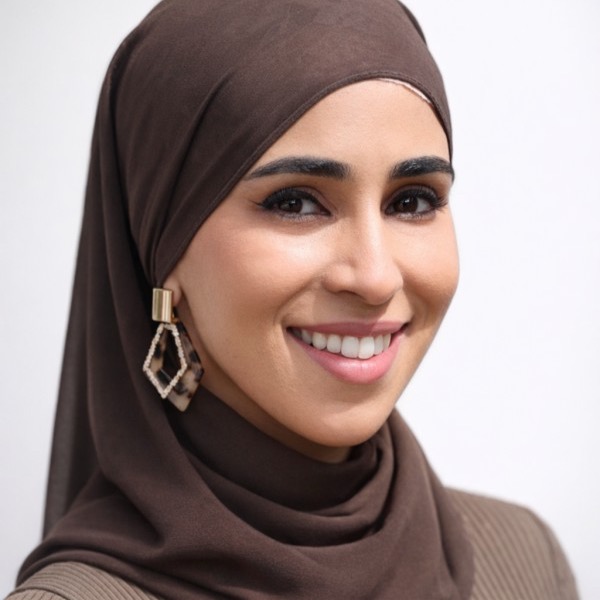
As a Moroccan Muslim RE teacher and curriculum leader, I have experienced Religious Education both as a pupil and as a professional. This dual perspective has shaped my understanding of the power RE holds: it can either deepen understanding and belonging, or unintentionally perpetuate narrow and misleading representations.
Looking back, I do not think this experience was unique to my classroom.
Missing stories in the curriculum
Too often, Islam is presented through simplified narratives that overlook the diversity, complexity and lived realities of Muslim communities. Pupils can leave lessons with a collection of facts about beliefs and practices, yet little understanding of the people behind them. When this happens, Religious Education risks reinforcing misconceptions rather than challenging them.
This experience also felt disconnected from the strong, articulate and confident Muslim identities I had grown up with. The women in my family and community were outspoken, respected and actively engaged in faith, education and public life. In my own country, Morocco, the legacy of scholars such as Fatima al-Fihri, who founded the University of Al-Qarawiyyin, widely recognised as one of the world’s oldest universities, reflects a long-standing tradition of women’s leadership in knowledge and learning. These narratives shaped my understanding of Islam, yet they were largely absent from my classroom experience.
Years later, as a primary teacher and subject leader, I often return to these contrasts. They continue to shape my belief that Religious Education must move beyond surface-level knowledge and create space for dialogue, reflection and belonging. This is particularly important when teaching about Islam, where narrow representations and limited cultural perspectives can unintentionally reinforce stereotypes. Too often, pupils encounter a single, simplified narrative that overlooks the global diversity of Muslim communities and the rich contributions of African and North African scholars, leaders and traditions.
The title of this blog, From Silence to Voice, is inspired both by my own journey and by the story of Bilal. Bilal, an African companion of the Prophet Muhammad, is remembered not only for his faith and resilience but for his powerful voice. As the first mueddhin (muezzin), his call to prayer symbolised dignity, representation and the recognition of diverse voices within the early Muslim community. His story challenges the idea that Islam can be understood through one culture or perspective. It reminds us that diversity has always been at the heart of the Muslim world.
Whose knowledge counts?
We should also ask difficult questions about whose knowledge is centred within our curriculum.
- Which voices are presented as authoritative?
- Which communities are treated as the norm, and which are positioned as the ‘other’?
When African, North African and diverse Muslim voices are absent from the curriculum, pupils receive an incomplete picture of both Islam and history. Representation is not an optional addition to curriculum design; it is fundamental to curriculum accuracy.
The contrast between these experiences is not simply personal; it reflects wider challenges within RE today. Despite significant developments in the subject, including the growing move towards a Religion and Worldviews approach, many pupils continue to encounter narrow or superficial representations of religious traditions. In the case of Islam, this can result in a limited understanding that does not reflect the diversity of Muslim identities, histories and lived experiences.
Recent national reports have highlighted similar concerns. The Ofsted subject report Deep and Meaningful? emphasises that in many schools, learning remains fragmented and lacks depth. Pupils may learn isolated facts but do not develop a coherent or meaningful understanding. This raises important questions about what it means to know and understand a religion or worldview. Is it enough to recall practices and beliefs, or should RE support pupils in engaging critically with diversity, identity and complexity?
My experience highlights an important challenge for Religious Education. There is no single Muslim experience. Islam is lived and understood in different ways across cultures, communities and individuals. A Religion and Worldviews approach encourages us to move beyond presenting religions as fixed systems of beliefs and instead explore how people interpret, practise and experience their faith in diverse ways.
When pupils encounter only one version of Islam, they are not learning about Islam in its complexity; they are learning a simplified construction of it.
So what does it look like to move beyond this in the classroom? Read part 2 for more…
About
Khadija Mahir is the Religious Education Lead at Wessex Gardens Primary School in London. She is passionate about curriculum design, worldviews and creating engaging, ambitious Religious Education that enables all pupils to think deeply about religion and belief. Khadija is a member of Barnet SACRE and the Ann Taves writing team for the Barnet Agreed Syllabus. She has just started Year 2 of the Leadership Scholarship Programme.