
SEND Provision: Then and Now
Many teachers will remember a time when supporting students with Special Educational Needs and Disabilities (SEND) often meant producing multiple versions of every task, printing worksheets on different coloured paper and trying to cater for every perceived learning style. Some students were given heavily scaffolded, simplified activities that removed challenge in the name of support.
I began teaching in 2017 and caught the tail end of this approach. Although coloured paper and differentiated worksheets were still common, classroom practice was beginning to shift.
With the publication of the Department for Education’s Every Child Achieving and Thriving and SEND Reform: Putting Children and Young People First earlier this year, discussions around effective SEND provision have become more important than ever. The white paper states that “Children with special educational needs and disabilities (SEND) are not succeeding as they should, with too many children not stretched to achieve all they can.”[1] This reinforces my belief that high-quality adaptive teaching, rather than lowering expectations, has the greatest impact.
Here are some practical strategies that have transformed my own RE classroom.
The Mission
My journey began last year when I taught a class of just sixteen students, half of whom had Education, Health and Care Plans (EHCPs). Many struggled to access the rigour of the curriculum, so I worked closely with our SEND team to understand each student as both a learner and an individual.
Rather than creating different tasks for different students, I made small adaptations that enabled everyone to access the same ambitious curriculum. A year later, the difference has been remarkable. These students now enjoy RE, work more independently, understand expectations and produce coherent extended writing. One lesson recently culminated in an academic debate filled with thoughtful reasoning and well-developed arguments—a moment that confirmed the impact of these changes.
Five Practical Strategies
1. Clarity, Consistency and Passion
Be consistent and become a “broken record”. From lesson one, establish clear expectations for behaviour, presentation and effort. Avoid lowering expectations simply because a student has an additional need. Instead, communicate your belief that every student is capable of success.
Take time to know your students well and build positive relationships. Show genuine enthusiasm for your subject—students often respond to a teacher’s passion. When learners know that you believe in them, they begin to believe in themselves.
2. Make the Most of a Visualiser
A visualiser has been one of the most powerful tools in my classroom, benefiting all learners, not only those with SEND.
It allows me to model exactly what success looks like, demonstrate presentation, construct paragraphs together and guide extended writing using an “I do, we do, you do” approach. Students can see every step of the thinking process, making complex tasks much more accessible.
Keeping a dedicated teacher exercise book under the visualiser also means previous models can easily be revisited whenever students need a reminder.
3. Prioritise Reading
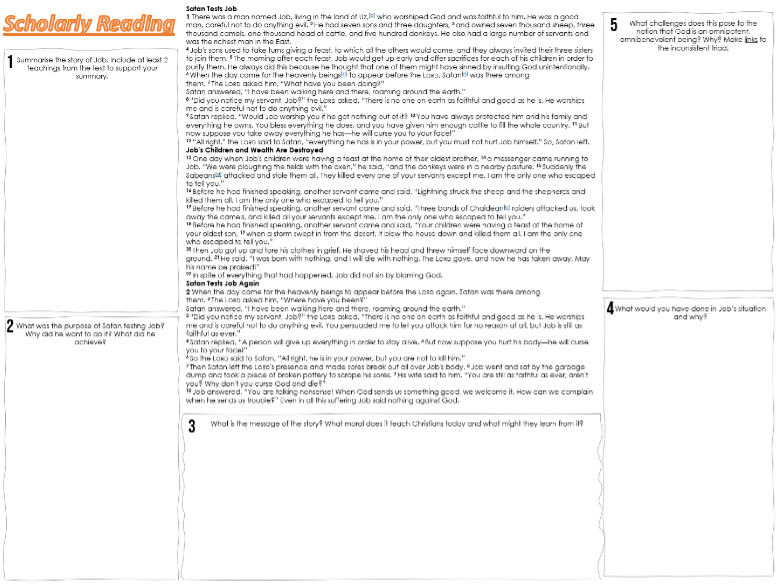
Reading plays a central role in my lessons. Sometimes I adapt the language or formatting of texts to improve accessibility by using larger fonts, wider spacing and clearer layouts.
More importantly, reading is always active. Students might summarise each paragraph using “stop and jot”, complete graphic organisers or annotate key vocabulary and ideas. Throughout reading I regularly cold call to check that students are following the text, can pronounce Tier 3 (specialised and uncommon ) vocabulary accurately, and understand unfamiliar language.
These strategies improve both comprehension and confidence while ensuring students engage meaningfully with challenging texts.

4. Use Images to Spark Thinking
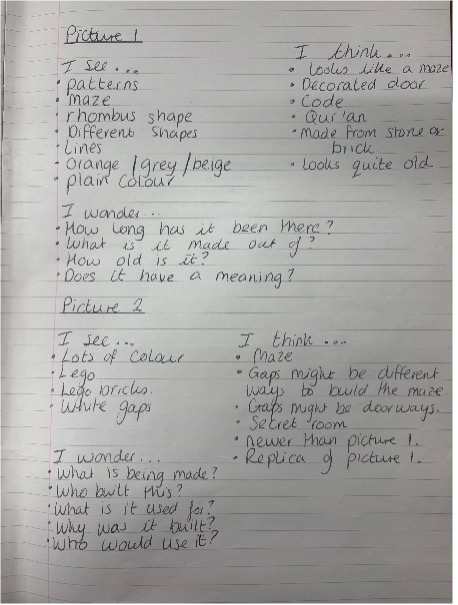
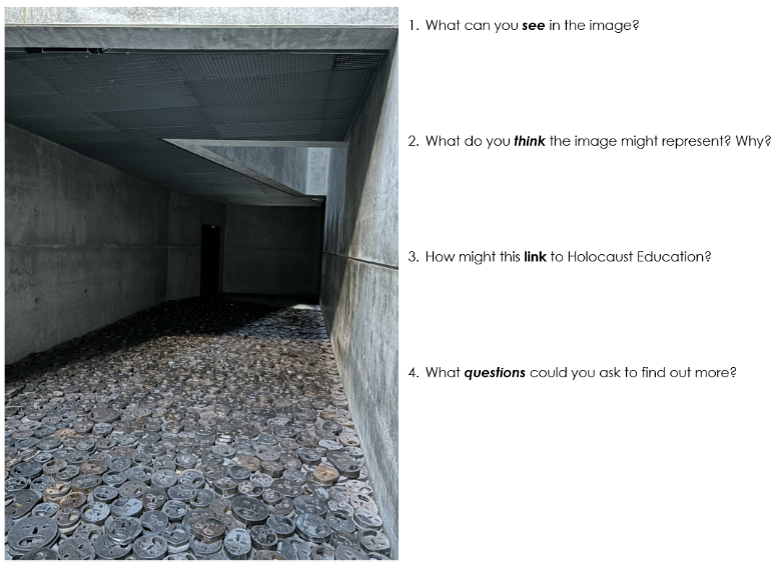
Images are a powerful way of developing observation, inference and oracy skills. They provide an accessible starting point for every learner while still offering significant challenge.
I regularly use images as lesson hooks by asking three simple questions:
- What can you see?
- What do you think is happening?
- What do you wonder?
The first question enables everyone to contribute, while the second and third encourage deeper thinking, inference and curiosity. This structure ensures all students participate while naturally stretching higher-order thinking.
5. Scaffold Towards Independence
Perhaps the biggest change in my own teaching has been rethinking scaffolding.
Effective scaffolding should gradually build independence rather than create dependence. It can be tempting to intervene too quickly when students struggle, particularly those with SEND, but too much support removes the productive struggle that leads to genuine learning.
My aim is always to help students self-scaffold first by planning, problem-solving and reviewing their own work. If additional support is needed, I move carefully through increasing levels of guidance.
I begin with prompts such as, “What do you need to do first?” If students still need support, I offer clues in the form of carefully worded questions. Next comes modelling, where I demonstrate part of the process before asking students to continue independently. Providing the answer outright should remain a last resort because it removes opportunities for independent thinking.
This approach closely reflects the Education Endowment Foundation’s scaffolding pyramid[2], which emphasises gradually reducing teacher support as pupils become increasingly independent.
Final Thoughts
Supporting learners with SEND does not require endless differentiated worksheets or reducing the level of challenge. Instead, it requires excellent teaching: strong relationships, clear routines, explicit modelling, purposeful reading, carefully chosen scaffolds and consistently high expectations.
The small adaptations described here have transformed the experience of one of the most challenging classes I have taught, without compromising the ambition of the curriculum. Every student deserves access to rich discussion, challenging texts and meaningful thinking, and with thoughtful adaptive teaching, they are capable of far more than we sometimes expect.
As the Education Endowment Foundation reminds us:
“It is tempting to talk about the challenge of SEND as a specific and distinct issue. Yet the evidence tells us that teachers should instead prioritise familiar but powerful strategies to support their pupils with SEND.”[3]
By focusing on these familiar, evidence-informed approaches, we can ensure that all students are supported, challenged and able to thrive.
[1] Every child achieving and thriving – GOV.UK
[2] What goes up, must come down: Promoting pupil independence… | EEF
[3] Special Educational Needs in Mainstream Schools | EEF
About
Jenni Rawlinson is the Faculty Leader for RE and Communication Lead at Wolsingham School in County Durham. She is currently a member of the National Association of Teachers of Religious Education (NATRE) Executive and serves on the Durham SACRE. Jenni is a passionate RE lead who has presented at national conferences and leads a NATRE local group.