Religious Imaginations is a religious literacy project of the LSE Faith Centre, kindly supported by Culham St Gabriel’s Trust.
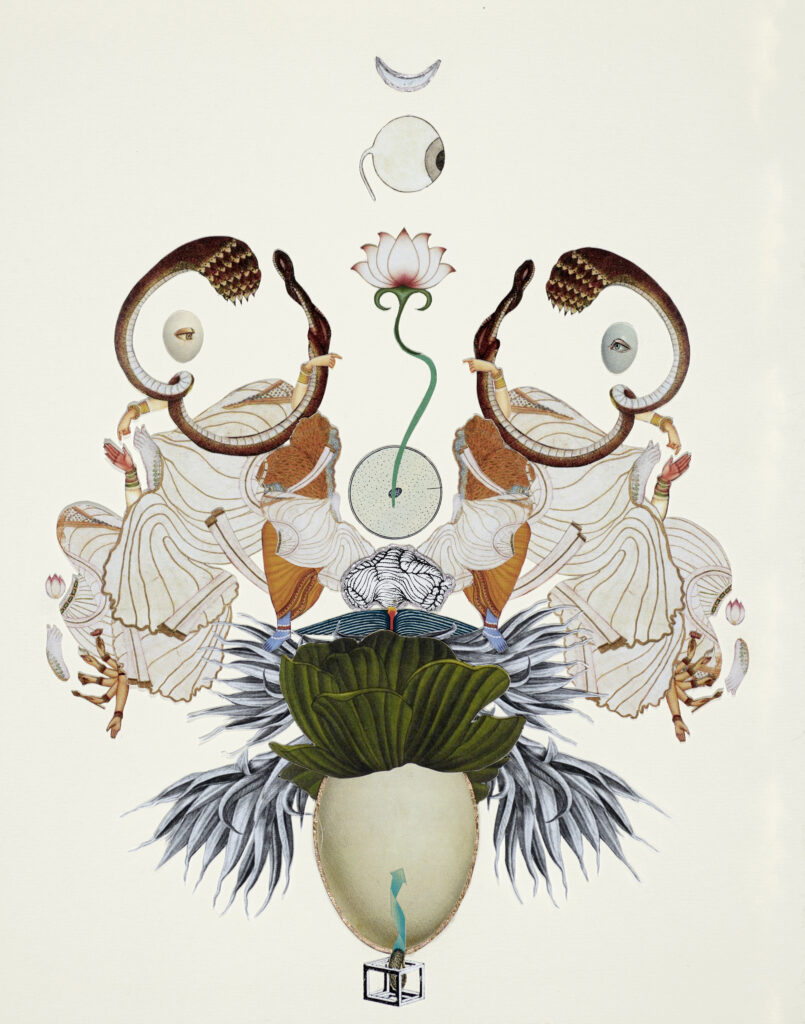
Religions are imaginative frameworks that shape how believers interact with the world, in patterns that are recognisable but not uniform. In these films, the focus is on a key concept within the six featured religious imaginaries, to build understanding of both the unity and the diversity within the world faith traditions.
It is impossible to encapsulate the beliefs and practices of millions of people in a short film, religions traditions are diverse, however, it is hoped those from these faith backgrounds will recognise their expression of faith as fitting within the framework set out.
These films are offered as a resource for use by students, companies, and public service departments as a starting point for developing religious literacy skills. You can view the films here and see a sample film below.
Questions for teachers:
How do the concepts explored in these films influence the lived experience of the religious communities they belong to?
In what ways can these films be used to explore differences both within religions and between them?
What makes video especially effective for exploring religious imaginations compared to text?
Whose worldviews
Resource Spotlight
Whose worldviews is a free resource for you to use with your pupils created by Stephen Pett from RE Today. It is best suited for use with secondary pupils but could be used by pupils age 9-11 in the primary classroom.
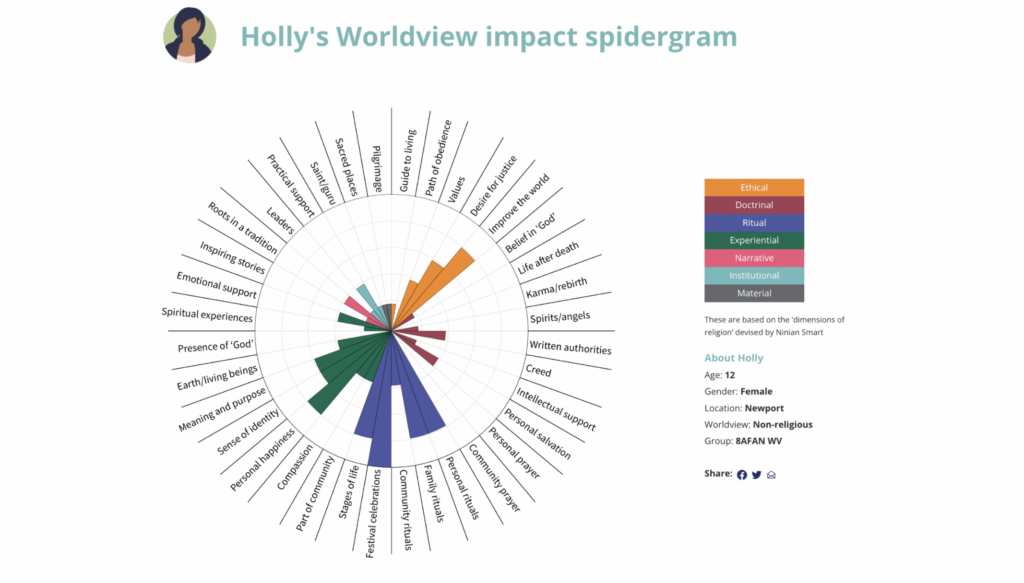
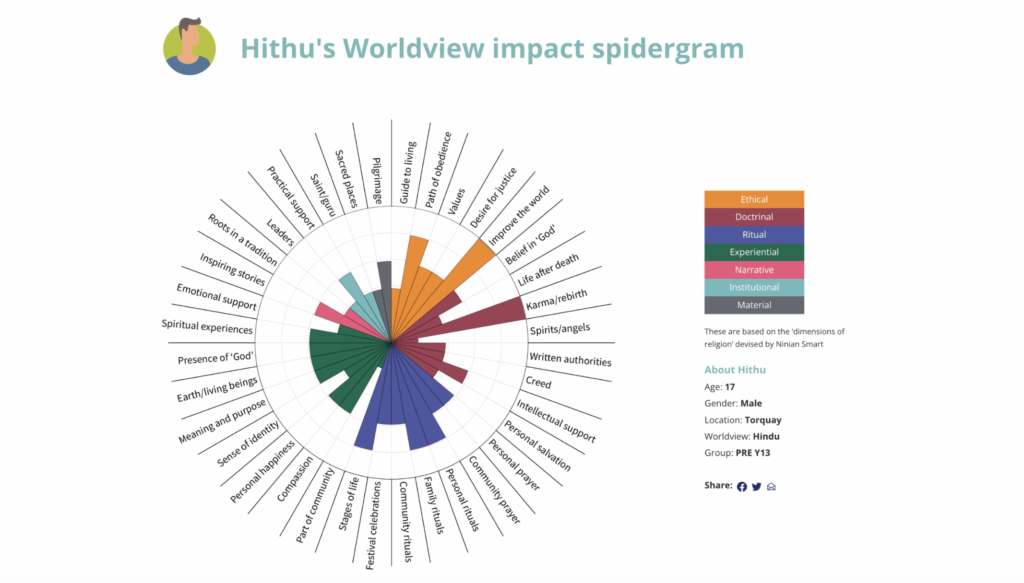
School pupils (and anyone else!) can fill in their responses to questions about their idea of God, and the impact their worldviews have in their lives, and have their responses turned instantly into a graphic representation – a snowflake or a spidergram. These can then be compared across a group or a cohort, sorted according to age, location, religious or non-religious worldview. Teachers can set up a group to enable pupils in their classrooms to see visual representation of their ideas about God and how far ideas of religion have an impact on their personal worldview.
Building on research in psychology from Johnson, Sharp et al, and testing the famous theory of dimensions of religion from Ninian Smart, this website gives visual presentations of data from your own classroom, to compare with others around the world. You can find lots more on using the snowflake and the spidergram in the secondary classroom from RE Today.
Please note that this is a public website and take care with any names/labels that identify your pupils too easily.
Have a look at these examples:
Inclusive Judaism
Inclusive Judaism
The Inclusive Judaism project began in collaboration with Culham St Gabriel’s back in 2020. The goal? To ensure educators teach Judaism in an authentic, diverse, and inclusive way. It is common for students to see Jewish people through a singular lens: Traditional, modestly dressed, and white-presenting. However, this idea only reflects one part of the over 300,000 British Jewish people today.
To address these gaps in Jewish representation, The Jewish Museum London have developed two key resources: The Inclusive Judaism Image Library and Judaism through a Jewish Lens Teacher CPDs. The Image Library is a contemporary collection of free images depicting Jewish life in the UK. Each photo is accompanied by contextual information around the objects and people represented. Our Teacher CPDs support and guide RE teachers on best Jewish pedagogical practices. They are delivered in-person or online.
As you read and watch this resource spotlight you might like to consider;
How far does my current teaching of Judaism move beyond a single or stereotypical representation, and what might pupils be missing as a result?
In what ways could using contemporary images and contextual information (such as those in the Image Library) deepen pupils’ understanding of lived Jewish experience in the UK?
How might I develop my own subject knowledge and pedagogical approach to teaching Judaism more authentically and inclusively, for example through CPD or engagement with Jewish perspectives?
Both resources were created to aid and empower teachers in the classroom. To book an Inclusive Judaism training CPD, reach out: learning@jewishmuseum.org.uk. To start exploring our Inclusive Judaism Image library click here!
Resource Spotlight: Inter Faith Focus Week
Resource Spotlight: Resources from the Faith and Belief Forum
The Faith and Belief Forum together with their RE partners have produced and signposted a number of excellent resources suitable for Inter Faith week and beyond. The team have produced four pupil facing PowerPoints with teacher prompts in the notes; for 4-7 year olds, for 7-11year olds, 11-14 year olds and 14-18 year olds. Each PowerPoint unpacks the Inter Faith week 2025 theme of Community: Together we Serve in four sections
What community is
How to build community
Service and equality
Sharing in community
The PowerPoints are replete with discussions, activities and films to share.
The Faith and Belief Forum produce a whole set of excellent resources that are useful for use outside of Interfaith week. You might want to look at
Telling Powerful Stories Through Film: Ten TrueTube Films
Resource Spotlight: Telling Powerful Stories Through Film: Ten TrueTube Films
CTVC Ltd is an award-winning independent media company that makes programmes for TV, Radio and Digital platforms.
What makes this of interest to RE teachers is that CTVC is first and foremost a charity, set up by the late Lord J Arthur Rank in 1965 with a remit to produce religious, ethical and moral content. Lord Rank was a wealthy industrialist and film mogul (remember the guy banging a big gong at the beginning of old films? That was Rank Films), but he was also a devout Methodist and passionate about the power of film to educate an audience about religion.
So – for example – we have produced seven series of Pilgrimage for BBC Two (with an eighth coming up Easter 2026); we have made dozens of short films for Religious Studies (like this one) for BBC Bitesize; documentaries about religious issues (like this one) for BBC Radio; and we have our very own podcast site called Things Unseen for people who have a faith, or just feel intrigued by the spiritual dimension to life.
Watch this short film, which shows the range of content we make.
Think about…
How you could use our films to help you explain a variety of worldviews in your lessons?
How you could use our films to encourage your pupils to share their own stories?
What films you would like us to make? (we’re always looking for ideas!)
Lord Rank’s vision for education is most obviously continued by TrueTube – a website that provides free short films for schools. All of the films are about values in some way or another, so they get used in assemblies, form times, PSHE, Citizenship and – yes – Religious Education. We have a short film about how to use the TrueTube website.
The strap-line for TrueTube is “short films, big stories” – and storytelling is at the heart of what we do. It might be a story we’ve made up, or a religious story that we’ve given a new spin, or a story that someone tells us about their own real-life experiences.
Here’s a selection of the short films we’ve produced…
The Demon’s Head – Nominated for a Children’s BAFTA and shortlisted for a Learning on Screen Award
The story of the goddesses Durga and Kali, and their defeat of the demon Mahishashura – a gory tale that is associated with the Hindu festival of Navaratri.
This film came out of a conversation between members of the TrueTube team about how our different families and cultures usually shape what we grow up to believe. A baby is born – what lies ahead of her? What are the different lives she might lead? It’s a good film to show at the beginning of Year 7, right at the start of a course in Religious Education, to make the point that we don’t always choose our beliefs and so we should be open to finding out about other people’s.
The TrueTube cameras visited a Gurdwara on the day of Vaisakhi to see what happens there, and to listen to the locals telling us in their own words about the festival and what it means to them. This includes the story of Guru Gobind Singh Ji’s formation of Khalsa, told with simple narration and some beautiful pictures.
Because CTVC Ltd makes the Pilgrimage TV series for the BBC, they kindly allowed us to take lots of clips from the full episodes to share on TrueTube. This particular film is a good example of someone sharing their own story. Paralympian Steph Reid tells her fellow celebrity Pilgrims how she lost her foot in a boating accident, and how it affected her belief in God – and it’s not in the way you might expect.
It does what it says on the tin. One of those ideas that looks great on paper, but then someone has to figure out if it’s even possible. Turns out it is, just about. It’s an animated overview of the Bible’s contents (and some of its stories) and shows how the different books within its covers are arranged.
Hijab and Me – Nominated for a Children’s BAFTA, shortlisted for a Learning on Screen Award, a Sandford St Martin Award and a Broadcast Digital Award
This is a great example of contributors telling their own stories. Three young Muslim women share their different interpretations of “hijab” and why wearing hijab is important to them.
This is more about young people telling us their “truths”, rather than “stories” in the usual sense. We took a camera around the country to visit school classrooms and asked young people to tell us what they think about various ethical issues. There are five films (so far) and this one provides a wide range of views on the topic of Abortion.
Again, not a “story” as such, but this film gives a young Jewish man the opportunity to show us his Synagogue and to talk about his beliefs and culture. The Holy Cribs films are TrueTube’s most successful series – so successful that in 2023, we decided to completely re-shoot the original Holy Cribs films we made back in the early 2010s to make sure they stayed as relatable as possible to our audience. Each film provides full access to a holy building – ideal if you can’t go on a visit, or great preparation if you’ve got one coming up.
Refugee – Winner of a Children’s BAFTA, a Learning on Screen Award, Broadcast Digital Award and a Sandford St Martin Trust Award.
A rare venture into actual drama, this is the story of a young refugee, told in reverse – so we see where she’s come from (what looks like a normal UK home) right at the end. Not specifically RE, but it can be used to start an empathy exercise when talking about multiculturalism, community cohesion and the like.
Screwball! – Winner of two Children’s BAFTAs and a Sandford St Martin Award, shortlisted for a Broadcast Digital Award
Another drama, in which a young man and a young woman navigate their first sexual experience together. Again – not specifically RE, but it can be used as an introduction to discussions around pre-marital sex, sexism and gender roles.
Woolf Institute: ‘Living in Harmony’ and ‘Gender in the Religious Experience’
Resource Spotlight: Woolf Institute: ‘Living in Harmony’ and ‘Gender in the Religious Experience’
February 2025
Arguably there is no better time for teachers of Secondary School aged pupils to be looking at resources focusing on Living in Harmony and Gender in the Religious Experience.
The ‘Living in Harmony’ resources began as a research project considering how various faith communities have lived together over centuries in the Middle East, fostering and facilitating the borrowing, adapting and integrating of traditions into a shared local culture. It explored how, in diaspora, cultural sharing carries on.
A series of materials have been created for secondary schools, but also useful to others for subject knowledge, exploring how Jews, Muslims and Christians have lived alongside and learned from one another throughout history. There are videos, written content and activities which teachers can place into their own lessons or use the fully prepared lesson plans. The resources are focused across three areas
The resources in the ‘Gender in the Religious Experience’ were developed from a research project on Religious Sisterhood: Encounters of Gender, Religion and Belonging Today. The resources include video interviews interspersed with videos from social media, and accompanied by discussion guides and lesson plans, all exploring gendered dimensions of various aspects of religious life from diverse viewpoints and lived experiences of Christians, Jews, and Muslims. The resources are made up of video interviews interspersed with videos from social media accompanied by discussion guides and lesson plans and are organised across 4 areas
Scholars from the Woolf Institute are also available to visit your school to talk about the topics covered in these two sets of materials.
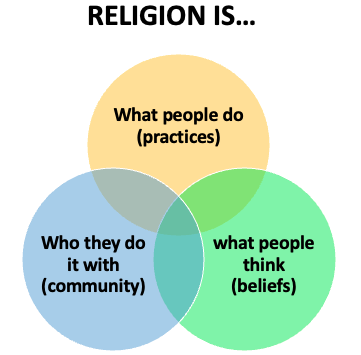
What is religion?
Resource Spotlight: What is religion?
February 2024
What is religion? Despite this idea being at the heart of our subject, the word is not always defined in teaching material. In our Resource of the Month for February we are pleased to offer a teaching resource by RE adviser Ruth Marx.
Ruth’s resource is a complete scheme of work, designed for KS3 but can be adapted. It contains videos, lesson plans, information and activities. Hou will find lots here to stimulate your pupils’ understanding and allow them to explore how the phenomenon of ‘religion’ can be classified and understood.
What do people do with Culham St Gabriel’s grants?
Resource Spotlight: What do people do with Culham St Gabriel’s grants?
July 2023
We bring our theme of ‘celebrating the Religion and Worldviews’ community to a close with a truly heartening, exciting and inspiring insight into the questions teachers are asking. Culham St Gabriel’s are proud to present those individuals and groups who have received CSTG grants in the last year or two years. Below you will find videos where grantees explain their projects, what they were hoping to achieve, and the fascinating insights they have gained through the process. As you will see, grantees had many different types of questions, such as how to create a Religion and Worldviews curriculum from age 4 upwards, how to explore religious diversity with young people across Europe and how to engage teachers and pupils in learning about the climate crisis through Religion and worldviews.
Timings for the individual films are:
00:00Barnet SACRE Bringing the High-level Academic Religion and Worldviews Approach of Anne Waves into the RE Classroom 01:32 The University of Strathclyde After Religious Education: Pedagogical Principles for an Education in ‘Religion and Worldviews’ 03:03 Open University Young People and Religion: Creative Learning with History and Filmmaking 04:46 University of Leeds Engaging Local Communities with Teaching Religion and Worldviews 06:02 Diocese of Bristol and South Gloucestershire Local Authority ‘RE:Hive’ Project: Peer to Peer School Improvement 07:30 St Peter Saltley Trust and the University of Birmingham RE:Connect RE Teacher Fellowship Programme 09:33 Wikimedia UK Tackling Cultural Bias on Wikipedia 13:22 Rose Castle Foundation Religions and Worldviews Through Scripture
As you can see from the films, grant-funded projects use different sources of information to further their understanding, such as interviews with teachers, pupils and faith members, reading around relevant literature and in the field research. The results of these projects will benefit different aspects of the Religion and Worldviews community, from pupils to classroom teachers, to those pursuing a more scholarly understanding of teaching and learning in the world today.
Why not think about applying for grant funding? If you have a question that has always bothered you, or an idea that you think could make a positive change, think about putting it to the test.
Culham St Gabriel’s welcome applications from all people. Our main strategic objective is the promotion of Religion and Worldviews as a curriculum subject. If you have an idea which increases understanding of Religion and Worldviews, engages decision-makers, supports teachers’ development or champions inspiring teaching, this could be for you.
The Visual Commentary on Scripture: (Re)discover the Bible in Conversation with Art
Resource Spotlight: The Visual Commentary on Scripture: (Re)discover the Bible in Conversation with Art
We are delighted to present the Visual Commentary on Scripture (VCS) which explores the Bible in connection with works of art. The resource opens up a wealth of themes, symbolism, history and interpretation. Whatever the age of your pupils this rich and fascinating resource will mean you never see the bible in the same way again.
Read curator Dr Chloë Reddaway’s blog to understand in more detail the potential of this resource
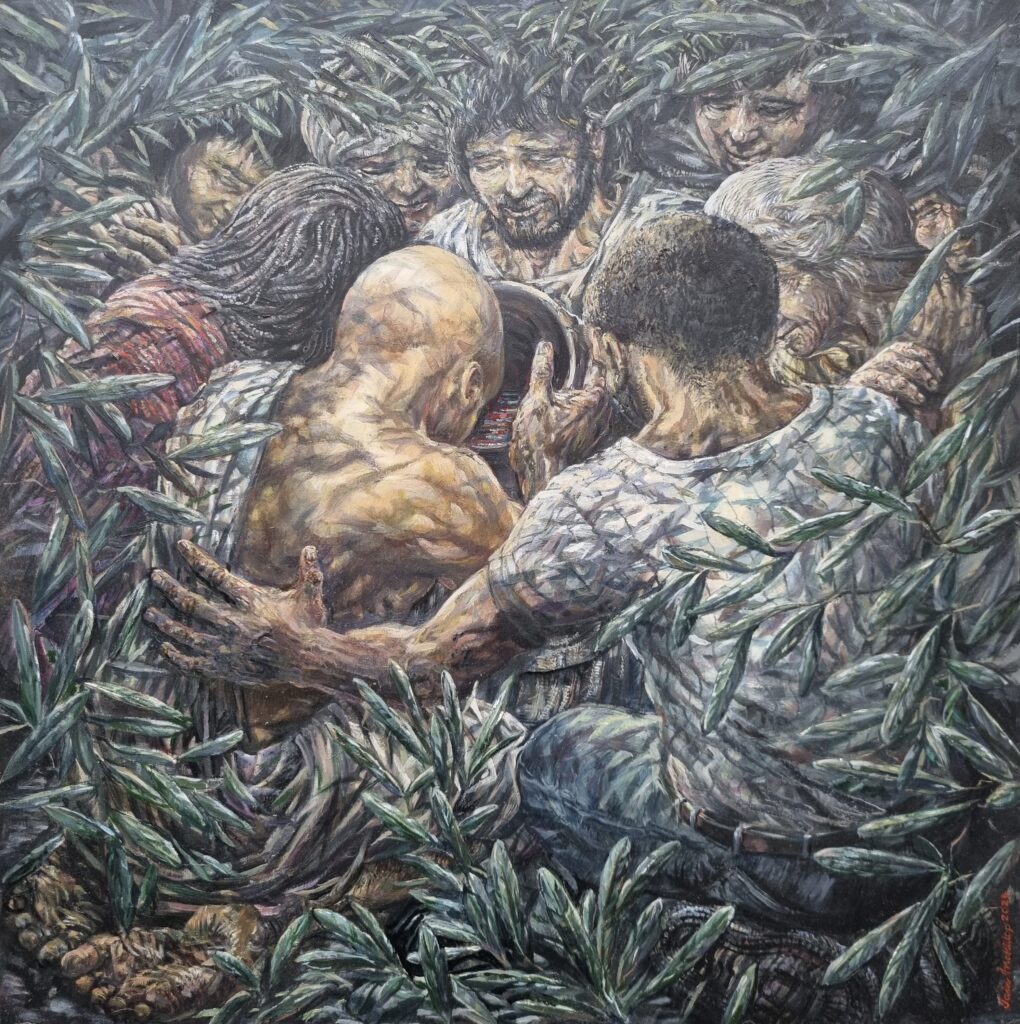
The Visual Commentary on Scripture (VCS) is a freely accessible online publication providing theological commentary on the Bible in dialogue with works of art.
Each section of the VCS is a virtual exhibition comprising a biblical passage, three high-resolution (zoomable) art works, and short commentaries exploring how the scripture and the artworks illuminate each other.
It is a rich, inter-disciplinary resource for teachers and pupils, transforming understanding of the Bible through diverse works of art and a wide range of authorial voices and perspectives.
Use the menu to explore the VCS through ‘themes’, including Creation, Biblical Women, and Miracles, search by Bible book, watch VCS films, or find additional resources such as our Stations of the Cross and spotlight feature on Coptic and Ethiopic art.
Resource Spotlight: Using sacred texts in the classroom
December 2022
Matthew Lane is RE Lead teacher in Norfolk and a Year 6 class teacher. In this presentation he introduces different ways to read sacred texts with Primary-age pupils to unlock varied and interesting layers of interpretation, personal knowledge and meaning. All the activities, texts and questions Matt suggests are designed for Primary pupils. They represent forms of hermeneutics, or interpretation. If you have heard this word but are not sure what it means, you might be interested to see what it can bring to your classroom. If you have heard the word and assumed it was too complicated for younger pupils, think again! Matt presents reading through different ‘eyes’; reading as the writer, reading as a reader, and reading as a believer. Each way of reading allows you to explore different sorts of questions with pupils, and allows pupils to experience sacred texts form different perspectives. Even if you don’t use the word ‘hermeneutics’ with your pupils, these ways of reading open up a rich understanding for your classroom.