Viewing archives for Leadership

Culham St Gabriel’s Trust turns 10 years old on 21st June 2022! 2012 was an important year in many different ways- the Diamond Jubliee and the London Olympics spring to mind- I also turned 40 that year too! However, the birth of Culham St Gabriel’s bringing together two church college Trusts was a very significant moment for the religious education community. In this blog a former Chair and director express their reflections, alongside the current chair. I also draw out some themes running through the last 10 years and what these might mean for the next decade.

Reflections from the first Chair of Culham St Gabriel’s, Dr Priscilla Chadwick OBE…

‘Culham St Gabriel’s was created in 2012 by the coming together of two church college trusts which had worked in close partnership for several years prior to the merger. St Gabriel’s Trust arose originally from the college’s closure by Mrs Thatcher in 1977, leading to the transfer of its buildings to Goldsmith’s College. At that time, St Gabriel’s had only enough money to offer a few book grants each year, but a wise legal adviser had inserted a footnote to the transfer that, should Goldsmith’s ever wish to relinquish the buildings, these would revert to the St Gabriel’s trustees at the original price! Thus the trustees were able to sell the college on to another educational institution, thereby providing the Trust with a significant charitable endowment for the future.

The charitable objects enabled the trustees to support RE teachers wishing to enhance their postgraduate qualifications and later created an important partnership with the Culham Educational Foundation, setting up the St Gabriel’s Programme. This initiative developed innovative resources for RE and established the annual St Gabriel’s Weekend, firstly in Sunningdale and later at Wokefield Park, offering a free of charge opportunity for RE teachers to come together in a residential setting and share good practice, something that most would otherwise be unable to do, isolated in their own schools and often undermined by government educational policy: for many, these weekends were utterly transformative professional experiences which inspired them as they returned to their schools.

When in 2012 the two clerks of St Gabriel’s and Culham were both planning to retire, the opportunity arose for the two trustee bodies to come together, building on the cooperation over many years, to create the Culham St Gabriel’s Trust. Thus the significant legacy of both colleges would be safeguarded for future generations of RE teachers. With a generous endowment, this now meant that the Trust could more easily support major national initiatives such as the RE Council and the 2018 Commission on RE. This commitment vital to RE continues to flourish under the strong leadership of Kathryn Wright.’

What strikes me about Priscilla’s reflections is that the Trust’s focus on free, transformative, and inspiring resources and professional development still very much lies at the heart of the Trust. The reimagining of RE:ONLINE over the last few years, our scholarship programmes and the recent launch of our free e-learning platform continue to fulfil this mission.

Reflections from the first Director of Culham St Gabriel’s, Dr Mark Chater…

First, the merger itself: I gather that the idea first occurred to Priscilla and John Gay while on a walk. From this the idea grew, building on the many years in which the two former Trusts had worked together. Mutual trust, confidence and enthusiasm deepened. John Keast chaired the Implementation Committee which looked after the details – of which there were many! Within only a few years, Trustees saw themselves as ‘CSTG’ rather than ‘Former C’ or ‘Former St G’. Now, everyone takes the existence of the merged Trust for granted. But it was a major achievement at the time, based on shared vision and painstaking care over detail. 

Modernising the grant application process to make it more user-friendly for applicants, and less burdensome for Trustees, was an early achievement. Putting it onto an online process with new, RE-focused grant criteria helped to place CSTG on the map. The feedback from grantees was positive. Sharing information and ideas with other RE grant-givers has also grown gradually. 

Three significant CSTG grant decisions which, perhaps, have deeply influenced the course of RE for the medium term: Understanding Christianity, the NATRE/RE Today regional champions, and the Commission. The first of these had a long and at times lively gestation, but eventuated in resources which really enhanced the rigour and excellence of RE. The regional champions have strengthened the infrastructure of support available to teachers, and contributed to the growth and sustainability of NATRE. The Commission, which submitted its final report and recommendations in 2018, changed the conversation about the future of RE (or Religion & Worldviews) and we wait in joyful hope for a government bold enough to implement the much-needed change which it envisaged. 

But that is not the end of the story. I hope and pray that CSTG will continue its vital leadership, support, and innovative thinking for many years to come. 

Having worked with Mark for a number of years as a CSTG Consultant I think he instilled in me an understanding of the Trust’s forward-thinking approach. Mark’s reflections show how the Trust has always been sensitive to the ever-changing educational landscape, responding to new contexts. At its heart, though always remains the focus on serving others in the best possible way. Therefore, we have some exciting new grant making plans to announce. Firstly, we are launching special 10th Anniversary grant awards for small, innovative projects that make a difference. Secondly, later in the summer we will be sharing details of our new scholarship programme series to run alongside our current masters and leadership programmes. Watch this space!

Reflections from our current Chair, John Keast, OBE…

So CSG (as I think of it) is ten years old. How time flies! As we commemorate this milestone, my mind goes back to the two constituent trusts, with their illustrious Chairs, trustees and staff, as well as to CSG itself. There are too many to mention them all in this short piece, but their vision, dedication and skill not only served those trusts well, but led to the formation of what is now a very effective force for good in the world of religious education. As I retire as Chair of CSG this year, I indulge myself below in surveying the whole period from 2003 when I first became a trustee of both constituent trusts then the merged trust. What highlights come to mind?

First, the people:

  • Three prominent and very effective chairs – Colin Alves, Tony Williamson and Priscilla Chadwick, each of whom had distinguished but varied careers in their own right, but brought their considerable expertise and experience to bear in building up the separate and then joint trusts.
  • Four extremely competent and dedicated officers (although they had different job titles) – John Gay working for both Culham and St Gabriel’s separately, though often in partnership with Brenda and Peter Duffells at St Gabriel’s, and Mark Chater, first CEO of the merged trust. All of these excellent people served the trusts so well, along with some many other partners and consultants over the years, with whom they worked.
  • The many trustees, who so well connected CSG to other organisations and spheres of influence, who brought the benefit of their links and experience to the work of the trust.

Second, specific events:

  • The massive teacher conferences, mostly held at Wokefield, which did so much to inspire and build the confidence and morale of teachers in RE classrooms. Not cheap to put on, but how exhilarating, powerful and enjoyable they were!
  • The smaller but very visionary colloquia, conferences and meetings which did so much to influence how RE both survived and thrived after the introduction and development of the National Curriculum, after the Great Education Reform Bill 1988.
  • Working in partnership with other organisations in RE, again too many to mention.

The reference to teachers, meetings and partners above encapsulates some of the core aims of the trusts over the years – the importance of the teacher of RE, and providing opportunities for training and support via grants and events; the need to influence policy and curriculum development in RE both nationally and locally; and the support of RE in schools of all kinds, not just those with a religious character.

Times change, and so must the capacity of RE to respond. CSG is now very properly focussed on clear strategic objectives. These have become so important in the past ten years when the threats to the wellbeing and structure of RE, based as it still is on the 1944 Education Act model, have become more serious. So in the past ten years, in addition to its continued focus on teachers, CSG has developed a leading role in helping to bring the stakeholders in RE together, not least through its support of the RE Council, which is essential to the future of the subject. With its current CEO and Board, CSG will become and even more significant player in the RE community of the future. Long live CSG!

It has been a pleasure to work with John over the last three years. He will step down as Chair this summer, and the Trust will enter another new chapter. John’s emphasis on the importance of people shines through his reflections. Nurturing relationships with all our grantees is vital. Yes, we provide funding for individuals and projects, but we also want to invest in people. We often talk about becoming part of the CSTG family. Empowerment and collaboration are two of our values, and we aim to live these out through all our work. As we enter a season where a new Education Act is on the horizon, John’s final words will be vital. We will continue to strive towards our vision by:

  • Increasing public understanding of religion and worldviews education
  • Engaging with, informing and influencing decision makers
  • Creating well-informed, empowered and influential educationalists
  • Establishing and building strategic and collaborative partnerships and networks
  • Commissioning and publishing focused and accessible research
  • Championing and developing inspired and well-resourced teaching and learning

Here is to another ten years… and beyond!

Kathryn Wright and guests
In November 2021 my team at South Bromsgrove High School were delighted to achieve a Gold RE Quality Mark award.

We decided to go for it after using the REQM Evidence form to complete a 360-degree assessment of the department. We realised we met much of the criteria. We found the form invaluable to guide us, particularly focussing on the 4 main strands of learning, teaching, curriculum, and leadership.

A pleasant surprise was discovering we could apply for a Westhill grant that made the process financially possible. There are actually lots of trusts and organisations that offer funding, see link to article at the end of this blog.

For me personally the award has given me the confidence to assure other RE teachers that they are not alone, as well as increase the presence of RE in my school. As an RE team the process helped to identify leadership strengths and areas to develop from a more objective perspective, particularly in preparation for a forthcoming OFSTED.

The experience of being assessed wasn’t too painful! The professionalism of the assessor was noteworthy, causing us to really think more objectively about how we can be more creative in our learning, develop more opportunities for project work, trips, and visitors in lessons. My Senior Leadership Team were supportive of the process and I was thankful to the assessor who really made the SLT stand to account on the provision of core RE at KS5. Since receiving the award we feel proud of the department. Seeing the students being interviewed and celebrating high quality teaching and learning in the department are my highlights.

We wanted our pupils to be at the heart of the process, from being interviewed to sharing their reflections through student questionnaires. A choice comment from a Year 9 student:  “We have studied worldviews I never knew about before Confucianism, Daoism and Jainism” A Year 10 student noted “I love the struggle part in RS, the teachers really challenge your thinking.”

I would encourage others to give it a go. An REQM can raise the profile and presence of RE across the school and wider community. Celebrate your hard work! If you want to ‘sell’ the idea to your leadership team, talk about how the REQM develops links within the community, with visitors to school, charities, and projects. It helped us to produce new schemes of work for our GCSE course, and of course allowed our students to share their views.

Our curriculum design plans are continuing, we feel that we are on the right path. We are also focusing on RE-related careers. Receiving the award has helped develop staff confidence and help identify further CPD aims of leadership across different Key Stages.

I will finish this piece with the words of a Year 12 student ambassador for RS: RS at South Bromsgrove has really opened my mind to leadership opportunities, attending meetings with staff and completing the VITA coaching programme so I can support other students in the lower school. The teachers are committed to helping everyone do their best, this has helped not only in developing my knowledge, but my approach to writing, and opened up new career options for me personally.”

Follow this link to find out about other organisations that offer funding and support:

How to develop partnerships and obtain funding: https://teachers-talk.natre.org.uk/how-to-develop-partnerships-and-obtain-funding/

Want to find out more about enhancing the status of RE? Check out this blog:

How to increase the presence of RE in your school: https://teachers-talk.natre.org.uk/how-to-increase-the-presence-of-re-in-your-school/

This September I am more aware than usual both of new beginnings and time passing. Although I have been in my school for almost two years, it has been mostly in lockdown. My experience of the school has not been in normal times, to say the least. When colleagues talk about a room, a person, a form to fill in, a process, an event, I am lost, it is like I started yesterday. I have existed in a bubble and now the bubble is burst.

Being back in the classroom, no longer confined to my metre box at the front, feels full of possibilities- students can work in groups and we can be more active in our learning, I can wander up to the back row or talk to a student quietly at their desk, rather than from the front of the room. Students can let off steam outside at break and lunch, no longer confined to their classrooms and bubbles. Being outside with all of year 7 and 8 as they tear around the playground feels surprisingly joyful, not how I would have described break duty before the pandemic.

I am also aware of changes closer to home. My daughter has started in Year 7. I have welcomed thousands of Year 7s in my almost 20 years in the classroom. Now I am finding out what goes on at home- making sense of the new systems, what books and kit are needed for each day, the pressures of homework. It is tiring and can be fraught if we are second-guessing a teacher’s instructions. But it is also exciting- a more independent young person is emerging, ready to take on these new challenges.

I have had the pleasure of working with Kathryn and the Culham St Gabriel’s team for some years. I am excited and privileged to take over stewardship of RE:ONLINE, building on the excellent work of my friend David Rees, who is much missed. RE:ONLINE brings together practical, classroom-focused guidance and resources, current research and information to keep you up to date. We will continue to offer high quality, practical and supportive material, whether for use in your classrooms or to adapt for another period of home learning. As always we welcome blogs from teachers or those working in and around religion and worldviews education. Email ideas you would like to share, however half-formed. We will develop them together.

We are developing an exciting online CPD platform for teachers- watch this space! The ‘In Conversation’ events which ran throughout two lockdowns will continue for the foreseeable future. These have been extremely beneficial in both communicating current research and thinking and allowing people to connect with others. It has been wonderful to see new faces at every session, perhaps people who would not usually join a face-to-face group for a variety of reasons. We look forward to welcoming new people to every event. These events and others like it have been an unexpected benefit of the pandemic.

As we look forward to a new term, some things feel really new- the mingling, mixing and moving feels at once rather scary and liberating. We are also looking back at almost two years of completely different working. We have learnt how to support each other in new ways, we have learnt to use Zoom (no mean feat), we have learnt how to carry on and how to change. Whatever is around the corner, we are looking forward to working with you. Have a great term!


The recent Ofsted Research Review has sparked much debate and discussion particularly on social media. The review sets out what it understands by a quality education in RE. In terms of the curriculum this is defined in terms of three types of knowledge:

  • Substantive
  • Ways of knowing
  • Personal

One of the questions which struck me as I read the review, was how we theorise the relationship between these three types of knowledge. This is illuded to in the report (see Interplay of knowledge in the RE curriculum), but I felt I needed to think about it creatively. I like to think in pictures. So, what I offer here is an analogy. It is not perfect, but I hope it will help us to understand a little more about the interdependence of different types of knowledge.

Let us weave a knowledge tapestry….

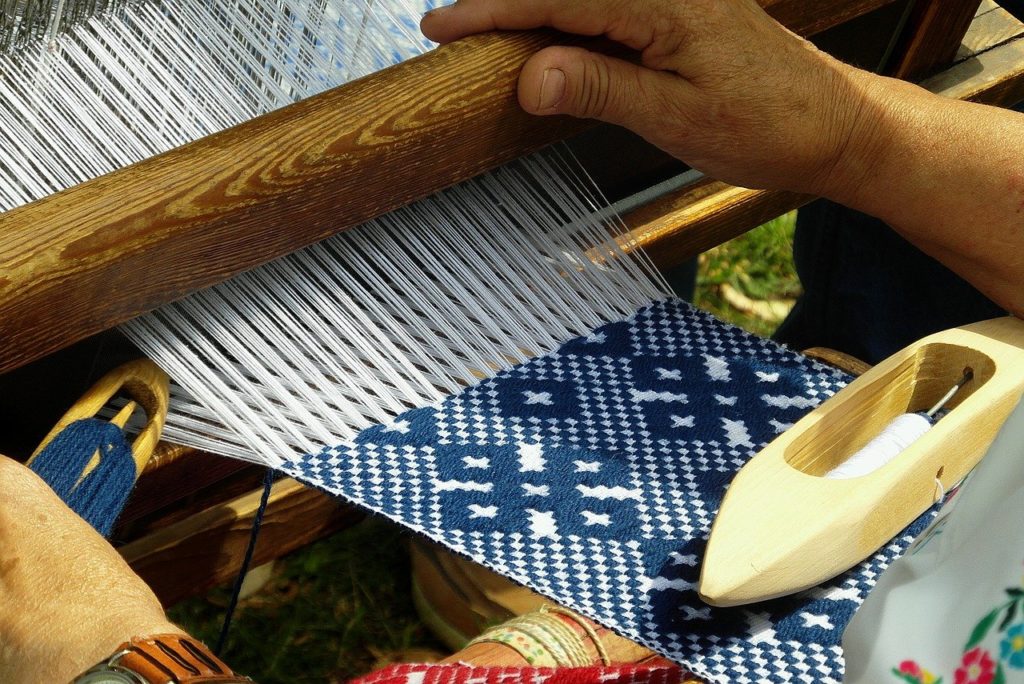
Image of a hand waving loom with a blue and white fabric being created

The curriculum– this is like a developing tapestry. In theory it may have an ‘end point’ (i.e., end of formal education) but in my opinion it continues through our lifetime as we develop the three different types of knowledge.  Therefore, it might be described as an unfinished tapestry. This emphasises the flexible nature of curricula. Yet this fluidity still enables the tapestry or knowledge to build over time into a beautiful masterpiece….

Substantive Knowledge – this is the warp. These are the threads on the loom over and under which other threads are passed to make the tapestry. Without this there would be no tapestry! The warp is laid out at the beginning with a clear sense of what you are going to produce. There is some intent here. Choices must be made about how many threads, how wide the tapestry will be and so on. This is like the choices that must be made in relation to the substantive content. Ofsted talks about illustrative content that leads to an end goal.

Ways of Knowing or Disciplinary Knowledge – these are threads of the weft. They are woven in and out of the substantive content. This is important. Unless they are woven into the content, they will not contribute to the overall tapestry.  This means that as pupils’ journey through the substantive content they learn about and use a range of tools and methods such as interpretation, observation, analysing data and so on.

Personal Knowledge– these are also threads of the weft. They are also woven in and out of the substantive content. Our own positionality, our own worldview is woven into what it is we learn about. This means being self-aware, recognising and reflecting on how we relate to the ‘warp’ or content. This is a process of reflexivity.

So, now is the time to think about the tapestry you are creating, what choices will you make to build towards and create a masterpiece….


References:

https://www.gov.uk/government/publications/research-review-series-religious-education

Engaging pupils can be a challenge in Religious and Moral Education (RME). Pupils can arrive with preconceptions of our subject based on a range of external influences.

I would like to give an overview of how I use thematic units to develop skills and engage learners.

In the last academic year, we worked on redeveloping elements of the Broad General Education (S1-3) courses for RME. The main area of my focus was S1 (equivalent to KS3).

Embedding skills for learning, life and work became central to the development of the new and revised units (in line with school improvement priorities). After our introduction to RME through Ultimate Questions, pupils explored a research skills mini-unit based on in-class and at-home activities that focussed on teaching the skills of research, using sources, analysis, and evaluation.

To follow this, it was decided to try a thematic approach for the S1 classes and seek to develop these skills further and introduce Beliefs and Values & Issues across different religious and non-religious viewpoints.

USING…Thematic Units.

Normally, we do not begin to use thematic units until S3 (KS4) and these focus on moral issues, however this new work sought to try a thematic unit from the start of the Secondary RME experience and use it to explore both issues of belief and issues of morality. The unit would be: Who Am I? The Human Condition – the broad scope of the unit was to explore beliefs about The Soul, the Nature of Human Beings, and Responses to Suffering.

TO DEVELOP…Skills.

I was keen to use this as an opportunity to further develop on the previous intensive research skills unit, in order to consolidate the pupils’ confidence in these skills. As we explored the content of the unit we made use of a variety of Making Thinking Visible thinking routines (already being used across the school), Co-operative Learning strategies (in order to provide structure and social skills development to our group and paired work), and Active Learning activities (in order to engage learners), with all these supporting the development of higher order thinking skills.

AS A RESULT…Engaging Learners.

In order to make learning relevant to pupils, I ensured the unit was broken down into small chunks, clearly linking lessons, and identifying contemporary moral issues that were relevant to each lesson.

As we explored the nature of human beings, we introduced debate around the environment and climate change; through teachings about responses to suffering, we explored racism and then poverty and injustice.

Pupils, through short focussed lessons, were engaging with sources that included Plato, Holy Scriptures from Buddhism, Islam, Christianity, and photo journalism. Throughout this unit they explored issues of belief, values and issues, consequences of beliefs, and began to express their own opinion with supporting reasons on the relationship between values and actions.

The result of this thematic approach to learning in S1 was a cohort of pupils who were more engaged in their learning than they were in subsequent single religion units or single-issue units. The pupils were able to demonstrate their progress toward the four capacities in Scottish education (for pupils to become Responsible Citizens, Successful Learners, Effective Contributors, and Confident Individuals). The quality of written answers were higher and more fully developed than in the previous year at this stage due to pupil interest and their ability to connect beliefs to issues. Feedback from pupils in their end of year evaluation has shown how they have appreciated dipping in and out of different religions and relating the beliefs to the world around them.

What is a ‘Specialist Leader of Education (SLE)?’ This is a question I have been asked dozens of times by both teaching and non-teaching friends and family. The role of an SLE is often not clearly defined and can be easily misunderstood, so in this blog I am hoping to answer that question, and also explore how SLEs can support the provision of RE across a Teaching School Alliance.

The DfE has defined SLEs as “experienced middle or senior leaders interested in supporting middle and senior leaders in other schools”. The impression I get is that even when schools employed ‘Advanced Skills Teachers’, there were varied examples of how these teachers were used, often with mixed degrees of success. The vision that I want to communicate in this blog post is that there is no ‘one-size-fits-all’ approach to being an SLE, and hopefully I can give some ideas as to how this might look. I think that the role can be defined by three Cs: collaboration, communication and context.

Let’s start with the first of our Cs: collaboration. When I was asked to put together this “How I…” blog, my initial reaction was to ask to change the title to “How we…”. I think that the days when an SLE will swoop in to provide the expertise to save the day for a failing teacher or department are gone. The absolute key to this role is empowering others to make positive change. Expertise does not just lie with an SLE, but with every single teacher of RE across every Alliance school. My role is to tap into this expertise and allow schools to work in a more joined-up way to share key ideas coherently.

In this situation an SLE is primarily a leader, someone who may have expertise but also the qualities to inspire change by developing the abilities of others. Coaching and mentoring can play a very important role in this school-to-schools support that SLEs can offer.

The second of our Cs is communication: this is vitally important in many different ways. Without a structure of communication, it is impossible for SLEs to offer any kind of lasting, meaningful collaboration between different schools across their TSA. One way of creating effective communication is the use of regular teach-meet style events. As a group of RE teachers we usually meet within our Alliance hub once a term. The purpose of this can be to share resources or subject and pedagogical knowledge. As an SLE it is my role to facilitate this session: this sometimes involves me delivering ideas myself, but often also involves me leaning on the shared expertise of others. To ensure this contact is ongoing, and not just once a term, we use Google classroom as a dialogue stream and a platform to continued sharing.

Context, the last of our Cs, is arguably the most important aspect of an SLE’s role. At the Chiltern Teaching School Alliance in Bedfordshire where I work, we serve a wide variety of schools. Our Luton schools have a large majority of Muslim pupils, whereas our Central Bedfordshire schools have a higher proportion of non-religious and Christian pupils. This is important because teaching RE in these different contexts carries its own sensitivities and challenges. In order to understand these contexts, the best thing an SLE can do is speak to the teachers from that school – in this situation they are the experts because they work within these particular settings on a daily basis. SLEs can also reach out to local community and religious groups to bring these contexts into greater focus thus enabling better support.

Being an SLE is a job that I truly enjoy. The reward is enabling the provision of high-quality RE, which undoubtedly benefits all. I hope that some of the ideas in this article are useful. If you would like to ask any questions, feel free to contact me on twitter (@AdamHoldsworth1) or email me (aholdsworth@denbighhigh.co.uk).

Or

‘How to build team virtually during the Covid-19 pandemic’

I’m passionate about team!! Team is one of the essential ways in which we live out the values of our Trust. So, I wanted to explore how we could build team virtually? As an office team we have had virtual ‘non-work’ coffee mornings as well as business catch ups, we are also using Whats App and Team chat a bit more, but I wanted something a bit different. This was when the Virtual Bake-Off idea was born…. How would our office team and consultants represent the Trust through baking? The results blew me away!!!

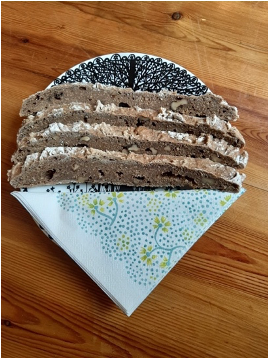
The Soda Bread: Kevin connected his ingredients with each member of the team. Here he explains….

The Organic wholewheat flour, full of goodness, which is the basis of everything – this is Deborah.

The extra-virgin olive oil, reputed in Castillo de Locubin to fix any kind of problem – this is Tracey.

The milled omega seeds giving golden sunshine to the texture – this is Kate.

The walnuts contributing dry, deep integrity – this is Dave.

A shot of espresso for a burst of energy this is our social media consultant

12-year-old malt whisky, seasoned, matured, with strong regional associations – this is John, our Chair of Trustees

Bicarbonate of soda – this is me (Kevin!) – just because I couldn’t face comparing anyone else to bicarbonate of soda!

The skilled presentation of the whole product on beautiful plates – this is Kathryn, orchestrating everything and acting as CSTG’s public face.

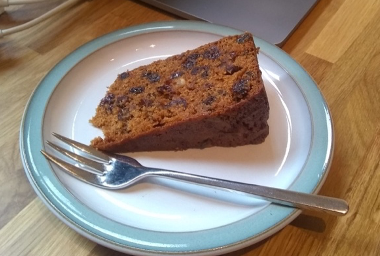
The Fruit Cake: Tracey’s fruitcake was based on the Trust values. This is what she said about it.

Collaboration – Fruit, works better together. Whole is greater than the sum of its parts

Openness – No hidden ingredients

Stewardship – Low cost simple ingredients transformed into a beautiful cake

Integrity – Traditional recipe, long slow cooking

Empowerment – cranberries added, which are said to be a super food

Service – What is a cake if not for sharing with others?

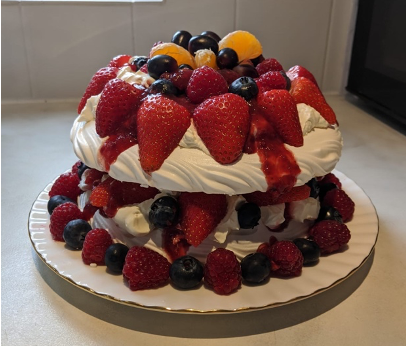
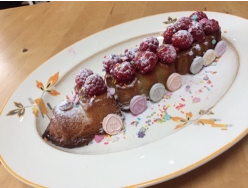
The Pavlova: Deborah’s pavlova was full of fresh cream and fruit, as the Trust is currently overflowing with fresh and fruitful ideas. The trust brings organisations together in partnership. We’re greater and can do more together than as individual organisations. Likewise, the individual components forming the pavlova are greater together. Each of the components’ initial letters together can spell CSTG (Cream, Strawberries, Tangerines, Grapes) and Religion and Worldviews Education (Raspberries, Whites of Egg). Deborah didn’t want to waste eggs and wanted to ensure the best outcome, so she outsourced for the best skills and expertise – buying the meringue is from Waitrose and getting her family to help  put it together!

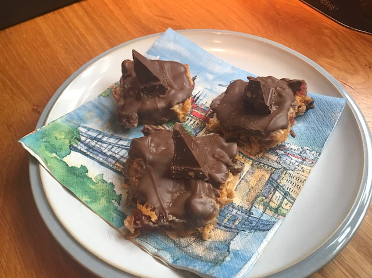
The Florentines: I made some Florentines with Kellogg Crunchy Nut cornflakes as our office in Oxford is in Kellogg College. They contain Chocolate, Sultanas, Toblerone and Glace Cherries spelling out CSTG. I used an unusual, colourful and vibrant mix of ingredients – like our amazing team. They were bound together by condensed milk. This product has longevity and is an important ingredient in many different desserts, just like CSTG. Lastly, and more practically I planned in advance to use no flour and eggs as it was possible these may be unavailable!

The Train: Kate made a train as Culham St Gabriel’s is going places. There is space for all sorts of people. We are on a journey together. The wheels are love hearts to show our positive message!

The Fat-Free Cake: Dave decided to create a Fat-Free cake. He says, ‘At the moment this is a Slimming World house – No cake making due to being supportive… If I buy a cake and present it, how does someone learn or personalise it? At CSTG we like to facilitate ways in which people can take their own cake journey – we signpost recipes, encourage sharing, research flavour combinations, explore cultural cake advice and engage in high level cake research which hopefully benefits our core cake audience. However, I did buy a cake or some rocky road bites – I also found a recipe and would encourage people to push the boundaries and personalise it – at RE:ONLINE we would ask bakers to let us know how they got on – could you blog about it? Rocky road – symbolically, it’s a rocky time and we are with you on your own rocky road– encourage people to take a recipe and make it their own – be inspired by and look to inspire others. Jaffa cakes – to show inclusion and to not shy away from controversy – Is it a cake? Is it a biscuit? Let us look at both sides and make a justified decision’. So instead of eating cake, Dave has produced a fantastic cake knowledge organiser with a religion and worldviews twist which you can download here. Of course, this is a bit of fun for you to enjoy over a coffee break, not to be taught in the classroom!

The bitesize snack: Our social media consultant also teaches full time, so she brought a bitesize snack which provided energy and quick nutrition like our social media and RE:ONLINE!

What a great team! No more words…

With huge thanks to:

Deborah Elwine, our Office and Operations Manager

Tracey Francis, our Data and Online Manager

Kevin O’Grady, our Lead Consultant for Research

Kate Christopher, our Lead Consultant for Teach:RE

Dave Rees, our Lead Consultant for RE:ONLINE

Our social media consultant

“FEEDBACK” A word used near continuously in my school setting for the last couple of years. We have attended feedback conferences, held staff meetings, changed processes and discussed with parents. But, almost all of the conversations we have are around feedback for learning and progress in English and Maths.

“ASSESSMENT” A word that invariably comes up in every single staff meeting or local network session for RE I have taken part in. Despite often feeling quite daunted or negative about assessment processes in RE, there is no doubt teachers are consumed by the need for guidance and clarity on the issue of how we assess RE learning effectively in our classrooms.

So quite recently I have tried to join the dots and try out some of the great ideas on effective feedback for learning, to support a more useful system for assessment in RE. Despite the fact that there is definitely a place for summative judgements and recording of progress is still required for most of us in primary RE, unsurprisingly many teachers would agree the most effective tool in assessment for learning in RE is formative assessment. Just as we do confidently in English and Maths, we must identify what the key objective for learning is in an RE session and identify how we will know what the children have achieved and where to take them next.

The starting point must be a clear long/medium term aim. This may well be a strong question for enquiry, forming the learning journey for a given unit of work. Then, clear steps must be in place for how pupils will travel along this pathway. For some, this might include a knowledge organiser or other planning document to identify factual knowledge, questions for discussion and resources/content to build up to answering the question. Maintaining this focus throughout the unit of work is key, in order not to attempt to drown the children in unnecessary content along the way.

Then in each session, a key skill, piece of knowledge or question can be focused upon. A decision can be made on how we will know how pupils have done today. This might be reflection on a piece of writing (not necessarily marking of it though…a discussion for another day); notes on group or class discussions; quizzes or exit tickets; thought bubbles or creative work – the possibilities are endless. The teacher can take the work, books, tickets etc and quickly judge what each pupil has achieved today. Work can be grouped, names highlighted on a list, or quick notes made on a planner. Now we decide what is needed next – content of the next lesson, continuation of the piece of work, or  questions tailored to each of the groups. Planning next steps is responsive to the feedback given by the pupils today, and we offer feedback to them through the expectation and planning of the next session.

Most of these ideas seem so obvious, because as teachers we are skilled already in assessing learning continuously and deciding what to do next. But, my experience of conversations with subject leaders and classroom teachers of primary RE is that we rarely consider transferring these skills into RE. I hope in reading these suggestions, more who haven’t yet considered these approaches might try and simplify their content and apply what they are already so good at, instead of worrying unnecessarily about time consuming and often unhelpful summative systems of assessment for RE.

I have taught RE since 2003, as an SLE for RE and RE consultant for SACRE. As such I support colleagues across Milton Keynes in projects that involve increasing student engagement in the humanities subjects and interfaith dialogue. I have been teaching Sociology, Religious Studies and Health and Social Care for the past 5 years. Currently outside my teaching timetable, I work one day a week with secondary schools across the town to improve community cohesion.

When RE was not included in the EBacc I became frustrated by the declining status of RE and non-rigorous approaches to teaching RE. So, in 2015 I contemplated giving up teaching altogether but then applied to teach Sociology and Health and Social Care in another local school. I threw myself from a lovely part-time job into a challenging full-time role teaching two new A level subjects and other Humanities subjects at KS3. Yes, you must think I was mad. I felt like an NQT again, reading in the early hours of the morning to build on my subject knowledge before my two small children would wake up. Little did I know what this journey would start…

As part of this new adventure, I was also given permission to take the lead in RE and it was made clear that the school wanted to raise the profile of the subject. The Humanities team placed a high value on RE and believed that RE underpins the concepts and emotions that help young people understand and appreciate belief and practice and understanding of our own culture and society. This appreciation of RE as an intellectual discipline enabled me to gain the full support I needed to make changes to RE across the school.  I decided to set up an interfaith group in the school and use the ideas of our students to redesign the RE into a curriculum that met their needs. Every week I would meet with a range of students who represented atheist, agnostic and theistic beliefs.

Before the Commission of RE report (2018) was released, we started taking a multidisciplinary approach to RE and decided to teach the subject, so it reflects the diversity of the beliefs of our students. As a result, we now have over 50 students studying A Level Religious Studies and 6 GCSE option groups. Without receiving the incredible level of support and trust from all my colleagues, the foundations for setting up Youth SACRE MK and a growing interest in RE would never have been possible.

One of our school improvement officers had heard about the growing success of RE in our school and invited me to attend a SACRE meeting. I shared my concerns about the general decline of RE both nationally and locally. I then started working with the Milton Keynes SACRE to form a ‘Youth SACRE’. I approached senior leaders in my school and received both advice and practical support concerning advertising and booking events. A lot of support given by the head of the teaching school meant that all the systems were in place to email all schools in the town. I personally wrote to individual RE leads and local feeder schools and advertised events through Educate, SACRE contacts, and through word of mouth. We hold 5/6 meetings a year for Year 5 to Year 13 students. All meetings are held between 1-3pm so that it is less disruptive for schools and easier for primary schools to attend. Each school brings up to 6 pupils and sometimes more if we have the capacity.

The aim of Youth SACRE was originally to bring pupils together and share ideas and resources in a bid to update local RE to meet the needs of the diverse community of children. Our first Youth SACRE meeting was attended by over 14 schools. Out of this, the Youth SACRE has provided many opportunities for students and teachers all over Milton Keynes to build a bridge of cooperation between young people of all faith and non-faith backgrounds.  Members of the Youth SACRE presented their thoughts on RE at one of the primary head teachers meetings and have worked together to improve and update the locally agreed syllabus. RE in our local feeder schools has improved. Our young people have been asked to present at the annual Holocaust Memorial and other Interfaith events. The group continues to support a new vision for RE that promotes freedom of thought, increased tolerance and respect of others. The pupils reflect the community of interfaith cooperation and older pupils get to demonstrate true leadership in helping the younger pupils.

The Youth SACRE meetings are also designed to inspire RE teachers (and non-specialists) with ideas and literature to support their own planning in RE.  It is not easy balancing a full-time teaching role and promoting RE through Youth SACRE, it requires a lot of sacrifice of ‘free’ time. Sometimes the dates for the meetings have not worked out so now we know which times of the year to avoid and all the dates are set for the year in advance. It is not always easy to pitch the activities to ensure we are engaging both primary and secondary pupils and we have had to refine our activities to meet the needs of the schools who attend. It has been particularly difficult to get all the secondary schools on board and another challenge is reaching out to primaries who are not teaching RE at all.

In classrooms when RE is taught well by subject specialists or most importantly, by non-specialists who care about RE, students love the subject. I would encourage all RE specialist teachers to collaborate and work together to set up a Youth SACRE in your local area. Our non-specialist colleagues need guidance and inspiration and they are willing to receive support if it is made easier for them. Young people love discussing faith and they love meeting other students in their local town. Teachers gain inspiration from these meetings and our young people empower us to do more in supporting RE to meet the needs of 21st century Britain.


I love my job, but boy can it can be a lonely place as a teacher of Religious Studies. Often in a one-person department, the smallest budget in the school, parents who are anti-RE, lack of understanding from the SLT, and the constant “Why are we learning this? I’m not religious!” comments from many students.

When I heard that NATRE were looking for Regional Ambassadors, I immediately thought of my colleagues who may feel exhausted or despondent for the reasons I’ve just mentioned, and felt that I wanted to support them if I could. I wanted to be a part of helping those teachers find like-minded RE teachers and be part of a local network of support, resource- sharing and friendship. I was absolutely thrilled when I got the job.

I began my journey as a Regional Ambassador in February ’19 and I’ve enjoyed my role so far. I’ve been to some amazing local groups, where teachers have given up their time because they know there is power and safety in numbers. These RE teachers and advisers have a passion for RE teaching and learning and have a desire to share their experience and wisdom with others. I’ve loved seeing the joy on a teacher’s face as they’ve heard from others that their own experience is not isolated, or when they’ve learned something new that they’ll be able to impart in their own schools. I’ve met with leaders and potential leaders who are willing to take a risk and lead a group because they know there is a need in their local area.

I’ve also attended SACRE meetings to talk about RE, and also a wonderful Youth SACRE. It’s amazing to know that young people have a desire to learn about other faiths and worldviews, despite what the media and SLTs might tell you is the value of RE.

One of the ways I’ve been able to reach RE teachers is through Social Media. I’ve set up a group for my region, South Central, on Facebook. It’s called ‘RE Teachers in South Central’ if you’d like to join! I post encouraging documents, websites for CPD and resource links to help my colleagues in the region. Other teachers and RE professionals can also post ideas and resources, or share their experiences. I use it as a platform to point people to local RE groups as the main reason for my role is to encourage teachers to be part of a network. It is important to me that no one is mocked or left out because of their subject knowledge or experience, no matter their question or concern. I also use Twitter to signpost people to the local groups in their area, relevant research and to share resources and links to help them on their teaching journey. You can follow me on @SPayneRE.

There are lots of ways that Social Media can help teachers, from being able to share their problems and issues, to sharing resources, tips and experiences which can support others’ lessons. Collaboration is so vital in our subject. You can find that you are not alone or isolated at all.

To see who your Regional Ambassador is visit https://www.natre.org.uk/about-natre/re-in-your-region/re-ambassadors/