Worldviews religions: The Church of Jesus Christ of Latter-day Saints
Brigham Young
Book of Mormon
Bishopric
The Church of Jesus Christ of Latter-day Saints Table of contents
Beliefs, Teachings, Wisdom, Authority
-
Basic Beliefs
The Church of Jesus Christ of Latter-day Saints, the official name of the Church, known popularly as the LDS Church or the Mormon Church (note the term Mormon is not approved by […]
-
Scriptures
As Christians, the Church of Jesus Christ of Latter-day Saints accepts the Old Testament and the New Testament. They believe the Bible is the word of God, both a historical and a […]
-
Revelation
Joseph Smith received visions in Palmyra, near Manchester, New York state, in the 1820s. In what became known as the First Vision, Smith saw two figures which he identified as God the […]
-
Founder
Joseph Smith was born in Sharon, Vermont, in 1805. He stated that he had his first vision at the age of 14. By the age of 24, he had published the Book of […]
-
Successors
The untimely death of Joseph Smith led to a splintering of the Church, with what became the main body of the Church following Brigham Young (1801-1877), the president of the Quorum of […]
-
Authority
Jesus Christ is seen as the head of the Church, as its name suggests. He in turn works through his prophets and other Church leaders. Joseph Smith was the first prophet, and […]
Ways of Living
-
Organisation
The organisation of the Church of Jesus Christ of Latter-day Saints hierarchy claims to be based on the primitive Christian Church and operates primarily through a lay leadership. Russell M. Nelson, originally […]
-
Guidance for Life
The responsibility of all members of the Church of Jesus Christ of Latter-day Saints is to follow God’s plan throughout their life. The Church describes God as generally having a simple pattern […]
-
Religious/Ritual Practice
Rituals are called ordinances. These are physical actions that symbolise spiritual experience or convey spiritual significance. They are performed by someone with priesthood authority. There are two types of ordinance: those necessary […]
-
The Journey of Life
Unlike many other Christians, Latter-day Saints do not practice infant baptism. Baptism is possible from the age of 8, which they consider the age of accountability when a child is generally sufficiently […]
-
Holy Days and Celebrations
The main holy day for Latter-day Saints is Sunday, which is considered the Sabbath. Orthodox Latter-day Saints will observe the spirit of the Sabbath Day, which means generally no work, no spending […]
Ways of Expressing Meaning
-
Stories of Faith
As Christians, Latter-day Saints read and draw inspiration from Biblical stories. These are supplemented with Book of Mormon stories about the ancient peoples of the North American continent. Many of these stories concern Lehi, […]
-
Symbols of Faith
Temple garments are given after a Church member receives the Temple endowment. It is underclothing worn day and night except when not practical, for example while swimming. It is ordinary white underwear, […]
-
Places of Worship
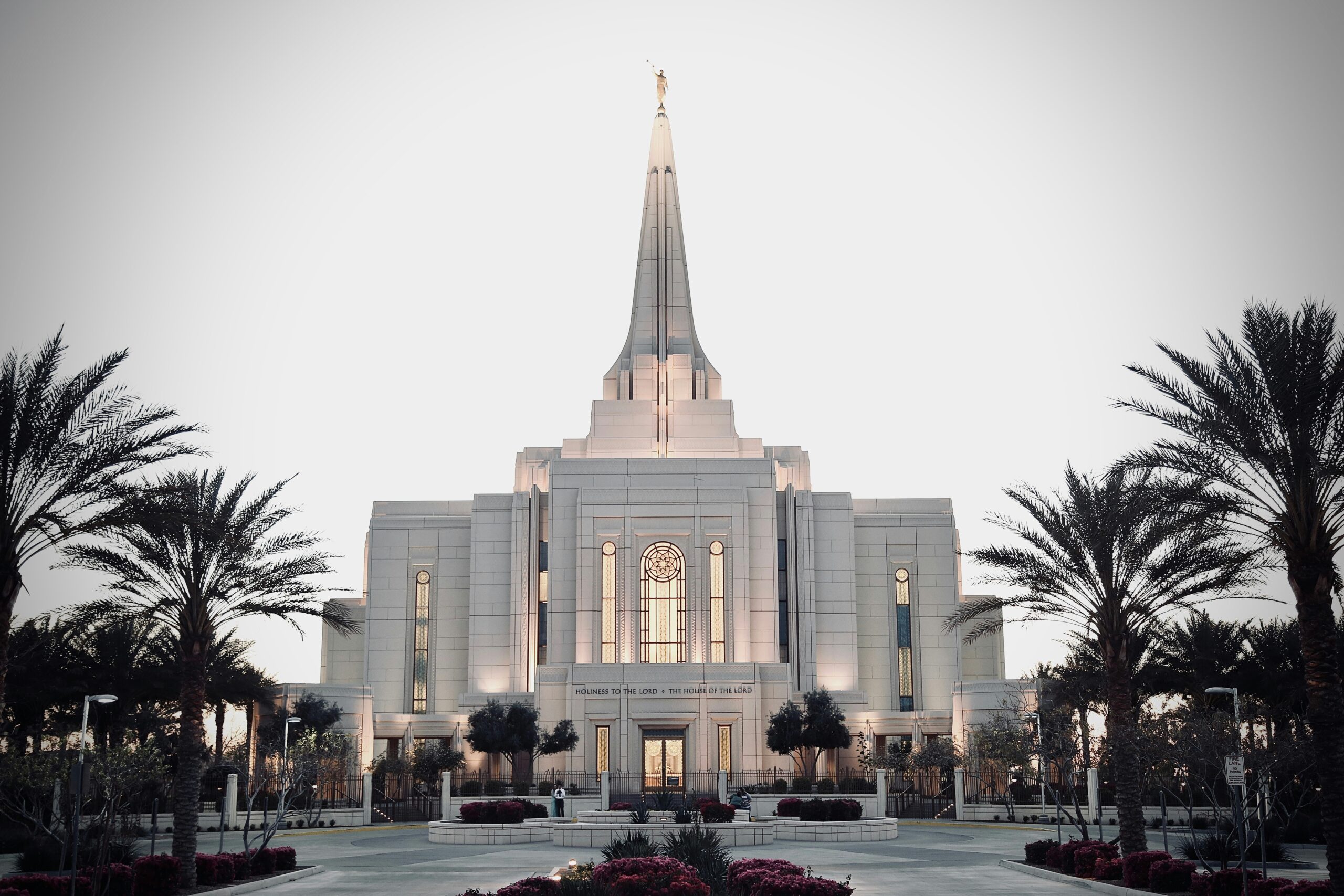
The most important place of worship for the Church of Jesus Christ of Latter-day Saints is the Temple. It is seen as the house of the Lord. Ordinances such as eternal marriage […]
-
Prayer and Meditation
Prayer is to God and no one else. It consists of a sincere heartfelt talk with Heavenly Father. It is seen as a way of knowing God and moving closer to him, […]
-
Pilgrimage
There is no formal or institutional pilgrimage required in the Church of Jesus Christ of Latter-day Saints, not even to Salt Lake City, where the Church is headquartered. God can be found […]
-
Expression and Worship
The singing of hymns is an important form of religious expression and worship in the Church of Jesus Christ of Latter-day Saints. Latter-day Saints sing many traditional Christian hymns, but also have […]
-
Art, Music, and Architecture
The Church of Jesus Christ of Latter-day Saints lacks a distinctive style of art and music. As noted, hymns are important for expressing Latter-day Saints stories and themes. Art by members expresses […]
Identity, Diversity and Belonging
-
Religious Identity
The identity of the Church of Jesus Christ of Latter-day Saints alternates between retrenchment from and assimilation to wider society. In the early history of the Church, the Latter-Day Saints lived separately […]
-
Family and Community
Family is central to the Church because members see God’s plan as working through the family. Family life continues beyond mortal life, members are sealed to each other for eternity that stretches […]
-
Diversity (within the tradition)
The Church was fragmented for 20 years following the death of Joseph Smith in 1844. There was an ambiguous doctrine on succession, and his eldest son, Joseph Smith III, was only 12. […]
-
Other Religions
Interfaith relations have been improving, with the Church leadership recognising and supporting the need for positive relations with other faiths. Historically the Church was isolationist, and in some views, supremacist. They see […]
Meaning, Purpose and Truth
-
Religious Experience
Religious experience for members of the Latter-Day Saints includes an important component of individual spiritual connection with and witness from God. Life is led as a quest for perfection (though unattainable as […]
-
Answers to Ultimate Questions
The answer to the ultimate questions for members of the Church of Jesus Christ of Latter-day Saints is that God has a plan, and it is up to them to choose to […]
-
Religion and Science
Scientific knowledge is revered in the Church of Jesus Christ of Latter-day Saints and a number of prominent apostles and Church leaders have been scientists. However the Church of Jesus Christ of […]
Values and Commitments
-
Moral Issues
Latter-day Saints are generally known for adhering to high moral standards. In general non-Latter-day Saints tend to think of these standards as rules requiring either great discipline or great servility; Latter-day Saints […]
-
Ethical Guidelines
The human body is seen as the Temple of God. The Word of Wisdom, a health code, was received in 1833, and adherence to key parts of it became required for Temple admission […]
-
Individual Responsibility
The Church of Jesus Christ of Latter-day Saints emphasises self-reliance, especially economically. Agency is seen as given by God. Individuals are responsible for their own choices. God has a plan but the […]
-
Community Support
The Church supports its community of believers, and the believers support the Church. Members are committed to their tithing 10 per cent of their income to the Church, a requirement for attending […]
-
The Environment
The Church teaches that God created the Earth and gave it to us as a gift. This is the stewardship idea of humanity’s relationship to nature. This means that humans are responsible […]
-
Global Vision
Missionary work is integral to the Church of Jesus Christ of Latter-day Saints. It has missions all over the world. As already mentioned, the Church encourages young men to go on a […]
Websites and Bibliography
-
Websites
Church Websites The main websites of Church of the Latter-day Saints: https://www.churchofjesuschrist.org/comeuntochrist LDS Church news: https://newsroom.churchofjesuschrist.org/ A young Latter-Day Saint woman’s blog about her missionary work in Barbados and Guadeloupe: https://sisterholtonamission.com/ Articles of Faith: https://www.churchofjesuschrist.org/comeuntochrist/article/articles-of-faith For […]
-
Bibliography
Abanes, Richard. 2002. One Nation Under Gods: A History of the Mormon Church. New York: Four Walls Eight Windows. Givens, Terry L. 2006. “The Church of Jesus Christ of Latter-day Saints” in Introduction to […]
We are indebted to Professor Eileen Barker, Founder and Director of INFORM (the Information Network on Religious Movements) and her team of researchers, for providing this new material in response to requests from RE teachers and pupils. INFORM can be contacted via www.inform.ac
The resources contained in the list of subjects below are a basic introduction to the facts and beliefs of The Church of Jesus Christ of Latter-day Saints. Although this church is also known to some as the Mormon Church their preferred title for themselves is The Church of Jesus Christ of Latter-day Saints.
Download the entire essay here
The Church of Jesus Christ of Latter-day Saints
Click here to visit our online glossary with clear definitions explaining key concepts and terms for a range of religion and worldview traditions or download the pdf version below:
Film Spotlight
Holy Cribs: The Mormon Chapel – Lewis and Leanda welcome TrueTube to the Hyde Park Mormon Chapel to give a guided tour, and talk about the main beliefs of the Church of Jesus Christ of Latter-day SaintsFrom the blog
More from the blogSorry no results