Global terms: Pagan

Belinda Twiggs | 30 April, 2026

An unexpected encounter

I first stumbled across a group of Druids, fully decked out in white robes, at Avebury Stone Circle in the spring of 1988.

My first thought was blunt:
What on earth do they think they are doing?

Curiosity got the better of me and I struck up a conversation with one of them. He looked for all the world like Dumbledore, dressed head to toe in white. As he talked, calmly eating a cheese sandwich that seemed tiny in his huge hands, his answers to my questions were thoughtful and profound.

When he finished eating, he reached behind a standing stone, pulled out a harp, and began to play. The tune was beautiful, lively and unmistakably Celtic. Others began to drum and dance.

At the end of the afternoon, he put on biking leathers, strapped the harp to the back of his Harley-Davidson, and roared off.

I learnt an important lesson that day: never judge a book by its cover.

Coming out as a Druid

It took me around fifteen years to feel comfortable wearing a robe in public, and nearly thirty years to ‘come out’ openly as a Druid. Fear of criticism, especially for following something seen as outside the mainstream or a little ‘wyrd’ (the spelling is deliberate-look it up), held me back.

Eventually, though, it felt important to be honest.

Occasionally, this leads to amusing moments. Children sometimes say to me in the dinner queue,
“I saw you on TV last night, Miss. Dad loves Joanna Lumley!”

They are referring to a brief appearance in Home Sweet Home, a documentary filmed at Merrivale Stones on Dartmoor during the 2021 COVID restrictions. The episode shows Joanna Lumley meeting Druids and observing a Samhain ritual. It is short, but it mattered to me as an example of lived practice being seen, however fleetingly, on national television.

Samhain: remembering those who came before us

Samhain is one of eight seasonal festivals celebrated by many (though not all) Pagans. It takes place on 31 October and has ancient roots that long predate Christianity.

This is the time of year when people historically gathered around the hearth, as the days shortened and darkness increased. Stories of spirits and the dead grew more powerful as the light faded. The idea that “the veil is thin” reflects a sense of closeness between the living and the dead.

At Samhain, we honour our well and wise ancestors. Death is something we all face, and taking time to think about loss, legacy and meaning feels both honest and necessary.

For me, this raises an ongoing question:

How can I live my life fully and well, so that my short time here is of value?

Beltane and the turning year

As the Wheel of the Year turns, we now approach Beltane (also known as Beltain or Bealtaine), marking the clear arrival of summer.

At dawn, many of us gather on Haytor on Dartmoor to watch the sun rise. It has become a large public event, with musicians, flaming torches and the Beltane Border Morris dancers. Hawthorn blossom- the second of the May blossoms- is worn in hats and woven into garlands as part of the celebration.

Songs are sung with enthusiasm, including Hal an Tow from Helston’s Furry Dance:

“We were up, long before the day-o,
To welcome in the Summer…”

Later, our Grove meets more quietly (a group where we meet together for rituals and festivals) . Having been up at around 3am to reach Haytor, we take a nap before coming together again. In ritual, we step through an archway, guarded by figures representing the Lord of the Wild Wood and the Lady Ceridwen, before leaping between two fires to symbolise cleansing and renewal.

Druidry as lived practice
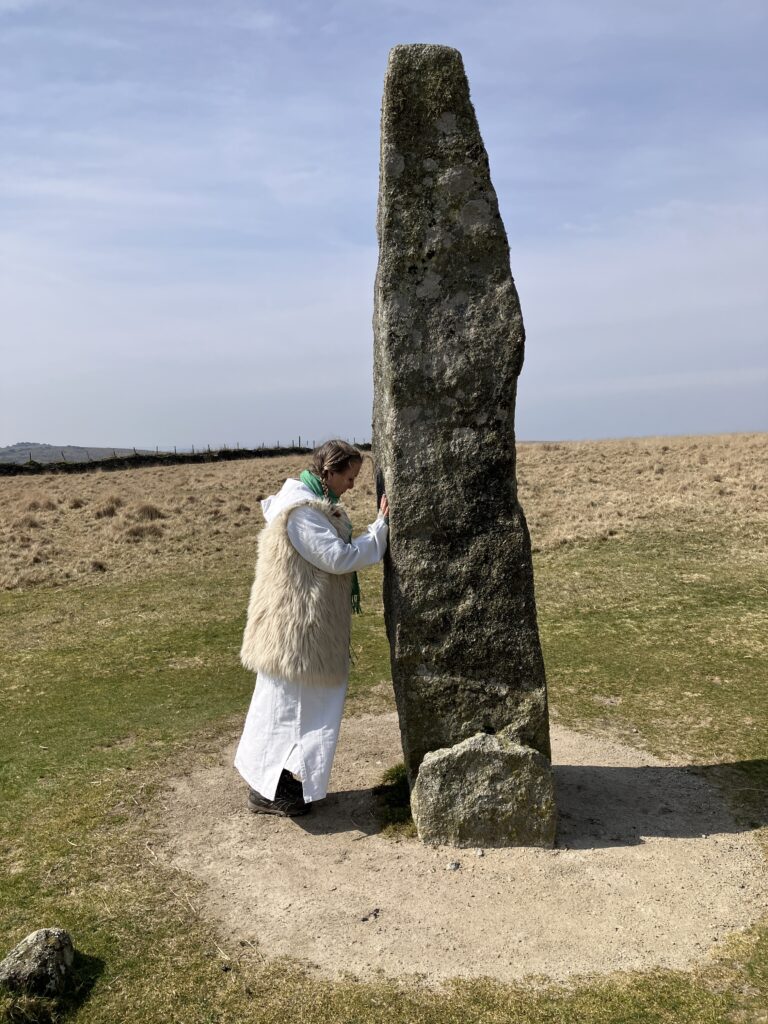
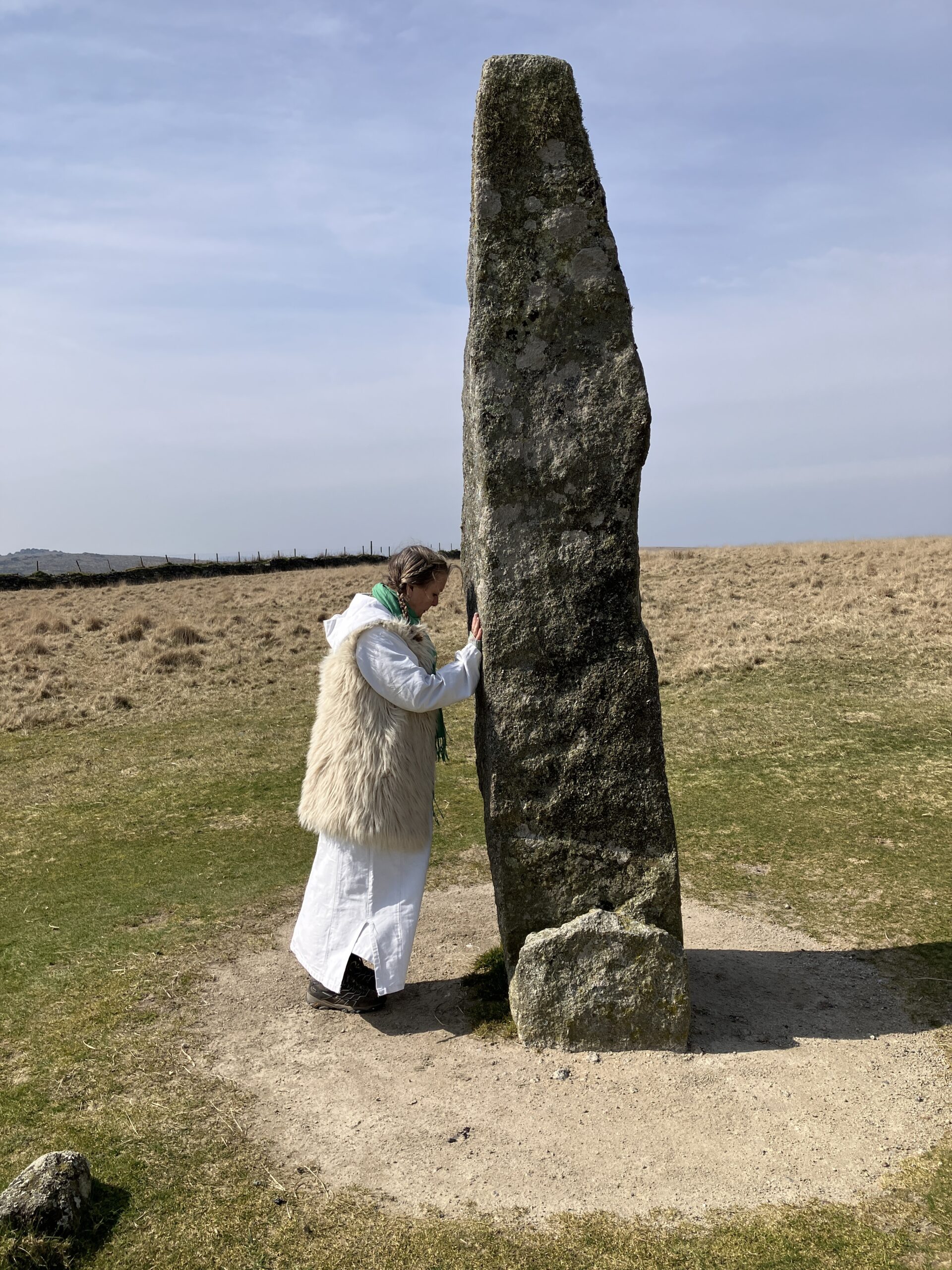
For me, Druidry is an authentic and meaningful path that honours nature, the Earth, and humanity’s place within the wider universe.

Through ritual, storytelling and communal feasting (often picnics), we mark the passage of time and celebrate the life-giving role of the sun. These gatherings happen roughly every six weeks and are as much about community as belief.

At the Spring Equinox in 2026, Dartmoor Grove met at Merrivale to celebrate the tipping point towards longer days. I am no longer concerned about how I look in public as a Druid. My practice feels honest, rooted and real.

Why this matters for RE

Stories like mine remind us that worldviews are lived, evolving and deeply human.

When pupils explore religion and worldviews, they are not just learning about beliefs. They are learning about identity, belonging, meaning and how people make sense of their lives.

Never judging a book by its cover is a good place to start.

About

Belinda Twiggs is a Primary RE Lead and teacher, LTLRE Hub Lead, Chair of Devon SACRE, Deputy Education Officer for the Pagan Federation and longtime member of OBOD working with a Grove of Bards, Ovates and Druids in Devon.

See all posts by Belinda Twiggs

Research Summary: Paganism: hard to live by, but still relevant to 21st century life?

Neo-paganism – contemporary ‘Western’ paganism, as distinct from the animist beliefs of ‘traditional’ people – is an international movement with branches in 30 countries. The Pagan Federation, founded in Britain in 1971, has as its first principle ‘Love for and kinship with nature’. But what does this mean for contemporary pagans? Is it really a description of their way of life, or is it metaphorical language, or is it romantic wishful thinking? The article gives an account of neo-pagan beliefs and practices. Neo-pagans do identify their beliefs with those of traditional animist peoples, and the article also spends some time giving accounts of those. The researcher shows that they are not totally comparable. Neo-pagan belief in kinship with nature is restricted to belief and ritual, whilst in traditional animist societies, it actually determines all of the rules of life, something which is impossible in a contemporary, pluralist society. Yet neo-pagan principles of kinship with nature are still important to the huge task of shifting people away from the damaging ideology of consumerism.

Researcher

Kathryn Rountree

Research Institution

University of Massey, New Zealand

What is this about?

  • Who are Neo-Pagans and what do they believe and practice?
  • How does their principle of ‘kinship with nature’ affect their lifestyles?
  • They identify their principle of ‘kinship with nature’ with the beliefs and cultures of traditional animist peoples, but to what extent can they be compared to such peoples? (What, in turn, do such peoples actually believe and practice?)
  • Neo-Pagans see their commitment to ‘kinship with nature’ as a solution to problems caused by twenty-first century consumerism, especially environmental problems. To what extent is this view justified?

What was done?

Mostly, the author’s research method is to review existing literature on Neo-Paganism and on traditional animist societies, but some communication via email with contemporary practitioners of neo-paganism is also evident.

Main findings and outputs

  • Neo-Paganism is an international movement with diverse members: Pagans, Wiccans, Heathens, Earth Goddess-Worshippers, Druids and Shamans. Most Neo-Paganists are animists, believing that all things on Earth have spirits. Humans are one kind of ‘people’ amongst ‘bird-people’, ‘waterfall-people’ and so on. All such ‘people’ have rights, all are inter-linked.
  • The key belief in Neo-Paganism is ‘kinship with nature’: humans have a familial relationship to all things on Earth. Some Neo-Pagans, especially in Britain, express this through environmental activism or protest. Participation in ancient rituals at sacred sites e.g. stone circles or springs is common. During such rituals, Neo-Pagans report feelings of intense communication with or non-separation from nature, or abilities to connect with local spirit beings or human ancestors.
  • Neo-Pagans choose these beliefs and rituals, but ‘traditional’ animists inherit animism as a matter of culture and law. Their kinship is with particular places, animals and / or plants. Various examples are given: for the Kamea of New Guinea, strict marriage laws mean that husbands and wives each have specific plants to grow, pieces of land take the names and identities of those working on them, trees are given names and young girls grow up eating food produced on their future husband’s land (marriages are arranged at birth).
  • Neo-Paganism is a radical alternative, hard to establish as ‘normal’, whilst traditional animism is taken for granted (though under pressure from Westernisation). It may be romantic, but ‘kinship with nature’ could be a useful strategy for working towards Earth’s sustainability.

Relevance to RE

  • The research offers very interesting and useful background information for those RE teachers seeking to include studies of Paganism in the curriculum.
  • Pedagogically speaking, the approach taken by the research could well be fruitful in the classroom. It is enquiring, sympathetic yet critical. Pupils could look into Paganism in a variety of ways (listening and responding to teacher presentations based on the article and other sources1, carrying out their own background research, receiving and interviewing a visitor, etc.) Some of the critical questions posed by the article could then be offered to pupils for discussion and debate, e.g. is it true that we are related to all other forms of life on Earth? Is it actually possible to live as if all other forms of life belong to your family? What are the strengths and weaknesses of Paganism as a way of life or philosophy, in relation to protecting the Earth for future generations? Does it have more or less to offer than the ‘mainstream’ religions which the pupils have studied?

Generalisability and potential limitations

The study is of the broad international Pagan movement, The Pagan Federation. It takes account of the fact that this movement is diverse in its membership. In comparing the beliefs of neo-pagans to traditional animist beliefs, it gives several different examples of these. The environmental issues that it raises are of very wide relevance and good for pedagogy.

Find out more

Neo-Paganism, Animism, and Kinship with Nature, Journal of Contemporary Religion, 27:2, 305-320 (published online 23 April 2012), 10.1080/13537903.2012.675746

http://dx.doi.org/10.1080/13537903.2012.675746

Resource spotlight: The Lived Worldviews of Tower Hamlets

Ruth Marx was awarded a 10th anniversary grant from Culham St Gabriel’s to research and create resources into core- Religion and Worldviews for Key Stage 5. This suite of resources is the result of this research and explores the worldviews of 13 individuals who live or work in Tower Hamlets interviewed about their worldviews. The worldviews discussed are from a range of religious and non-religious traditions and the interviewees are expressing their own opinions and not representing any organisation as a whole. Each video is accompanied by an editable power point with activities to embed and extend the learning and an overview document shows the worldview(s), themes discussed and cross curricular links which can be explored with this resource. Whilst created with core 16-19 Religion and Worldviews in mind these resources may be of use for younger age groups and for teacher CPD.

  • Could you create a suite of resources like this for your area?
  • Could you share one of these resources and compare it to a case study of a person in your area?
  • Do let us know how you use these resources?

All the resources are available in The Lived Worldviews of Tower Hamlets Padlet

A taster video is available below:

Pagan Symbols

A resource looking at symbols used with Paganism, to represent Pagan faith groups and concepts.  Students may have seen some of the symbols on clothing, jewellery, etc.

It includes independent research, which could be suitable as a piece of homework. It would fit well into a broader lesson (or series of lessons) looking at symbols and symbolism within religion. Find out more in our subject knowledge section.

Download the entire resource as a PDF