Global terms: Religion and Worldviews

A PowerPoint presentation on Hajj. It has been written by Aliya Azam.

Inclusive Judaism

The Inclusive Judaism project began in collaboration with Culham St Gabriel’s back in 2020. The goal? To ensure educators teach Judaism in an authentic, diverse, and inclusive way. It is common for students to see Jewish people through a singular lens: Traditional, modestly dressed, and white-presenting. However, this idea only reflects one part of the over 300,000 British Jewish people today.

To address these gaps in Jewish representation, The Jewish Museum London have developed two key resources: The Inclusive Judaism Image Library and Judaism through a Jewish Lens Teacher CPDs. The Image Library is a contemporary collection of free images depicting Jewish life in the UK. Each photo is accompanied by contextual information around the objects and people represented. Our Teacher CPDs support and guide RE teachers on best Jewish pedagogical practices. They are delivered in-person or online.

As you read and watch this resource spotlight you might like to consider;

  • How far does my current teaching of Judaism move beyond a single or stereotypical representation, and what might pupils be missing as a result?
  • In what ways could using contemporary images and contextual information (such as those in the Image Library) deepen pupils’ understanding of lived Jewish experience in the UK?
  • How might I develop my own subject knowledge and pedagogical approach to teaching Judaism more authentically and inclusively, for example through CPD or engagement with Jewish perspectives?

Both resources were created to aid and empower teachers in the classroom. To book an Inclusive Judaism training CPD, reach out: learning@jewishmuseum.org.uk. To start exploring our Inclusive Judaism Image library click here!

Belinda Twiggs | 30 April, 2026

An unexpected encounter

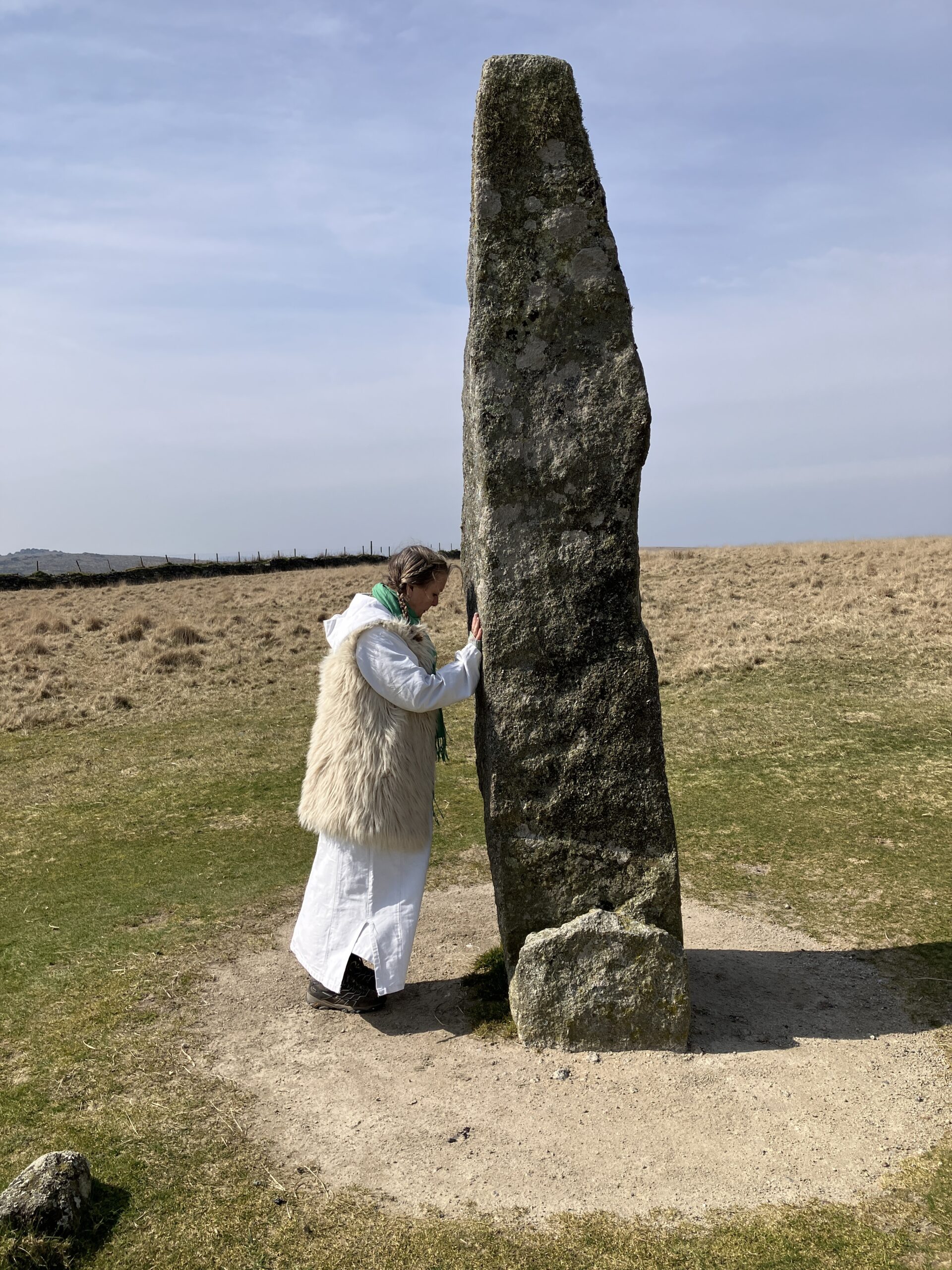
I first stumbled across a group of Druids, fully decked out in white robes, at Avebury Stone Circle in the spring of 1988.

My first thought was blunt:
What on earth do they think they are doing?

Curiosity got the better of me and I struck up a conversation with one of them. He looked for all the world like Dumbledore, dressed head to toe in white. As he talked, calmly eating a cheese sandwich that seemed tiny in his huge hands, his answers to my questions were thoughtful and profound.

When he finished eating, he reached behind a standing stone, pulled out a harp, and began to play. The tune was beautiful, lively and unmistakably Celtic. Others began to drum and dance.

At the end of the afternoon, he put on biking leathers, strapped the harp to the back of his Harley-Davidson, and roared off.

I learnt an important lesson that day: never judge a book by its cover.

Coming out as a Druid

It took me around fifteen years to feel comfortable wearing a robe in public, and nearly thirty years to ‘come out’ openly as a Druid. Fear of criticism, especially for following something seen as outside the mainstream or a little ‘wyrd’ (the spelling is deliberate-look it up), held me back.

Eventually, though, it felt important to be honest.

Occasionally, this leads to amusing moments. Children sometimes say to me in the dinner queue,
“I saw you on TV last night, Miss. Dad loves Joanna Lumley!”

They are referring to a brief appearance in Home Sweet Home, a documentary filmed at Merrivale Stones on Dartmoor during the 2021 COVID restrictions. The episode shows Joanna Lumley meeting Druids and observing a Samhain ritual. It is short, but it mattered to me as an example of lived practice being seen, however fleetingly, on national television.

Samhain: remembering those who came before us

Samhain is one of eight seasonal festivals celebrated by many (though not all) Pagans. It takes place on 31 October and has ancient roots that long predate Christianity.

This is the time of year when people historically gathered around the hearth, as the days shortened and darkness increased. Stories of spirits and the dead grew more powerful as the light faded. The idea that “the veil is thin” reflects a sense of closeness between the living and the dead.

At Samhain, we honour our well and wise ancestors. Death is something we all face, and taking time to think about loss, legacy and meaning feels both honest and necessary.

For me, this raises an ongoing question:

How can I live my life fully and well, so that my short time here is of value?

Beltane and the turning year

As the Wheel of the Year turns, we now approach Beltane (also known as Beltain or Bealtaine), marking the clear arrival of summer.

At dawn, many of us gather on Haytor on Dartmoor to watch the sun rise. It has become a large public event, with musicians, flaming torches and the Beltane Border Morris dancers. Hawthorn blossom- the second of the May blossoms- is worn in hats and woven into garlands as part of the celebration.

Songs are sung with enthusiasm, including Hal an Tow from Helston’s Furry Dance:

“We were up, long before the day-o,
To welcome in the Summer…”

Later, our Grove meets more quietly (a group where we meet together for rituals and festivals) . Having been up at around 3am to reach Haytor, we take a nap before coming together again. In ritual, we step through an archway, guarded by figures representing the Lord of the Wild Wood and the Lady Ceridwen, before leaping between two fires to symbolise cleansing and renewal.

Druidry as lived practice

For me, Druidry is an authentic and meaningful path that honours nature, the Earth, and humanity’s place within the wider universe.

Through ritual, storytelling and communal feasting (often picnics), we mark the passage of time and celebrate the life-giving role of the sun. These gatherings happen roughly every six weeks and are as much about community as belief.

At the Spring Equinox in 2026, Dartmoor Grove met at Merrivale to celebrate the tipping point towards longer days. I am no longer concerned about how I look in public as a Druid. My practice feels honest, rooted and real.

Why this matters for RE

Stories like mine remind us that worldviews are lived, evolving and deeply human.

When pupils explore religion and worldviews, they are not just learning about beliefs. They are learning about identity, belonging, meaning and how people make sense of their lives.

Never judging a book by its cover is a good place to start.

About

Belinda Twiggs is a Primary RE Lead and teacher, LTLRE Hub Lead, Chair of Devon SACRE, Deputy Education Officer for the Pagan Federation and longtime member of OBOD working with a Grove of Bards, Ovates and Druids in Devon.

See all posts by Belinda Twiggs

Jamie Woodhouse | 30 April, 2026

Part of the excitement of modern Religious Education comes from exploring non-religious worldviews with children, an important element of the REC’s Religion and Worldviews approach. That exploration is timely as around half of UK people now say they have a non-religious worldview.

One increasingly popular modern worldview, that builds on ancient ideas, is Sentientism. You may have seen it mentioned in this RE Today resource or heard about it on The RE Podcast or the What Even Is RME? podcast.

What is the Sentientism worldview?

Like other worldviews, whether religious or not, Sentientism looks to help us with the deep questions like “what’s real?”, “who matters?” and “how can we make a better world?” Sentientism suggests we start answering those questions with a commitment to “evidence, reason, and compassion for all sentient beings”.

Sentience is the capacity to feel or to have experiences like pain or happiness or love or boredom. So sentient beings are, so far, human and nonhuman animals. But, maybe one day, we’ll create or meet artificial or alien sentient beings that should matter too.

Sentientism’s “compassion for all sentient beings” shares rich common ground with religious concepts like ahimsa, compassionate stewardship, ital and avoiding mafsada. At the same time, its “evidence and reason” shares the humble, open-minded, evidence-led naturalistic epistemology of Humanism.

Is Sentientism a new idea?

While Sentientism is a fairly new word, only coined in the 1970s, its core ideas are very old, maybe even pre-human. Naturalistic epistemology and sentience-focused ethics have deep roots in many regions and cultures and times. These themes can be found in African, Asian and ancient Greek thought, for example. Some thinkers even combined these ideas into something very much like an ancient form of Sentientism.

One example is the blind Arab philosopher poet Al-Ma’arri who lived over a thousand years ago. He used a naturalistic approach to challenge religious thinking and wrote about the ethics of veganism long before the word “vegan” was invented. He’s a fascinating historic character to bring into the classroom to complement modern sentientist thinkers like Greta Thunberg, Billie Eilish, Peter Singer and Joaquin Phoenix.

Sentientism seems to be of particular interest to young people as it resonates with their concerns about the environment, their care for nonhuman animals, the threats and opportunities of artificial intelligence (could AI be sentient?) and the risks of misinformation, disinformation, conspiracism, discrimination and exclusionary ethics. Sentientism also provides a secular framework for finding meaning and purpose that many young people find compelling.

An additional attraction of teaching the Sentientism worldview is that its commitment to “evidence and reason” can be a gateway into the wider worlds of philosophy, science and the humanities. Even younger children engage richly in questions like “how can we work out what’s true?” and “who should we care about?” All too often these deep questions are neglected because we’re busy focusing on lists of beliefs and practices and on narrowly intra-human ethics.

 How can Sentientism deepen philosophical thinking in RE?

Children of all ages also enjoy exploring the sometimes radical implications of this simple, pluralistic worldview. One of the most obvious implications of Sentientism is Veganism (see VinEs great resources here), now recognised in UK and EU Equalities Law as a cogent philosophical belief and a protected characteristic. But what about Sentientist PoliticsSentientist Justice and even a Universal Declaration of Sentient Rights? We can reimagine our entire world together.

Exploring the Sentientism worldview can help you bring real philosophical depth into your classroom in an engaging way that feels fresh and relevant to young people. In my own work with schools, I find children’s curiosity and compassion bubbles up with an irrepressible energy when we work on these profound questions.

If you’re interested in digging a little deeper, here’s a recording of a recent “Teaching Sentientism” webinar. I’m also registered with RE Hubs as a nationwide school speaker for Sentientism so I can help you run classes, workshops, deliver assemblies and shape curriculums. Please do get in touch if I can help in any way. And regardless, I’d love to hear you and your children’s thoughts on the Sentientism worldview.

You can find Jamie on BlueSky (and elsewhere) @JamieWoodhouse and @Sentientism. Full links here

Jamie Woodhouse (hello@sentientism.info)

Links: YouTube (suitable for older students and teachers) Podcast Sentientism.info Community (all welcome!) @Sentientism

About

Jamie is working to develop Sentientism (“Evidence, reason, and compassion for all sentient beings”) as a worldview and as a global movement. He hosts the Sentientism Podcast and YouTube, speaks at schools and universities, and has published articles and presented academic seminars on the Sentientism philosophy and its implications. He is building a range of global Sentientism Communities (open to all) that so far span over 100 countries.

See all posts by Jamie Woodhouse

Theologies of Reading

Jennifer Jenkins, RE Facilitator for Coventry and Warwick, presents Theologies of Reading, a wide-ranging set of information concerning the reading of sacred texts. Taken from research, faith-based reading and techniques of interpretation and contemplation, these presentations contain much rich understanding for the classroom.

How do you read with your pupils? How do you help them make sense of sacred texts? Are there multiple interpretations, and how to explore these?

These presentations will help you consider how meaning is made and the relationship of text to reader with guidance and practical tips to try in the classroom.

Available here:

Introduction: this introductory presentation brings the general thinking to you. A script is given in the ‘notes’ function to help you lead a group through the presentation.

Judaism, Christianity and Islam: three separate presentations focusing on reading and interpretation in these three traditions.

Published January 2020.

Research Summary: Y12 understandings of Christianity’s internal diversity: enhancement through ethnography?

Religious Education in British schools seeks to help students learn critically about, and from, a wide range of religious phenomena. Yet, how do we ensure that these religious traditions, in all their rich diversity, are authentically represented within the Religious Education classroom? Many will do so without ever interacting with these faith communities personally. Building on the work of Robert Jackson, this research thus explores the extent to which ethnographic material can be used to invite diverse religious perspectives into the classroom, to ensure that generalised understandings of religious communities are debunked and not perpetuated.

Researchers

Zoë Grainger

Research Institution

University of Cambridge

What is this about?

  • How do Y12 students develop understanding of the diversity within Christianity?
  • To what extent can an ethnographic approach help them to do this?

What was done?

There was a review of relevant literature, followed by action research on two questions: What prior knowledge did the class have of Christianity’s internal diversity? What insights did students gain through engaging with the ethnographic material? Jackson’s interpretive approach was adapted in a Y12 scheme of work, using various materials and methods to bring diverse Christian insider voices into the classroom. The students completed questionnaires, the teacher-researcher and her mentor made observation notes, the students’ classwork was analysed and visitors from the different Christian communities were interviewed.

Main findings and outputs

  1. Ethnographic content does clarify and consolidate subject knowledge.
  2. It also aids deconstruction of stereotypes.
  3. Further, it also enables critical engagement with subject matter.
  4. Attention is also needed to how students’ understanding of religion is shaped by social media.
  5. The interpretive approach is best used alongside complementary pedagogical models, e.g. hermeneutical examination of sacred texts.

Relevance to RE

The research has various forms of relevance to RE. The original article gives a useful introduction to the interpretive approach, including practical applications and criticisms, and takes the approach into KS5 for the first documented time. It shows the value to KS5 students of interactions with religious insiders. The main findings suggest potentially useful classroom teaching strategies.

Generalisability and potential limitations

As an action research study, the research does not aim for generalisibility, but the findings certainly suggest promising avenues for other teachers to explore in their own classrooms; and the background and context of the study are very well accounted.

Find out more

The original article is: Zoë Grainger. 2023. Seeing the kaleidoscope: Investigating whether Year 12 understandings of Christianity’s internal diversity can be enhanced through an ethnographic approach. Journal of Trainee Teacher Education Research.

It can be freely downloaded from https://doi.org/10.17863/CAM.96937