Global terms: Teaching & Classroom Practice

John Maiden | 11 October, 2024

The Religion, Belief and Worldviews Hub has been created to address some key, relevant issues concerning religion. The first issue was ‘Religion and Belief’ in the Equality Act (2010). We were aware that OpenLearn had an excellent and award winning ‘Race and Ethnicity Hub’. We wanted to create another Hub which was useful to teachers and others in the public sector – for example, healthcare – and in professions such as law, in thinking through the implications of ‘Religion and belief’ as a protected characteristic in the law. The second issue we wanted to address was the growing importance of ‘Worldviews’ or a religion and worldviews approach in education. We wanted our hub to help people think through the implications of this development and support them in the classroom.

The Religion, Belief and Worldviews Hub is a platform which offers quality, free resources on religious and non-religious worldviews developed by academics at the Open University. You will find animations, videos, articles, short courses, and longer courses; for example, teachers will find resources for the classroom – from ’60 seconds in religion’ films (narrated by David Mitchell) to our 360 degree tours of London’s religious buildings. Teachers might want to start with our new animation called ‘Why Worldviews?’ to introduce our approach to the Hub. We also commissioned another animation, ‘Religion, Faith, Spirituality and Worldviews’ to explain what these different categories mean and why we use them.

We hope that this resource can help teachers of RE where there are gaps in teacher knowledge. The feedback we have had so far has been very encouraging. There must be close to 100 individual resources on the hub, addressing everything from individual festivals and events in the religious calendar, to key pedagogical issues such as decolonising religious studies. There is a rich range of materials here, which can highlight the sheer internal diversity of religious and non-religious worldviews. There is also much for continuing professional development, for example around teaching worldviews. We also have some highly innovative pedagogical resources, such as our Badged Open Course on making ‘Docutubes’ (short films) in the classroom about religious diversity, toleration and peace.

Teachers and those working in Higher Education (HE) need to learn to from each other. It should be a two-way conversation. The more we are talking to each other, aligning and making consistent what and how we teach, the better the experience for students as they move through their education. The HE sector can also assist where there are issues of capacity in teaching RE in schools. We know about the lack of resourcing for RE in the UK, and that it is sometimes taught by teachers who might be excellent but are not necessarily experts in the area and may be time poor. Where the HE sector can help by providing relevant resources which help these teachers, I think it should do so.

There is some remarkable work going on now in our subject. The move towards a religion and worldviews approach is extremely positive and groups such as the Religious Education Council, Culham St Gabriel’s and others are doing important work developing this agenda. This approach is important because it allows students to ask a different set of critical questions about religious and non-religious worldviews. In this way, it aligns well with the ‘lived’ or ‘vernacular’ religion emphasis in Religious Studies. This moves us beyond the idea of homogenous traditions and sometimes unhelpful binaries like ‘religion’ and ‘secular’.

Teachers might want to check out our free course, which lives on the hub, ‘An education in Religion and Worldviews’, which goes into the religion and worldviews approach in greater depth.

Visit the Religion, Belief and Worldviews Hub

About

John is Head of Religious Studies and Senior Lecturer at the Open University. He is the lead coordinator of the Open University Religion

See all posts by John Maiden

Thomas Breakwell | 09 October, 2024

Previously I have written about how and why my department have moved towards using booklets in RS. Here I explain how we have implemented the use of booklets for GCSE RS classes, and what we will change for the next academic year. Context In my school, RS is compulsory. All students sit the full GCSE. Students have RS three hours a fortnight with student who have elected to take three sciences at GCSE, having RS only once a fortnight. Ultimately, there is a lot of time pressure on staff and students to complete the course. As a result, efficiency matters. Booklets are a way of cutting down on wasted time (sticking sheets in, for instance) and student voice found that students did not find their books helpful for their revision as they were poorly organised and had ‘too many sheets’ and not enough ‘useful notes’. 1. Start with a house style It might seem superficial, but the attractiveness and professional quality of the booklet matters. My view is that students are more likely to treat something with respect if it looks good. Therefore, I spent time designing a ‘house style’ for each GCSE booklet.
  • What will the front cover look like?
  • What size will the font be?
  • What will the font be?
Although this took time, it made the booklets recognisably ‘RS’, rather than any other booklet students receive during their school career. When staff plan lessons for me and make booklets from these lessons, they adhere to this style and this helps ensure consistency for all. 2. Explicitly teach students how to use booklets Before booklets, I would print copies of the specification and lesson overviews and students would stick them in before starting the topic. However, unless you micromanage a 14 year to stick sheets to your exacting standards, these sheets invariably looked like they had been glued in by a child. Therefore, each booklet has a copy of the specification as well as a host of other useful things: links to previous learning, links to other subjects and QR codes with links to online resources to help with revision. This is explained to students at the start of the lesson. Students are also remined not to ‘race ahead’ and try to complete the booklet without teacher guidance. Although this might seem like I am penalising proactive students, the rationale is that the teacher many go above and beyond the contents of the booklet, they may even not complete sections and therefore students need to listen. At the start of each topic, students are explicitly reminded about how to use their booklets, that they are there to help with their studies and why what is on the specification is important. This might seem obvious, but we can sometimes assume students know this when they don’t. 3. Booklets, not book less Each lesson ends with some form of exam practice. This year, students completed this exam practice in their booklets. However, on reflection, students often did not complete as much as if they were writing in their usual exercise books. For next year we are moving to a booklets, not book less approach. Here students will complete their ‘do now’ and exam practice in their exercise books and everything else in their booklets. It also gives teachers more flexibility to adapt lessons as they see fit: the booklet is a pedagogical tool, not a tool to confine teachers. Overall, our department and students find booklets useful. They are not a replacement for great teaching, high student attendance, revision etc, but I have found them very helpful in the context in which I teach. Naturally, our department are frequently reflecting on how we use booklets, making adaptions to lessons, and will continue to make changes in the future. The key elements I have found to be important when implementing booklets at GCSE have been:
  1. A house style
  2. Explicitly teach students how to use booklets
  3. Booklets, not book less

About

Thomas is a Subject Lead for Religious Studies at Colmers School & Sixth Form College, Birmingham.

See all posts by Thomas Breakwell

Thomas Breakwell | 07 October, 2024

Booklets are like marmite; you love them or hate them. My own view on booklets had been a high- minded scepticism. I knew of teachers, entire schools and even academy trusts that implemented a ‘booklet-based curriculum’. My view was ‘you do you’, but not for me. I viewed booklets as all the things I did not want teaching to be; reductive, inflexible and uninspiring. However as Subject Lead I agreed to give them a try, persuaded by others in my team who have had a positive experience. And so, inevitably, came my Damascene conversion. This was both pragmatic as well as pedagogical. Practically, no precious RS time was taken up with ‘Sir, I don’t have a glue stick!’. Moreover, I spent no more time fixing a jammed photocopier, something we have become so adept at, it should be on Teacher’s Standards. Pedagogically, I found booklets were not a barrier to the sort of curriculum we are working towards, that is, ambitious and academic. Such a curriculum needs to be coherent and well-sequenced, which booklets allow. I realised booklets at the appropriate level of challenge provided clarity and consistency for the team as well as students. Expectations are clear, and high. My first booklet was for Year 9 about the existence of God. As a booklet novice I provided every explanation, every keyword, every activity. For some students, this was helpful, for others it was stultifying. For teachers, it was a straitjacket. I had created exactly the type of booklet I did not want. I completely changed my approach. Out went activities and in came the ‘non-negotiables’ such as reading a high-quality text, well thought-out explanations and questions which teachers could choose how they deliver. For instance, a lesson may feature reading a text and completing a table. This new approach shows what the main focus of the lesson should be, the non-negotiable, but gives plenty of time and space for exploration and discussion. Students certainly needed time to learn how to use the booklets so they were a springboard and source of support, but not a prison. Teachers are free to go beyond the booklets in conversation, and we tried to avoid the sense that the booklet just needs to be finished as fast as possible. We as a teaching team have had to adapt. Some booklet- based lessons have been great and others have bombed; whether too long or too short, or suitable for one class and not at all for another. I now bring a spare booklet to each class and scrawl notes at the end of a lesson. The adaptation process has provided some extremely helpful professional conversations. The booklets have been helpful for our non-specialists in supporting them to grasp the trajectory of a scheme of work and give high quality explanations, but they do not replace the conversations we have had as a team, addressing misconceptions and identifying improvements. When it comes to graphic design, I am about as talented as someone on the Apprentice. However, a clear and attractive design is important. We include lines and extra lines for writing, in response to student feedback. Despite my reluctance, booklets have transformed my practice. In the next blog, I explain exactly how we structure our booklets to help students prepare for GCSE study. My top tips:
  1. Non-negotiables, not activities
  2. Teach students to use the booklets
  3. Be prepared to adapt
  4. Present clearly and attractively
Want to know more? Read my next blog Booklets, not book less: Implementing booklets in GCSE Religious Studies.

About

Thomas is a Subject Lead for Religious Studies at Colmers School & Sixth Form College, Birmingham.

See all posts by Thomas Breakwell

Neil Duncalf | 01 July, 2024

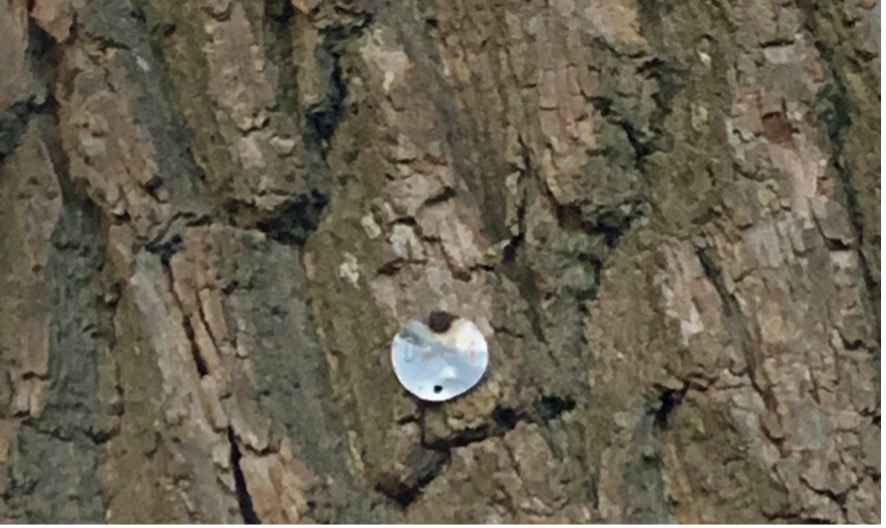
I was out taking the dog for a walk around the village the other day when I noticed that one of the oak trees on the back lane was tagged. It was only a small metal disk nailed to the tree’s trunk, but it was there to show that it was a protected tree subject to a preservation order.

small metal disk nailed to the trunk of a large old tree.

When I thought about the tree later that evening, I began to think about our role as teaching practitioners in protecting and preserving our subject in the face of the challenges education can throw at us. How can we effectively achieve this?

We need to “shout” about how important our subject is and it’s role in the school curriculum. It is not just the senior leadership team that need to hear the message but so should the school governors, the pupils and their parents. I’m not suggesting that it’s easy or that it does not need some careful planning and thought but there are some good starting points.

Firstly, make sure your RE curriculum is both progressive, engaging and stretches pupils’ learning. This is important to ensure long term pupil engagement. Help to develop the pupil voice in RE by providing ample opportunities for discussions and debates; not every lesson needs to include written work. Consider using visual evidence of pupil engagement, photographs can say a lot more than books filled with worksheets. Talking of visuals, a good way to demonstrate RE’s importance is to carry out a human mind map. This something I have used regularly at the start of each academic year. I have an A4 visual for each of the subjects on the school curriculum and I ask for a volunteer at the start explaining that the role requires someone who is very strong; I give this pupil the visual for RE. Another pupil holds up one of the subjects and the group discuss any links they can think of, once they have suggested two or three links then a string is held between them linking them together. The discussions continue in this way until all the subjects have been linked to RE. Videoing the activity with an iPad helps with the summing up at the end. Some subjects are easier to link than others; for example, history can be linked to RE because historical facts play an important role in religions. Other subjects are harder for example, physical education but with a little prompting pupils suggest things such as the issue of athletes wearing hijabs.

Some of you might think I’ve gone slightly mad, but it is a good idea to volunteer a lesson during the next round of lesson observations. As well as making sure that the lesson has plenty of evidence that meets any lesson observation briefing but include opportunities to address common misunderstandings and misconceptions. Let the pupils show that they are making links in their learning and don’t be afraid if the observer wants to talk to them. You already know that they are fully engaged and committed to their learning in your lessons. The observer will leave your lesson feeling very positive about RE and will share their thoughts with other colleagues.

Invite school governors to join one of your lessons or to observe a whole school RE activity. In my experience both as a teacher and a school governor, governors like to take advantage of opportunities to observe and learn about what goes on in our lessons. If this is not possible then volunteer to talk to the governor’s curriculum sub committee about the RE curriculum and how it strengthens the other subjects. If you can get the pupil voice and their positive thoughts on RE then so much the better. Make sure governors understand the non- academic role of RE in helping to develop pupil’s understanding and tolerance towards other peoples beliefs and how this helps them to develop their ability to be effective members of the community.

If there is a local RE Hub in your area, then make sure you join it. They are a wealth of knowledge, experience and ideas. My own local hub is called the “Pathways RE Hub,” the founding members came up with the name early and it simply stands for the “Pinch and tweak hub,” where ideas are shared and tweaked to an individual school’s need. Hubs also offer fantastic opportunities for networking and informal CPD. My other suggestion linked to hubs is to offer to host a meeting within your own school. Don’t forget to invite senior leadership and a governor or two!

As a final thought, if you are new to leading RE then in addition to joining your local hub, consider the RE Quality Mark. It can offer an excellent and effective framework for you to develop your leadership of the subject against. When you gain the quality mark whether it is bronze, silver or gold then you will have a very visual acknowledgement of how effective your RE faculty is, in the form of the certificate which can be displayed prominently for all to see.

About

Neil Duncalf is on Year 1 of the CSTG Leadership Scholarship programme. He teaches and leads RE and Humanities in an 11-18 special school in Cheshire. He also leads the Pathways RE Hub in the Cheshire West & Chester area.

See all posts by Neil Duncalf

Ian Coles | 17 May, 2024

Using faith visitors to support RE lessons is a fantastic way to develop pupils’ understanding. Encountering someone who lives their faith, who can draw on real and authentic experiences, can really make the religion come alive.

In an essentialised, world religions paradigm, using faith visitors was simple, essentially, ‘this person represents their religion, children, and whatever they tell you is what all of the other people in their religion believe as well.’ However, in a religion and worldviews approach, the relationship between faith visitors and the curriculum needs to be more nuanced. No longer do we want pupils to equate the experiences, values and beliefs of one person with all members of a religion. Faith visitors in a religion and worldviews approach is exciting, but also tricky. How to tease apart the institutional and personal elements of a visitor’s worldview, for example? Below are three practical tips:

1 – Notice essentialism in the curriculum

In the past I have certainly been guilty of posing questions such as, ‘What do Hindus believe?’ When we ask questions like this we are broadcasting to pupils that there is only one way to be a ‘proper’ Hindu. In a curriculum like this, when pupils meet a faith visitor they make all sorts of simplistic assumptions. In being aware of essentialism we can acknowledge that members of a religion act and think in very different ways, and this is completely normal. This allows pupils to interact with the knowledge in a much more explorative way.

2 – Listen to many voices

Another way that we can help pupils to explore diversity is make sure pupils hear a variety of voices. This might not always be easy or straightforward, but there are ways and means. While a real-life interaction has the greatest impact academically, if this isn’t an option then there are a plethora of videos to be found on the internet by all sorts of people on a huge array of subjects. The inclusion of any of these in lessons, will help to build up pupils’ understanding and normalise diverse perspectives for when a visitor does come in.

3 – Introduce hermeneutics

Hermeneutics seems like a complicated word, in fact Ofsted’s 2021 Research Review describes hermeneutical thinking many times without mentioning the word! Essentially hermeneutics is the idea that everyone interprets things differently. You can find a fantastic guide to it here: RE:Online – Hermeneutics. When pupils are used to exploring different interpretations, including their own, it becomes much easier to see a visitor’s interpretation as just that; one view among many. In a religion and worldviews approach, faith visitors are able to represent their religion in their own way and not answer for all other members.

As well as intellectual benefits of diverse voices, there are social benefits too. For many teachers who work in areas of low diversity, there may be local prejudice towards people who are perceived to be ‘different’. Welcoming a faith visitor provides an excellent opportunity for pupils to meet those they might not encounter outside school. These contact experiences can develop understanding and interest, and potentially decrease prejudice.

Moreover, as the religion and worldviews approach deliberately avoids associating one visitor with an entire religion, it is possible that prejudicial views will decrease as reductive and essentialising ways of seeing are no longer on the menu.

I would suggest that following a religion and worldviews approach means faith visitors are just as welcome to the classroom, for academic and social benefits. It could be argued that with this renewed emphasis on cultural context and diverse voices, faith visitors can have an even bigger impact in allowing young people to explore the connected, complicated world we live in.

About

Ian is a primary RE co-ordinator working in North Nottinghamshire, an MA student at St. Mary's, Twickenham and a recipient of the Culham St. Gabriel's Masters scholarship.

See all posts by Ian Coles

Hayley Curtis | 02 April, 2024

In this blog, Hayley discusses how her school approaches facilitating challenging current affairs conversations in the RE classroom.

As a department, we are passionate about providing our students with opportunities for informed and honest dialogue about religion, ethics and life. Recently our Year 10 students specifically requested, through a Form Captain meeting with the Head, information about the current Israel- Gaza conflict. They wanted to better understand the history and the terminology they were being exposed to through the media. We felt this request for information should be honoured by teachers, and set about the uncertain and time-consuming task of designing a new resource.

We felt it was extremely important to give an opportunity for students to have this knowledge as well as tackling issues such as misinformation. This current crisis is very present in our students’ concerns, but we respond to other global or sensitive issues in the same way as educators; we agree that students must have the information they need to make sense of the world. In previous years we have developed lessons about the Holocaust for a KS3 scheme of work. Rather than avoiding painful, emotionally-charged topics, we have learnt that staff and students are best supported when they have well-designed, accurate information, as well as different ways of seeing the information, to explore, discuss and come to a conclusion of their own.

Therefore, we created a resource which both delivered information as well as allowed students (and staff) to view the information from different perspectives. The resource begins with an exploration of the meaning of the word ‘conflict’ and moves to the historical roots of conflict between Israel and Palestine, the emergence of Hamas and the role this group plays in the situation. We termed this process ‘looking at’; seeing historical information from different points of view. This is such a valuable process in itself for teenagers as they learn to make sense of the world, whatever the topic. Then we encouraged students to ‘look beyond’ the current conflict and potential resolution through words. The words used came from two sources; interviews with a Rabbi and Imam.

We took very seriously the need to avoid a sense that anyone was ‘taking sides’, or taking a biased stance, in the terminology of the recent DfE guidance1. We are aware of powerful currents of pain, shock and fear in our students’ communities. After consulting with senior management, we took the decision to explore this resource in the classroom as part of the fortnightly Core Ethics programme for KS4. Teaching staff were briefed and given the options to take part or all of the lesson to deliver. After the lessons we completed a debrief and feedback session with staff.

We found that each lesson varied due to the shape of the questions students asked and the ensuing discussion. Generally, students were very keen to understand the history of Israel and Palestine especially as they had previously studied the region in a KS3 unit on Jesus and early Christianity. Teachers found that this process of simply understanding the current crisis led to discussion reflecting students’ concerns about others’ perceptions. It was interesting to see that this was as much of a issue to students as a desire to gain knowledge. Teachers also found that groups spent time discussing ideas around conflict resolution.

We plan to introduce the resource to Year 9 with a wider set of voices considered as part of the ‘looking beyond’ section. We have shared this resource with our local RE network. A member of staff will be running a workshop for teachers in the wider network before they bring the resource to their students. This model has shown us that schools can provide a space for students to make sense of some of the planet’s most urgent conflicts, where the suffering seems incomprehensible, when staff work together, take responsibility for identifying accurate information, and are also able to explore the information from different perspectives. It is surely our job as teachers to help our young people make sense of the world.

Recommended by NATRE, you might find this curated list of resources to support schools when addressing contentious topics helpful. 

About

Hayley is Joint Curriculum Leader for Religious Studies and Ethics at Dartford Grammar School for Girls. She is passionate about high quality teaching and learning, as well as the capacity of the subject to allow young people to explore the views of themselves and others.

See all posts by Hayley Curtis

Naomi Johnston | 20 February, 2024

The first thing I need to say is that I am a non-specialist Head of RS. Yes, we exist! You might know someone similar. My specialism is actually English. At a time when I was looking to get back into teaching, having taken time out to raise my daughter, there was an urgent shortage of RE teachers in my area. Having grown up in a religious family, where my father was an elder of the Evangelical Free Church, I have always had a strong interest in religion, so I jumped at the chance. I imagined it would be ‘safer’ than diving into teaching English. Looking back this seems like a very naive view!

As I got used to the department, I began to see limitations in the curriculum when it came to teaching about Christianity. Lessons in no way explored the wide variety of views, traditions and beliefs that I was aware of. I wondered how far this must be the same for other faiths too. When my head of department left I applied to become the subject lead for RS, and then my journey as an RS teacher really began.

In many ways English and RS compliment each other. Both are about observing small details and using them to make sense of the whole. English however offers constant opportunities to explore different interpretations of a source, different arguments and is completely open to the idea that views change over time. This could be part of RS, but it is not as established as English at present. For me this would be what a shift to Religion and Worldviews could look like.

I found the multitude of conversations I had with students each day fascinating. The biggest challenge has been to distill thousands of years of history and belief, especially when there is no curriculum that supports this. I have spent my first two years on the job building a Religion and Worldviews curriculum.

When we gained out first GCSE cohort, I was delighted to discover the Big Ideas approach for AQA Christianity at GCSE on RE:ONLINE (referenced below).

The curriculum covers all the main points of the GCSE specification and is fully resourced, but what I like most is the Big Ideas approach itself. There is a big question to answer every couple of lessons, and content is framed by a mixture of philosophical, ethical, historical and theological questions. These are the Big Ideas in effect. Framing the subject content with the Big Ideas has allowed me to use examples from different Christian traditions. I found my students enjoyed the philosophical questions especially, which enhanced engagement and progress.

I have used the Big Ideas curriculum for my current Year 10s and can see already that they retain much more conceptual information than students did last year, before we adopted Big Ideas. The approach gives students an accessible way to think about religion, a subject many do not know anything about.

Inspired by this success, I am now embarking on creating my own GCSE curriculum following the same approach for Buddhism. Watch this space!

I am interested to see how this approach to teaching influences our teaching and curriculum design at KS3. We have found separating knowledge into different Big Ideas helpful for so many reasons, but mostly because it allows students to explore complexity, retain information and make connections.

Read about the Big Ideas approach and check out the GCSE Christianity and Islam curricula for yourself https://www.reonline.org.uk/teaching-resources/big-ideas-curriculum/

Find out more about the Big Ideas approach, including lessons and teaching material: https://bigideasforre.org/

About

Naomi is RS Subject Lead at a small secondary school in the South East

See all posts by Naomi Johnston

Ruth Marx | 02 February, 2024

Our Resource of the Month is a unit of work designed by Ruth Marx exploring how religion can be classified, to allow pupils to answer the question, ‘what is religion?’. In this blog Ruth explains the thinking and inspiration behind her work, which was originally created with Isobel Boyson at the Bridge Academy, Hackney, London.
The main aim of this teaching resource is to help teachers explore the phenomenon of religion and some key thinkers exploring the classifications and origins of religion. The resource takes a disciplinary approach and introduces some key thinkers whose ideas have been used to challenge religious belief, offering opportunities for evaluation throughout. The resource includes explainer YouTube clips around the key thinkers which can either be used for staff subject knowledge or shown directly to the class, as well as knowledge organisers for teachers. I was teaching much of this content to my A Level classes and wanted to explore these ideas with a younger age group, many of whom may not take RS A Level, so I designed a unit of work for Key stage 3. It was first taught to Year 9, and has subsequently been taught to a non-examined Humanities Pathway cohort of year 9/10/11 students. Since then I’ve offered the resource widely to the Religion and Worldviews community as there seems to be an appetite for this approach. So far it has been sent out to 50 teachers across the country. My aim in writing this blog is to share the resource with many more. In creating these lessons I am hoping to support teachers who want to develop a multidisciplinary approach in their classrooms. I was first inspired by a note in the 2018 CoRE Report that the idea of ‘what is religion itself’ is missing from most syllabuses. The resource supports teachers who are interested to explore topics around atheism and non-religious worldviews. The resource also shows teachers how they can introduce scholarship to a younger age range. A lesson on Jedism as a religion was added to allow discussion of this subject in light of the England and Wales census. There are many ways to improve our subject knowledge as teachers, even if we are short of time. Reading of course, but podcasts are a great way to gain knowledge if you can’t find time for reading, such as Panpsycast and the RE Podcast. There are online sources of support, such as RE:ONLINE, on Facebook, @Team RE- UK on Twitter, NATRE resources, and much more- if you want to explore there will be a community for you. Getting together with other teachers through local Hubs and networks is also incredibly valuable. It is such a vibrant and exciting time to be an RE teacher and the best thing is that I feel the community are supporting one another through the transition to Religion and Worldviews. If anyone tries these resources I would love to hear from them; how did students respond, what kind of discussions took place in the classroom? Do please let me know, as we move into this new era of RE together. Contact: ruth.h.marx@gmail.com Find Ruth’s resources below: ‘What is Religion?’ Unit of Work Booklet to support the learning Explainer videos for teachers and students

About

Ruth was an RE teacher in London for 20 years and now works as a consultant and author in Religion and Worldviews and PSHE support. She now lives in South West France and can be contacted via X (formerly twitter) @MzMarxRE

See all posts by Ruth Marx

Jane Brooke | 02 January, 2024

I will talk about a new resource called ‘Mixing Lenses’, written for Primary teachers to explore the ways scientific language and religious language can overlap. For readers who are not Primary teachers, don’t be put off- there is lots here for Secondary- age students, and you may well be asking similar questions to myself. The aim of the resource is to support pupils in making sense of the world using language at the interface of science and Christianity. I started with some significant questions; are there new ways to approach engagement with science and faith? Can the ways that we help children to explore both science and faith be mixed together? How can we show children a meaningful intertwining of the language of science and faith in the classroom? I have been concerned over the years when I see an ‘either/ or’ mentality applied to science and faith; as if pupils have to choose. Yet of course both modes of thinking offer meaning, and many people comfortably employ both. This is nothing new – for many years we have tried to help young people understand that a believer of any faith can also be a scientist. This often involves myth- busting, for example, dispelling the myth that Genesis is read in the same way as a science book. The Mixing Lenses resource for teachers has emerged from my work with Chester Cathedral Education Department. Workshops on science and faith were taken into schools, funded by a group called Scientists in Congregations. Scientists in Congregations celebrates the scientists who are present in church congregations. The group seeks to understand and share ideas around science and faith, developing material for teaching and encouraging the creative and at times surprising thinking that arises from explorations in this area. Find out more on the ECLAS website. You may have heard of God and the Big Bang, a project to provide space for school students to explore science and faith in creative ways. RE Today have produced a set of teaching resources following God and the Big Bang topics for Primary and Secondary. As my own work was with Chester Cathedral I focused on Christian faith but the questions and information could be explored with any faith. It occurred to me that both faith and science: a. have language in common. b. use both metaphor and analogy to aid understanding of concepts. This got me thinking, and four questions emerged which have become the basis of my planning:
  1. What are the concepts within the science and RE topics?
  2. What is the vocabulary to be taught in Science and RE (in my case, Christianity)?
  3. What activity can be planned to link the vocabulary between the subjects and so offer deeper understanding? What question could be asked to lead the activity?
  4. What questions can be asked during the activity/discussion or on completion?
The resource established the parameters of this field of thinking for teachers using learning theories such as Piaget and Vygotsky. The resource then works through some practical examples. For example, the resource connects and explores the idea of circuits in science, and discipleship in Christianity. Circuits can break, and children can explore how to keep a circuit open and running. In a Christian life, sometimes events keep people from being disciples, their circuit has broken. Children can explore what might cause someone to stray away from their path, and the help and support they can receive the find it again. The resource makes many other connections in this way, such as the idea of a sound wave, and the idea of love travelling to reach people. This resource is free for teachers. I hope it is useful. I am also interested to know if readers think there is mileage in developing this further, with other key stages and faiths. If anyone would like to pilot the material or offer suggestions, I would be delighted! Contact: Canon Jane Brooke jane.brooke333@gmail.com  

About

Jane has worked in schools as Head of RE, written syllabi, advised in dioceses and local authorities, and inspected Religious Education. Jane and Mary Myatt co-founded the RE Quality Mark.

See all posts by Jane Brooke

Nadia Nadeem | 01 December, 2023

I was intrigued by this project because it was an opportunity for me to learn about a topic I had never given any real thought to; how animals are farmed, and what are ethical ways of thinking about this. The project is CEFAW: Christian Ethics of Farmed Animals Welfare. The CEFAW project is an engaging and accessible way to educate pupils about farming practices and the ethical questions raised, such as responsible meat consumption. As a teacher, I was able to tailor the lesson plans and resources created through the project to enable pupils from all backgrounds to explore these ideas, contextualising what this means for Christians, the animals, farmers and for pupils as individuals – now and in the future.

I have always been mindful of what children put into their bodies and how this can impact their physical, emotional and mental wellbeing and consequently their ability to learn and be responsible members of society. I had been recently researching the impact hormone injected chickens can have on children and what some of the signs are of this impact.

For these reasons, when the opportunity to work alongside leading experts like David Clough and James Holt presented itself, I was excited to explore how a topic I am interested in personally, will develop through the RE lens.

I worked with two primary colleagues – Mel Gilbert and Stacey Cowell- which was a wonderful experience in itself. We shared ideas and experiences and provided each other with advice and support to refine our thoughts. Working with teachers from different parts of the country made certain that the resources were reflective of all pupils.

Furthermore, being provided with forums where I could share my research and experience from the project has facilitated me to continuously reflect on how the project can be utilised in the primary classroom and its potential long-term impact on the environment and young people’s health. For this I am grateful to Culham St Gabriel’s Trust!

One of the many things that I have taken away from this project, is the effectiveness of using discursive questions to stimulate pupils to think critically, review their opinions and experiences considering what they are learning and researching in lessons as well as the wider implication of key concepts and ideas.

Regardless to say, participating in such projects has its own barriers. As a fulltime teacher in Year 6, I had to consider whether I would be able to manage the deadlines and workload. I couldn’t attend the residential as it clashed with SATs. Consequently, I didn’t have the first hand experience of being on a farm; a highlight of the project. Despite my own unfortunate diary clash, it is essential for teachers to take such opportunities, which prevents our teaching from becoming stale and invigorates our own thinking.

Every time I participate in classroom-based research, my class enjoys the benefits of learning something controversial, being able to ask difficult questions and appreciating it is not necessary that everyone agrees to everything.

When the CEFAW resources are available for distribution, I believe everyone should evaluate how their pupils can benefit and trial them.

Our pupils live in a complicated world where most of what they experience is through a screen – the CEFAW project teaches compassion for living things – it teaches to connect with what is happening around you.

About

Nadia Nadeem works in Primary education whilst supporting RE in Barking and Dagenham as an Advisory Teacher.

See all posts by Nadia Nadeem