This September I am more aware than usual both of new beginnings and time passing. Although I have been in my school for almost two years, it has been mostly in lockdown. My experience of the school has not been in normal times, to say the least. When colleagues talk about a room, a person, a form to fill in, a process, an event, I am lost, it is like I started yesterday. I have existed in a bubble and now the bubble is burst.
Being back in the classroom, no longer confined to my metre box at the front, feels full of possibilities- students can work in groups and we can be more active in our learning, I can wander up to the back row or talk to a student quietly at their desk, rather than from the front of the room. Students can let off steam outside at break and lunch, no longer confined to their classrooms and bubbles. Being outside with all of year 7 and 8 as they tear around the playground feels surprisingly joyful, not how I would have described break duty before the pandemic.
I am also aware of changes closer to home. My daughter has started in Year 7. I have welcomed thousands of Year 7s in my almost 20 years in the classroom. Now I am finding out what goes on at home- making sense of the new systems, what books and kit are needed for each day, the pressures of homework. It is tiring and can be fraught if we are second-guessing a teacher’s instructions. But it is also exciting- a more independent young person is emerging, ready to take on these new challenges.
I have had the pleasure of working with Kathryn and the Culham St Gabriel’s team for some years. I am excited and privileged to take over stewardship of RE:ONLINE, building on the excellent work of my friend David Rees, who is much missed. RE:ONLINE brings together practical, classroom-focused guidance and resources, current research and information to keep you up to date. We will continue to offer high quality, practical and supportive material, whether for use in your classrooms or to adapt for another period of home learning. As always we welcome blogs from teachers or those working in and around religion and worldviews education. Email ideas you would like to share, however half-formed. We will develop them together.
We are developing an exciting online CPD platform for teachers- watch this space! The ‘In Conversation’ events which ran throughout two lockdowns will continue for the foreseeable future. These have been extremely beneficial in both communicating current research and thinking and allowing people to connect with others. It has been wonderful to see new faces at every session, perhaps people who would not usually join a face-to-face group for a variety of reasons. We look forward to welcoming new people to every event. These events and others like it have been an unexpected benefit of the pandemic.
As we look forward to a new term, some things feel really new- the mingling, mixing and moving feels at once rather scary and liberating. We are also looking back at almost two years of completely different working. We have learnt how to support each other in new ways, we have learnt to use Zoom (no mean feat), we have learnt how to carry on and how to change. Whatever is around the corner, we are looking forward to working with you. Have a great term!
About
Kate teaches part-time in a secondary school in inner London, is an RE Advisor and is Culham St Gabriel's Lead Consultant for Professional Development. Email: kate@cstg.org.uk

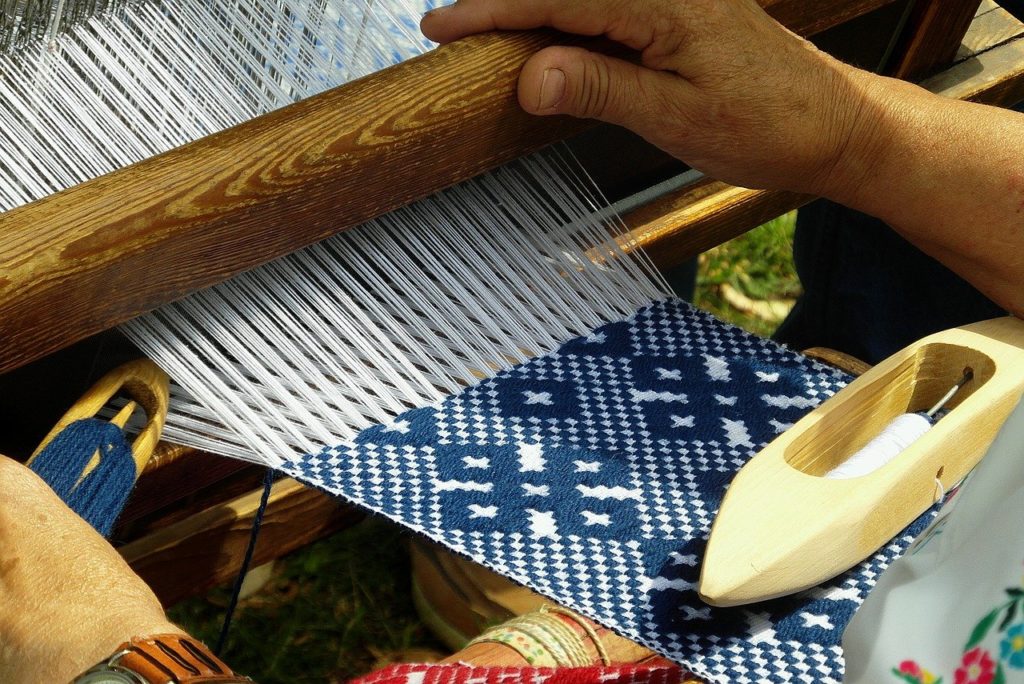 The curriculum– this is like a developing tapestry. In theory it may have an ‘end point’ (i.e., end of formal education) but in my opinion it continues through our lifetime as we develop the three different types of knowledge. Therefore, it might be described as an unfinished tapestry. This emphasises the flexible nature of curricula. Yet this fluidity still enables the tapestry or knowledge to build over time into a beautiful masterpiece….
Substantive Knowledge – this is the warp. These are the threads on the loom over and under which other threads are passed to make the tapestry. Without this there would be no tapestry! The warp is laid out at the beginning with a clear sense of what you are going to produce. There is some intent here. Choices must be made about how many threads, how wide the tapestry will be and so on. This is like the choices that must be made in relation to the substantive content. Ofsted talks about illustrative content that leads to an end goal.
Ways of Knowing or Disciplinary Knowledge – these are threads of the weft. They are woven in and out of the substantive content. This is important. Unless they are woven into the content, they will not contribute to the overall tapestry. This means that as pupils’ journey through the substantive content they learn about and use a range of tools and methods such as interpretation, observation, analysing data and so on.
Personal Knowledge– these are also threads of the weft. They are also woven in and out of the substantive content. Our own positionality, our own worldview is woven into what it is we learn about. This means being self-aware, recognising and reflecting on how we relate to the ‘warp’ or content. This is a process of reflexivity.
So, now is the time to think about the tapestry you are creating, what choices will you make to build towards and create a masterpiece….
References:
The curriculum– this is like a developing tapestry. In theory it may have an ‘end point’ (i.e., end of formal education) but in my opinion it continues through our lifetime as we develop the three different types of knowledge. Therefore, it might be described as an unfinished tapestry. This emphasises the flexible nature of curricula. Yet this fluidity still enables the tapestry or knowledge to build over time into a beautiful masterpiece….
Substantive Knowledge – this is the warp. These are the threads on the loom over and under which other threads are passed to make the tapestry. Without this there would be no tapestry! The warp is laid out at the beginning with a clear sense of what you are going to produce. There is some intent here. Choices must be made about how many threads, how wide the tapestry will be and so on. This is like the choices that must be made in relation to the substantive content. Ofsted talks about illustrative content that leads to an end goal.
Ways of Knowing or Disciplinary Knowledge – these are threads of the weft. They are woven in and out of the substantive content. This is important. Unless they are woven into the content, they will not contribute to the overall tapestry. This means that as pupils’ journey through the substantive content they learn about and use a range of tools and methods such as interpretation, observation, analysing data and so on.
Personal Knowledge– these are also threads of the weft. They are also woven in and out of the substantive content. Our own positionality, our own worldview is woven into what it is we learn about. This means being self-aware, recognising and reflecting on how we relate to the ‘warp’ or content. This is a process of reflexivity.
So, now is the time to think about the tapestry you are creating, what choices will you make to build towards and create a masterpiece….
References: