I was out taking the dog for a walk around the village the other day when I noticed that one of the oak trees on the back lane was tagged. It was only a small metal disk nailed to the tree’s trunk, but it was there to show that it was a protected tree subject to a preservation order.
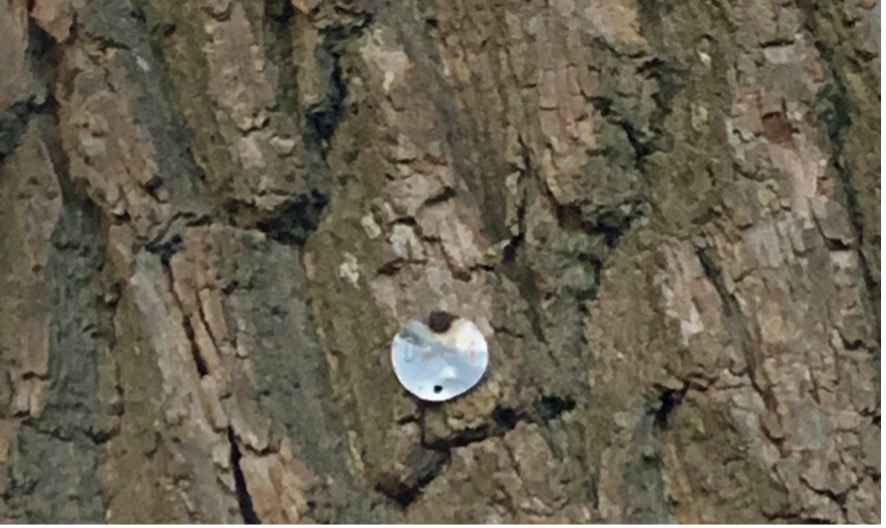
When I thought about the tree later that evening, I began to think about our role as teaching practitioners in protecting and preserving our subject in the face of the challenges education can throw at us. How can we effectively achieve this?
We need to “shout” about how important our subject is and it’s role in the school curriculum. It is not just the senior leadership team that need to hear the message but so should the school governors, the pupils and their parents. I’m not suggesting that it’s easy or that it does not need some careful planning and thought but there are some good starting points.
Firstly, make sure your RE curriculum is both progressive, engaging and stretches pupils’ learning. This is important to ensure long term pupil engagement. Help to develop the pupil voice in RE by providing ample opportunities for discussions and debates; not every lesson needs to include written work. Consider using visual evidence of pupil engagement, photographs can say a lot more than books filled with worksheets. Talking of visuals, a good way to demonstrate RE’s importance is to carry out a human mind map. This something I have used regularly at the start of each academic year. I have an A4 visual for each of the subjects on the school curriculum and I ask for a volunteer at the start explaining that the role requires someone who is very strong; I give this pupil the visual for RE. Another pupil holds up one of the subjects and the group discuss any links they can think of, once they have suggested two or three links then a string is held between them linking them together. The discussions continue in this way until all the subjects have been linked to RE. Videoing the activity with an iPad helps with the summing up at the end. Some subjects are easier to link than others; for example, history can be linked to RE because historical facts play an important role in religions. Other subjects are harder for example, physical education but with a little prompting pupils suggest things such as the issue of athletes wearing hijabs.
Some of you might think I’ve gone slightly mad, but it is a good idea to volunteer a lesson during the next round of lesson observations. As well as making sure that the lesson has plenty of evidence that meets any lesson observation briefing but include opportunities to address common misunderstandings and misconceptions. Let the pupils show that they are making links in their learning and don’t be afraid if the observer wants to talk to them. You already know that they are fully engaged and committed to their learning in your lessons. The observer will leave your lesson feeling very positive about RE and will share their thoughts with other colleagues.
Invite school governors to join one of your lessons or to observe a whole school RE activity. In my experience both as a teacher and a school governor, governors like to take advantage of opportunities to observe and learn about what goes on in our lessons. If this is not possible then volunteer to talk to the governor’s curriculum sub committee about the RE curriculum and how it strengthens the other subjects. If you can get the pupil voice and their positive thoughts on RE then so much the better. Make sure governors understand the non- academic role of RE in helping to develop pupil’s understanding and tolerance towards other peoples beliefs and how this helps them to develop their ability to be effective members of the community.
If there is a local RE Hub in your area, then make sure you join it. They are a wealth of knowledge, experience and ideas. My own local hub is called the “Pathways RE Hub,” the founding members came up with the name early and it simply stands for the “Pinch and tweak hub,” where ideas are shared and tweaked to an individual school’s need. Hubs also offer fantastic opportunities for networking and informal CPD. My other suggestion linked to hubs is to offer to host a meeting within your own school. Don’t forget to invite senior leadership and a governor or two!
As a final thought, if you are new to leading RE then in addition to joining your local hub, consider the RE Quality Mark. It can offer an excellent and effective framework for you to develop your leadership of the subject against. When you gain the quality mark whether it is bronze, silver or gold then you will have a very visual acknowledgement of how effective your RE faculty is, in the form of the certificate which can be displayed prominently for all to see.
About
Neil Duncalf is on Year 1 of the CSTG Leadership Scholarship programme. He teaches and leads RE and Humanities in an 11-18 special school in Cheshire. He also leads the Pathways RE Hub in the Cheshire West & Chester area.
 Culham St Gabriel’s Trust turns 10 years old on 21st June 2022! 2012 was an important year in many different ways- the Diamond Jubliee and the London Olympics spring to mind- I also turned 40 that year too! However, the birth of Culham St Gabriel’s bringing together two church college Trusts was a very significant moment for the religious education community. In this blog a former Chair and director express their reflections, alongside the current chair. I also draw out some themes running through the last 10 years and what these might mean for the next decade.
Reflections from the first Chair of Culham St Gabriel’s, Dr Priscilla Chadwick OBE…
‘Culham St Gabriel’s was created in 2012 by the coming together of two church college trusts which had worked in close partnership for several years prior to the merger. St Gabriel’s Trust arose originally from the college’s closure by Mrs Thatcher in 1977, leading to the transfer of its buildings to Goldsmith’s College. At that time, St Gabriel’s had only enough money to offer a few book grants each year, but a wise legal adviser had inserted a footnote to the transfer that, should Goldsmith’s ever wish to relinquish the buildings, these would revert to the St Gabriel’s trustees at the original price! Thus the trustees were able to sell the college on to another educational institution, thereby providing the Trust with a significant charitable endowment for the future.
The charitable objects enabled the trustees to support RE teachers wishing to enhance their postgraduate qualifications and later created an important partnership with the Culham Educational Foundation, setting up the St Gabriel’s Programme. This initiative developed innovative resources for RE and established the annual St Gabriel’s Weekend, firstly in Sunningdale and later at Wokefield Park, offering a free of charge opportunity for RE teachers to come together in a residential setting and share good practice, something that most would otherwise be unable to do, isolated in their own schools and often undermined by government educational policy: for many, these weekends were utterly transformative professional experiences which inspired them as they returned to their schools.
When in 2012 the two clerks of St Gabriel’s and Culham were both planning to retire, the opportunity arose for the two trustee bodies to come together, building on the cooperation over many years, to create the Culham St Gabriel’s Trust. Thus the significant legacy of both colleges would be safeguarded for future generations of RE teachers. With a generous endowment, this now meant that the Trust could more easily support major national initiatives such as the RE Council and the 2018 Commission on RE. This commitment vital to RE continues to flourish under the strong leadership of Kathryn Wright.’
What strikes me about Priscilla’s reflections is that the Trust’s focus on free, transformative, and inspiring resources and professional development still very much lies at the heart of the Trust. The reimagining of RE:ONLINE over the last few years, our scholarship programmes and the recent launch of our free e-learning platform continue to fulfil this mission.
Reflections from the first Director of Culham St Gabriel’s, Dr Mark Chater…
First, the merger itself: I gather that the idea first occurred to Priscilla and John Gay while on a walk. From this the idea grew, building on the many years in which the two former Trusts had worked together. Mutual trust, confidence and enthusiasm deepened. John Keast chaired the Implementation Committee which looked after the details – of which there were many! Within only a few years, Trustees saw themselves as ‘CSTG’ rather than ‘Former C’ or ‘Former St G’. Now, everyone takes the existence of the merged Trust for granted. But it was a major achievement at the time, based on shared vision and painstaking care over detail.
Modernising the grant application process to make it more user-friendly for applicants, and less burdensome for Trustees, was an early achievement. Putting it onto an online process with new, RE-focused grant criteria helped to place CSTG on the map. The feedback from grantees was positive. Sharing information and ideas with other RE grant-givers has also grown gradually.
Three significant CSTG grant decisions which, perhaps, have deeply influenced the course of RE for the medium term: Understanding Christianity, the NATRE/RE Today regional champions, and the Commission. The first of these had a long and at times lively gestation, but eventuated in resources which really enhanced the rigour and excellence of RE. The regional champions have strengthened the infrastructure of support available to teachers, and contributed to the growth and sustainability of NATRE. The Commission, which submitted its final report and recommendations in 2018, changed the conversation about the future of RE (or Religion & Worldviews) and we wait in joyful hope for a government bold enough to implement the much-needed change which it envisaged.
But that is not the end of the story. I hope and pray that CSTG will continue its vital leadership, support, and innovative thinking for many years to come.
Having worked with Mark for a number of years as a CSTG Consultant I think he instilled in me an understanding of the Trust’s forward-thinking approach. Mark’s reflections show how the Trust has always been sensitive to the ever-changing educational landscape, responding to new contexts. At its heart, though always remains the focus on serving others in the best possible way. Therefore, we have some exciting new grant making plans to announce. Firstly, we are launching special
Culham St Gabriel’s Trust turns 10 years old on 21st June 2022! 2012 was an important year in many different ways- the Diamond Jubliee and the London Olympics spring to mind- I also turned 40 that year too! However, the birth of Culham St Gabriel’s bringing together two church college Trusts was a very significant moment for the religious education community. In this blog a former Chair and director express their reflections, alongside the current chair. I also draw out some themes running through the last 10 years and what these might mean for the next decade.
Reflections from the first Chair of Culham St Gabriel’s, Dr Priscilla Chadwick OBE…
‘Culham St Gabriel’s was created in 2012 by the coming together of two church college trusts which had worked in close partnership for several years prior to the merger. St Gabriel’s Trust arose originally from the college’s closure by Mrs Thatcher in 1977, leading to the transfer of its buildings to Goldsmith’s College. At that time, St Gabriel’s had only enough money to offer a few book grants each year, but a wise legal adviser had inserted a footnote to the transfer that, should Goldsmith’s ever wish to relinquish the buildings, these would revert to the St Gabriel’s trustees at the original price! Thus the trustees were able to sell the college on to another educational institution, thereby providing the Trust with a significant charitable endowment for the future.
The charitable objects enabled the trustees to support RE teachers wishing to enhance their postgraduate qualifications and later created an important partnership with the Culham Educational Foundation, setting up the St Gabriel’s Programme. This initiative developed innovative resources for RE and established the annual St Gabriel’s Weekend, firstly in Sunningdale and later at Wokefield Park, offering a free of charge opportunity for RE teachers to come together in a residential setting and share good practice, something that most would otherwise be unable to do, isolated in their own schools and often undermined by government educational policy: for many, these weekends were utterly transformative professional experiences which inspired them as they returned to their schools.
When in 2012 the two clerks of St Gabriel’s and Culham were both planning to retire, the opportunity arose for the two trustee bodies to come together, building on the cooperation over many years, to create the Culham St Gabriel’s Trust. Thus the significant legacy of both colleges would be safeguarded for future generations of RE teachers. With a generous endowment, this now meant that the Trust could more easily support major national initiatives such as the RE Council and the 2018 Commission on RE. This commitment vital to RE continues to flourish under the strong leadership of Kathryn Wright.’
What strikes me about Priscilla’s reflections is that the Trust’s focus on free, transformative, and inspiring resources and professional development still very much lies at the heart of the Trust. The reimagining of RE:ONLINE over the last few years, our scholarship programmes and the recent launch of our free e-learning platform continue to fulfil this mission.
Reflections from the first Director of Culham St Gabriel’s, Dr Mark Chater…
First, the merger itself: I gather that the idea first occurred to Priscilla and John Gay while on a walk. From this the idea grew, building on the many years in which the two former Trusts had worked together. Mutual trust, confidence and enthusiasm deepened. John Keast chaired the Implementation Committee which looked after the details – of which there were many! Within only a few years, Trustees saw themselves as ‘CSTG’ rather than ‘Former C’ or ‘Former St G’. Now, everyone takes the existence of the merged Trust for granted. But it was a major achievement at the time, based on shared vision and painstaking care over detail.
Modernising the grant application process to make it more user-friendly for applicants, and less burdensome for Trustees, was an early achievement. Putting it onto an online process with new, RE-focused grant criteria helped to place CSTG on the map. The feedback from grantees was positive. Sharing information and ideas with other RE grant-givers has also grown gradually.
Three significant CSTG grant decisions which, perhaps, have deeply influenced the course of RE for the medium term: Understanding Christianity, the NATRE/RE Today regional champions, and the Commission. The first of these had a long and at times lively gestation, but eventuated in resources which really enhanced the rigour and excellence of RE. The regional champions have strengthened the infrastructure of support available to teachers, and contributed to the growth and sustainability of NATRE. The Commission, which submitted its final report and recommendations in 2018, changed the conversation about the future of RE (or Religion & Worldviews) and we wait in joyful hope for a government bold enough to implement the much-needed change which it envisaged.
But that is not the end of the story. I hope and pray that CSTG will continue its vital leadership, support, and innovative thinking for many years to come.
Having worked with Mark for a number of years as a CSTG Consultant I think he instilled in me an understanding of the Trust’s forward-thinking approach. Mark’s reflections show how the Trust has always been sensitive to the ever-changing educational landscape, responding to new contexts. At its heart, though always remains the focus on serving others in the best possible way. Therefore, we have some exciting new grant making plans to announce. Firstly, we are launching special