Global terms: Other Evidence Informed Practice & Research

Teacher Case Study: Fay Lowe

I am Researching…

the extent to which a locally agreed syllabus can meet the moral development needs of white British working-class boys, in an area where there is a high prevalence of far-right extremism.  This topic is one that matters because it is now being recognised that far-right extremism, which has to some extent been overlooked by the media and even government policy in the past, is a growing threat to our society (Thomas, 2012; Abbas and Awan, 2015).

My research will engage with the challenges facing white working-class boys in education and the implications this has for their moral development. It is not until more recently that white working-class boys have been recognised in their underachievement in school (Demie and Kirstin, 2014; Demie and Mclean, 2017). The factors contributing to their educational underachievement including social, economic, and cultural are beginning to be acknowledged and the wider implications these have, including and importantly for this research, a lack of identity within educational contexts. The curriculum doesn’t reflect the culture and lives of working-class children (Demie and Kirstin, 2014)  For Reay (2018), this is an inherent problem with an education system that was not created for the working classes. This can lead to resistance from the pupils (Bright, 2011) and a struggle to understand their identity in such a context (Ingram, 2009, 2011). It is this lack of identity and specifically for this research, their moral identity, which can contribute to the reason why some of these boys then become involved in far-right extremism. My research will explore this further and consider if there are ways this can be countered through the Religious Studies curriculum.

When exploring morality and moral identity, I will consider what morality is and why I believe RE has a place in supporting a pupil’s moral development. Moral education can be seen to “assist young people to live more meaningfully and rightly in the light of a clear recognition of the greater value for positive human development of some principles and qualities over others” (Carr, 2005, p. 25). For this research, the unique moral development need being considered is how white British boys living in areas of high prevalence of right-wing extremism, can identify the principles and qualities that are of greater value, against some local acceptance of extreme views, racism and violence. Eaude (2011) in relation to the role RE has to play in this, whilst accepting that moral education needs to be in the whole life of the school, recognises that RE has a distinctive contribution to make to moral education. For him, this contribution is to consider how religious traditions have understood morality and to set issues of morality within this context, encouraging critical engagement.

To consider the ways which the curriculum can meet the moral development needs of white British working-class boys, a preliminary study of the locally agreed syllabuses needs to be carried out. The locally agreed syllabus is a curriculum document unique to Religious Education in England (and Wales). Local Authorities are required to produce their own syllabus for the teaching of RE. The area where this research is based uses a syllabus written in collaboration with RE Today Services, the trading arm of the ecumenical charity Christian Education and an organisation that has provided syllabuses for many areas across the country. My research will consider the place of white British working-class boys within this syllabus, but also highlight its intended contribution to moral development. As a result, I will begin to highlight how this syllabus may or may not be meeting their moral development needs. Following this a more in-depth analysis will be made through mixed methods research, engaging with the target group of boys themselves, to find out their views on their own moral development and the contribution RE has played. I will also consider the views of those involved in the production of the syllabus and the teachers who have recontextualised the syllabus for their classrooms about the extent to which they see the syllabus having an impact. Further research could be carried out with those involved in preventing violent extremism or policy makers when considering the recommendations that may be made by this research.

References:

Abbas, T. and Awan, I. (2015) Limits of UK Counterterrorism Policy and its Implications for Islamophobia and Far Right Extremism, International Journal for Crime, Justice and Social Democracy. Available at: https://www.crimejusticejournal.com/article/view (Accessed: 25 January 2021).

Bright, N. G. (2011) ‘“Off The Model”: resistant spaces, school disaffection and “aspiration” in a former coal-mining community’, Children’s geographies, 9(1), pp. 63–78. doi: 10.1080/14733285.2011.540440.

Carr, D. (2005) Making Sense of Education: An Introduction to the Philosophy and Theory of Education and Teaching. Routledge.

Demie, F. and Kirstin, L. (2014) Raising the Achievement of White Working Class Pupils. Lambeth Research and Statistics Unit Education, p. 43. Available at: https://www.lambeth.gov.uk/rsu/sites/www.lambeth.gov.uk.rsu/files/Raising_the_Achievement_of_White_Working_Class_Pupils_-_Barriers_and_School_Strategies_2014.pdf (Accessed: 9 January 2021).

Demie, F. and Mclean, C. (2017) Narrowing the Achievement Gap of Disadvantaged Pupils. Lambeth Research and Statistics Unit Education. Available at: https://www.researchgate.net/profile/Feyisa-Demie/publication/316701342_Narrowing_the_Achievement_Gap_of_Disadvantaged_Pupils/links/590de27ba6fdccad7b10b818/Narrowing-the-Achievement-Gap-of-Disadvantaged-Pupils.pdf.

Eaude, T. (2011) ‘Spiritual and Moral Development’, in Barnes, L. P. (ed.) Debates in Religious Education. Routledge, pp. 134–145. doi: 10.4324/9780203813805-19.

Ingram, N. (2009) ‘Working‐class boys, educational success and the misrecognition of working‐class culture’, British Journal of Sociology of Education, 30(4), pp. 421–434. doi: 10.1080/01425690902954604.

Ingram, N. (2011) ‘Within School and Beyond the Gate: The Complexities of Being Educationally Successful and Working Class’, Sociology (Oxford), 45(2), pp. 287–302. doi: 10.1177/0038038510394017.

Reay, D. (2018) ‘Miseducation: inequality, education and the working classes’, International Studies in Sociology of Education, 27(4), pp. 453–456. doi: 10.1080/09620214.2018.1531229.

Thomas, P. (2012) Responding to the Threat of Violent Extremism – Failing to Prevent. London, UK: Bloomsbury Academic. Available at: http://eprints.hud.ac.uk/id/eprint/14969/ (Accessed: 8 March 2021).

Fay Lowe

has been teaching RE for 15 years.  She is currently the Head of RE at a high school in Rochdale.  She is also studying for a PhD in Education at the School of Interdisciplinary Studies, Glasgow University where her research interests include moral education, the locally agreed syllabus and preventing far-right extremism. In that precious unit of time called ‘free-time’, she is usually either playing the violin or walking the hills and reservoirs around Manchester.

@FayLucille08

Update: Fay has now completed her research and has written about it here and in the Scotsman. Look out for further writing.

Research Summary: Does it matter whether Buddhists have home shrines?

Previous research has recognized shrines in homes as sites of shared memory which bring the sacred into the home. For Buddhists, shrines occupy a grey area between the cultural and the religious. A quantitative study of 417 British teenagers self-identifying as Buddhists found that the 70% who had a home shrine were less likely to visit a Buddhist temple, but more likely to exhibit daily personal religious practice and to bow to parents. Those with shrines were generally happier at school, more communal and strict about intoxicants. Heightened religiosity was linked with having a home shrine, particularly for female, late-teen, and heritage Buddhists. For these groups of Buddhists, a shrine represents a site for shared memory, whilst for males, early teens, and converts, there is more a sense of shrines giving focus to their Buddhist identity.

Researcher

Phra Nicholas Thanissaro

Research Institution

University of Warwick

What is this about?

This research is about shrines in Buddhist homes and what they signify. Are they cultural or religious? How do they affect the religiosity of Buddhist teenagers? Does this vary according to different sub-groups, including male or female, early or late teen, heritage or convert, for example? The study is of different Buddhist teenagers in Britain.

What was done?

A survey questionnaire was completed by 417 self-identifying teenage Buddhists. The sample consisted of 225 males (54%) and 192 females (46%) aged between 13 and 20, with an ethnic composition of Asian (52%), White (34%), Mixed (11%), Chinese (2%), and Black (1%). In terms of the temple institutions they attended, to give some idea of the national Buddhist traditions included, the sample included Sinhalese (23%), Thai (16%), Tibetan (12%), Burmese (11%), Vietnamese (9%), Japanese (5%), Bangladeshi (3%), Western (2%), Chinese (2%), Nepalese (2%), and Cambodian (1%).

Main findings and outputs

  • 70% of British Buddhist teenagers had a shrine in their homes.
  • Having a shrine was likely to correspond generally with heightened religiosity but lower mystical orientation.
  • Those with a shrine at home were significantly more likely to have a daily religious practice (22%) than those without a shrine (7%). Those with a shrine were also significantly more likely to bow to their parents (66%) than those without shrines (36%). Those with a shrine were significantly less likely to attend a temple on a weekly basis (41%) than those who had no home shrine (74%).
  • Home shrines are significantly linked with Buddhist religiosity in female, heritage Buddhists in their late teens.
  • For these Buddhists in particular, the shrine helps remind them about the Buddha and Buddhist clergy as symbols of their religion.
  • This includes feeling that life has a sense of purpose, considering oneself a ‘proper’ Buddhist, and thinking that Buddhist monks do a good job.
  • For male, convert, and early teen Buddhists particularly, the presence of the shrine can be seen as a symbol of the self or identity formation.

Relevance to RE

The research is relevant to RE practice because it shows how teachers need to be sensitive to different factors about religion – it is specifically about Buddhism but has relevance regarding religious traditions in general. The researcher warns about the danger in presenting Buddhism as simply a set of beliefs, which is a distortion because ritual practice in the home as well as the temple is clearly significant to Buddhists. Yet he also presents evidence that ritual practice in the case of a home shrine is significant in different ways to different Buddhists; that it differs by gender, for instance, or whether one is a heritage or a convert Buddhist, is a reminder of the need to explore the diversity within religions when teaching about them.

Generalisability and potential limitations

This is a fairly large and differentiated survey. The researcher does identify some questions for future research, not yet addressed, which could elaborate upon the study of shrine-related practice using qualitative research. It might explore details such as observation of the daily context in which Buddhists practise in relation to their shrines, how they practise, what they worship, what they chant, how often they chant, whether they are alone when they practise or with their family, and so on.

Find out more

The original article is: Phra Nicholas Thanissaro (2018) Buddhist shrines: bringing sacred context and shared memory into the home, Journal of Contemporary Religion, 33:2, 319-335.

https://www.tandfonline.com/doi/abs/10.1080/13537903.2018.1469277

Research Summary: Do Jain teachings solve the ecological crisis?

From proclaiming the equality of all life forms to the stringent emphasis placed upon nonviolent behavior (ahimsa), and once more to the pronounced intention for limiting one’s possessions (aparigraha), Jainism has often been pointed to for its admirably eco-friendly example. The Jain-inspired Anuvrat Movement, founded in 1949 by Acharya Sri Tulsi, is relevant today. Anuvrat’s final vow (vow eleven) calls for practitioners to “refrain from such acts as are likely to cause pollution and harm the environment,” and to avoid the “cutting down of trees” and the “wasting of water”. When it comes to the modern eco-conscious imperative to “live simply so that others may simply live”, this research argues, there is indeed much that Anuvrat has to offer.

Researcher

Michael Reading

Research Institution

Mt. St. Mary’s University, Los Angeles

What is this about?

  • Jainism.
  • The Anuvrat Movement.
  • Eco-conscious living.
  • Ecology.
  • Ecological vow-taking.

What was done?

This is a critical, scholarly study of Jainism, the Anuvrat Movement and their relevance to contemporary ecological problems.

Main findings and outputs

  • Jain beliefs and practices, e.g. ahimsa (non-violence to all beings) are highly relevant to ecological problems.
  • A further ideal, aparigraha, refers both to the physical limiting of one’s possessions, as well as one’s achieving a general state of spiritual detachment, also a highly eco-friendly stance.
  • The Anuvrat Movement, launched in 1949 by Acharya Sri Tulsi, revolved around what he perceived to be a moral deterioration within Indian society. To remedy the situation he encouraged all people to take a set of vows (not only Jains but also Hindus, Muslims, Christians and Sikhs have participated).
  • The vows are based on traditional Jain and Yoga vows, and also include one (the eleventh) of particular ecological relevance:
    I will do my best to refrain from such acts as are likely to cause pollution and harm the environment.
    I will not cut down trees.
    I will not waste water.
  • There are others of relevance, e.g. the seventh enjoins limiting one’s acquisitions – and 42% of greenhouse gas emissions is caused by consumer goods production.

Relevance to RE

This research has clear relevance to RE. Teachers can use it to develop their knowledge of Jainism. It also has clear applications to ethics courses and units of study. As reported, Tulsi placed emphasis on individual conduct. His teachings can frame questions such as: to what extent are we responsible? How important or difficult are lifestyle changes? How effective can vows be, and to whom or what might a non-religious person vow? Teachers are encouraged to read the whole article, which also contains interesting points not summarised above, concerning psychology, addiction and self-examination.

Generalisability and potential limitations

Rather than generalisable, the research is a scholarly account of one influential religious tradition and its possible contemporary relevance. People will have different views about Jainism and ecology, pointing out, for instance, that it originated as a soteriological not ecological movement, but the author explicitly recognises this.

Find out more

The original article is Michael Reading, The Anuvrat Movement: A Case Study of Jain-inspired Ethical and Eco-conscious Living, Religions 2019: 10 (11), 636

https://www.mdpi.com/2077-1444/10/11/636

 Research Digest: British Religion in Numbers

British Religion in Numbers is an online religious data resource. Numbers aren’t just for statisticians. People want to visualise and understand data for work, for study, for general interest, or to settle a debate: how large? how many? how typical?

That’s from the introduction to the British Religion in Numbers (BRIN) database, managed by the British Academy for the Humanities and Social Sciences: http://www.brin.ac.uk/ The database is itself an ongoing research project. And it’s for use by researchers, who are weighing up questions like these –

  • How secular, or religiously diverse, is Britain?
  • Do people see religious and political identities as conflicting?
  • How does religion affect lifestyle, health, and what opportunities are open to people?

It should be clear that the resource is useful to teachers as well as researchers (or illustrates how a teacher often needs to be a researcher). As it says, people need to use data for study purposes or to settle debates. Pupils are no exception, and teachers should ensure that the data we present to our pupils when teaching is up-to-date and accurate. BRIN provides a searchable database including government sources, opinion polls and faith community sources. There are figures, maps and charts, and guides to understanding the various data.

Teaching ideas

Representations of Muslims and Islam in the British media

The following is from the Counting Religion in Britain bulletin (number 74, November 2021) (page 7):

“In a 320-page report for the Centre for Media Monitoring at the Muslim Council of Britain, Faisal Hanif explores British Media’s Coverage of Muslims and Islam (2018–2020). The methodology for the underlying research comprised daily monitoring, between October 2018 and September 2019, of 34 British media websites and 38 television channels using keyword searches, leading to the identification of 47,818 articles and 5,512 broadcast clips referring to Muslims and/or Islam, followed by analysis of each article or clip against five metrics to determine whether it was affirmative or not affirmative in nature. Almost three-fifths (59%) of the articles were found to incorporate negative references to Muslims or Islam, while 21% were judged antagonistic and 14% biased. In his conclusion, Hanif asserts that ‘a large section of the media still favours voices that echo colonial era tropes which see Muslims as dangerous fanatics, terrorists and misogynists whilst giving preference to voices which regurgitate these tropes.’ He claims not to seek any special treatment for Muslims; rather he wants journalists to depict them consistently as for other social groups. The report is available at: https://cfmm.org.uk/wp-content/uploads/2021/11/CfMM-Annual-Report-2018-2020- digital.pdf ”

  • Your first task is to decide where to place this content in your curriculum and why. (Translating it into teaching material could be a very engaging and productive meeting agenda!) If including it in a unit about Islam, it might be best towards the close, for reasons that are given later.
  • Secondly, it is important to give attention to the language use. Try to re-create the excerpt so that it meets the pupils’ needs. Remember that they don’t only need to grasp it straightaway. They need to be stretched and challenged by it, developing new or improved knowledge, understanding, skills and dispositions. So, our suggestion is to leave some of the language as it is: e.g., ‘negative’, ‘antagonistic’, ‘biased’ are terms worth exploring with pupils.
  • Thirdly, consider how to introduce the re-worked material. You could create a power-point slide and give a brief lecture, or a handout for pupils to go through in pairs or groups; whichever way, allow time for questions and discussion afterwards, until you are sure that all are clear about the content.
  • That gives you the first broad part of a lesson (but adapt these suggestions as you see fit; you might begin with a quick ‘brainstorm’ about why the coverage of any group by the media matters, to establish the purposes of the lesson on secure grounds, before moving to the excerpt).
  • The pupils could next move into a task focused on these figures: ‘Almost three-fifths (59%) of the articles were found to incorporate negative references to Muslims or Islam, while 21% were judged antagonistic and 14% biased.’ Can they prepare to explain the differences between ‘negative’, ‘antagonistic’ and ‘biased’, perhaps with examples?
  • After some pupils have offered explanations for discussion, and when all are clear about the language and meaning, move into a plenary task. This could also form the basis of a homework write-up or reflective essay. It might be in two parts: first, comment on the researcher’s call for no special treatment for Muslims; rather, journalists to depict them consistently as for other groups. Second, from what you learned about Islam and Muslims in this unit, what would you say to those negatively biased against them: what positive media stories should be told? You need to go into detail about people’s practice of Islam, in their communities. Pupils could also be directed to the work of the Religion and Media Centre.

Depicting the ethnicity of Jesus Christ: What is acceptable?

See: http://www.brin.ac.uk/wp-content/uploads/2022/01/No-75-December-2021-1.pdf

The link is to the December 2021 edition of Counting Religion in Britain. Its first entry is about an opinion poll on what is acceptable when Jesus’s ethnicity is depicted. The poll was an online survey by YouGov of a national cross-section of 1,714 Britons carried out on 14– 15 December 2021. These were the headline figures:

  • 58% of the public think Jesus is usually depicted in images as a white person and 22% as Middle Eastern.
  • When asked which racial group he could be depicted as being from, 68% believed Middle Eastern was acceptable, 63% white, 44% black, 40% as South Asian, and 37% as East Asian.

The questions were also put to a sample of 1,023 black, Asian, and minority ethnic adults on 8–16 December 2021. In this case:

  • 60% felt it acceptable to depict Jesus as Middle Eastern. In a sub-sample of respondents who were Christian, the result was the same.

More details, including full data tables, can be viewed here.

The linked article – Matthew Smith’s What race can Jesus be? – contains the following paragraphs:

“The image of Christ as a man with white skin and blue eyes would appear to be at odds with what is likely, given the biblical account of his family hailing from the Middle East.

Nevertheless, Britons are far more likely to say they usually see Jesus being depicted as White (58%) than Middle Eastern (22%).

This is despite the fact that a Middle Eastern Jesus is the one that makes most sense to Britons. Two thirds (68%) say it would be acceptable to depict Christ as having Middle Eastern racial characteristics, compared to only 9% who disagree.”

The article also gives age-related data. “There is a noticeable age difference on these two characterisations: while opinion is near identical across all ages for a Middle Eastern Jesus, younger Britons are less accepting of a White saviour (51% of 18-24 year olds, 61% of 25-49 year olds) than their elders (66-67% of those aged 50 and above).”

Some ideas for basing teaching on the research now follow.

  • As with the representations of Muslims and Islam in the British media research, decide where to include the material in your curriculum. It could be in a topic on Christianity, Jesus, religion and the arts, or religion and social or community cohesion.
  • Within a lesson, it also has various possible uses (introduction, main task(s), plenary, or summary). In the outline given below, the idea is that pupils will be initially engaged by images rather than statistics.
  • You could begin by presenting a series of images of Jesus, varying by ethnic or other appearance, and asking pupils to respond to each. Where is it from? What is the artist trying to convey? What else strikes you? Which is most likely to ne historically accurate and why? In looking for images, you might start at Jen Jenkins’s superb RE:engaging collection of (mainly) Christian iconography from different traditions it/6AcFrY2 We are very grateful to Jen for this resource.
  • Then introduce the YouGov poll, talking briefly through some headline data before giving pupils a more detailed datasheet to discuss in pairs or groups. Why do you think British people are much more likely to see Jesus depicted as White than Middle Eastern? Why is there a big difference between the Jesus most British people would expect to see and the depiction of Jesus that makes most sense to them? Why do you think younger people are less accepting of the idea of a White Jesus?
  • Finally, take and discuss feedback of ideas from pairs or groups. This could precede a concluding discussion on why all this matters. Is it only a question of historical accuracy, or is more at stake? For Justine Ball, a dominant White depiction of Jesus “does not allow an opportunity for all children regardless of their background to see themselves in the teaching resources used and is something which suggests that a colonised curriculum is present in RE”. See Justine Ball, An approach to decolonising teaching about Jesus in Primary Schools

Justine’s piece describes her own research in this area and makes practice recommendations, including that we should not only consider what we present, but what we leave out; that Jesus’s Jewish context should be referenced; and that “the artwork that teachers use should not only reflect the worldwide global nature of Christianity, but also reflect the multicultural nature of Christianity in the UK.”

Download these resources

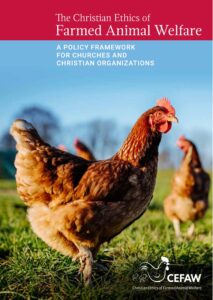
Front cover of The Christian Ethics of Framed Animal Welfare A ploy Framework for churches and Christian Organisations. Has an image of 3 chickens in a field on a sunny day.

Teacher Case Study: CEFAW Three-Teacher Case Study

CEFAW is a research project funded by the Arts and Humanities Research Council aimed at developing a Christian ethics of farmed animal welfare for Christian institutions, with thirteen institutional partners, including major UK churches. In its final year, it has been exploring ways in which the project might inform the teaching of Religious Education and the wider practice of schools.

The project’s output includes ‘The Christian Ethics of Farmed Animal Welfare: A Policy Framework for Churches and Christian Organizations’, which provides a foundation for Christian concerns about farmed animal welfare; species-specific explanations of what farmed animals need to flourish; information about which assurance schemes support flourishing conditions; and recommendations for individual and community responses. You can download the Policy Framework, request a free copy, and find supporting resources such as a short animated video introducing the project on the Policy pages.

CEFAW selected 12 teachers to develop teaching materials suited to their students and schools, with support and guidance from the Research Team: Professor David Clough (School of Divinity, University of Aberdeen), Principal Investigator; Dr James Holt (Faculty of Education, University of Chester), Researcher; and Dr Margaret B. Adam (School of Divinity, University of Aberdeen), Postdoctoral Researcher.


Here, three of the participating teachers share their experiences with CEFAW Education:

Nadia Nadeem teaches Year 6 at Rose Lane Primary School, in Romford. She writes that the CEFAW Education information expanded her awareness of farmed animal welfare.

‘Some of the truths about the practices of modern-day farming are disturbing. The excess of meat consumption and lack of moderation make it essential we teach children how to lead healthy balanced lives and critically evaluate whether a product is what it claims to be. I am frustrated by the lack of support from governing bodies to ensure apt animal welfare and by a poor understanding amongst the population on the importance of healthy, nutritious and responsible consumption of food.

At Rose Lane, we already include critical thinking and being mindful, responsible humans as a core element of our curriculum. Animal welfare fits in well in our cross-cultural approach. The greatest challenge will be to ensure staff are aware of the cross curricular links and are able to reflect on prior and future learning to ensure the sequence of lessons is effective and progressive.

James Holt was fantastic in helping us to get our bearings and set the ball rolling when we were discussing what our Learning Objectives could be and how we could develop a series of lessons that are progressive in the four key areas across the primary setting. I have prepared lesson plans, quote sheets, teacher PowerPoints and facts sheets, and my students have connected with the material with lots of discussions and inspiration to make a change.

I am most excited about CEFAW Education’s ethical aspect relating to the interpretation of Dominion and Stewardship – its implementation in a practical sense and the subsequent implications for all parties. Eat little but eat well!’

Simon Archer teaches at Archbishop Tenison’s, Croydon.

‘I appreciate CEFAW Education’s cross age/stage approach that looks at how the issues of farmed animal welfare might ‘land’ with different groups, and the range of different views and approaches amongst the educators that have been involved.’

Simon notes that:

‘Farmed animal welfare fits in well with what I would ordinarily teach, as a late KS3 investigation into moral issues and practical theology.

James Holt has been great at co-ordinating and proposed brilliant and ideas and support with developing resources. I’ve been able to prepare a survey for the school, PowerPoint and worksheet materials, and specific case studies on food and faith.

I don’t think that working with other teachers as an ‘online group’ has been so effective, and developing materials in the Autumn Term – which is a very busy term – has been challenging. At the same time, the aspect of CEFAW Education that I am most enthusiastic about is helping young people discuss and encounter difficult issues in a manageable way. It’s very interesting to see how little the students have thought about these issues before being asked. I am eager for the next steps of CEFAW /Education, to see how this material can be disseminated most effectively.’

Scarlett Hayward teaches at Whitby High School in Chester. She observes that:

‘One aspect of the CEFAW Education project that has been surprising to me is the ease with which animal welfare and the politics surrounding contemporary farming can be translated to fit into the curriculum and engage students. Before engaging with the project, animal welfare, although touched on briefly, in this level of depth felt quite distant from student interests.

In KS3 we teach Environmental Ethics, including how animals are treated and the link between these two areas; in KS4, particularly within the GCSE specification, we refer to the rights of and values ascribed to animals. Farmed animal welfare stretches and challenges students further and gets them to reflect on the treatment of animals within a capacity that they will have experience of.

I have found the limited time allocated by my school to curriculum development challenging. I see students less often than other subjects in the curriculum. This should mean that certain topics which support the Locally Agreed Syllabus need to be prioritised to ensure students have an adequate understanding of them.

Working with James Holt as part of the project has been really useful. Through listening to James’ insight on pedagogy and best teaching practice, we have been able to collaborate within our subject area to produce resources which are accessible, able to be differentiated and engaging. The pedagogies discussed and deployed allow student understanding and cognition to continuously develop.

Whilst students in my school haven’t yet engaged directly with the new materials, when I have discussed the project with them many students have expressed an interest, as the questions surrounding the ethics of meat consumption and animal welfare are something they are actively engaging with both inside and outside of school.

I have prepared lesson resources including PowerPoints and supporting materials – with a particular focus on what animals need to flourish; the decisions that need to be made to run a farm and influences on this; and an assessment which considers Christian attitudes for an against animal farming.

I love the opportunity CEFAW Education provides for collaborating with like-minded professionals and academics to produce a new scheme of work which reflects upon and responds to contemporary ethical issues. I wish we had more time for face-to-face collaboration!’

The year CEFAW researchers have spent with RE teachers and a pilot group of schools has been an exciting one. It has enthused teachers about engaging with new academic research on a pressing ethical issue and using their expertise to develop learning resources that encourage their students to engage with it too. The academic members of the research team have appreciated learning from teachers about how the issues can be framed in a school context and the opportunities this provides for engaging students and questions of school practice. Teachers had the opportunity to gain academic credit for their work on the project through the University of Chester’s MA programme in Theology and Religious Studies. The project illuminates the exciting opportunities that follow from bringing teachers and academic researchers into conversation and represents a model that could be reproduced in relation to many other research areas.

Photograph of the face of David CloughProfessor David Clough, School of Divinity, University of Aberdeen

Photograph of the face of Margaret AdamDr Margaret B. Adam, School of Divinity, University of Aberdeen

Photograph of the face of Nadia NadeemNadia Nadeem, teacher

Scarlett Hayward, teacher

Photograph of the face of Simon ArcherSimon Archer, teacher

Teacher Case Study

Opening Doors: How Educational Research empowered and inspired me

During my second year of teaching I completed a Masters’ in Education with a thesis titled: When does Dialogue about Race and Racism become Dangerous within the Classroom? This explored the dynamics of a white teacher facilitating dialogue about race and co-constructing the knowledge and rules for dialogue with students. Since then, I have maintained that the M.Ed has been the most meaningful and empowering thing I have done as a teacher in my professional development.

The M.Ed allowed me to investigate a previously unexplored topic of interest within my teaching and curriculum and come to understand my students and their backgrounds more deeply. I also had the opportunity to develop a pedagogy and corresponding scheme of work for racial dialogue based on my findings. This was adopted by my department. All of these ‘in school’ benefits made the Masters valuable, but the greatest reward was in my own individual development and progression. The M.Ed taught me important skills of data analysis (further than the usual school statistical analysis), allowing a more meaningful level of reflection on curriculum and pedagogy, the application of literature and others’ knowledge to my own teaching and context and finally, how to draw meaningful conclusions based on the appraisal of evidence. All of these skills are desired from leaders, and the M.Ed gave me an opportunity to develop these within myself which have now led to further opportunities, such as a Farmington Fellowship, collaborating with Martha Shaw and Adam Dinham at Goldsmiths in their work on Innovation Through Co-production, networking with Culham St Gabriel’s Trust and beginning a PhD in January. All these opportunities came as a result of the M.Ed, therefore I can say it certainly opened many doors for me.

To provide context on how I applied and was accepted into the Masters’ course, I was a PGCE student two years before the M.Ed and had completed Masters’ accredited modules as a result of my training. I was then able to complete the M.Ed with my training provider, which allowed a smooth transition into the course as I was familiar with the facilities and staff already. My biggest apprehension when applying for the course was that during my training it became clear that educational research was a weakness of mine. Coming from a Philosophy degree I wrote conceptually, using thought experiments and counterexamples as evidence, rather than literature or data. This was a steep learning curve during my training, and I could have used this as a reason to avoid the M.Ed. However, knowing this was my weakness and being dedicated to personal development and progression I decided this is more of a reason to do the M.Ed, rather than a reason to avoid it. Consequently, I now consider these skills as my strengths in teaching. The best way to learn it, is to do it.

The M.Ed was demanding. The time pressure of weekly webinars meant I needed to balance my time well, and although at the time I saw the webinars as an inconvenience on top of my workload, they were essential and extremely beneficial at becoming acclimated to education. Also, because of the typical demands of teaching, I inevitably left the M.Ed work until half terms, which meant that I found I was sacrificing a lot of personal time. However, the benefit was worth the cost.

I would encourage any teacher looking to further their personal progression in education to undertake an M.Ed. If you are interested but don’t know where to start, contact your training provider or local University, who should be happy to help you start the next step of your journey.  I recommend choosing a subject that you want to study. I observed friends who had chosen subjects they thought would look good on a CV struggling to summon the energy to complete their studies. A subject that you are passionate about and gives you the drive to continue when you are tired and overworked. This is something that really provided me drive and motivation within the research and what encouraged me to take risks. Finally, and most importantly, ensure you make your research ‘you-centric’. The overall conclusions of the research are important, but what is more important is that you learn the skills and processes of educational research. Hopefully, education research like this opens up doors and opportunities for you as much as it did me.

Conor George is a full-time Secondary teacher in Peterborough, He is also a Farmington Fellow and has earned his Masters in Education. Conor is currently studying for his PhD, focusing on impact of religion on student achievement. Conor is interested in exploring the purpose of RE and the implications for the curriculum.

Research Summary: Can RE teachers be impartial?

This article is based on the authors’ experiences of teaching RE, educating RE teachers and carrying out research on RE. They write about how skills and attitudes supporting impartiality in RE can be developed. A relationship of trust between teacher and students is seen to be very important. In this respect, it is of benefit if teachers can build knowledge and understanding of the opinions and values of the pupils in their classes. Some student teachers or teachers with very firmly held views find it difficult to be impartial regarding RE’s content. However, using examples from their research, the authors argue that good quality teacher education can assist those wishing to take an impartial approach. They recommend further research, ideally involving partnership between researchers and practitioners.

Researchers

Robert Jackson & Judith Everington

Research Institution

University of Warwick

What is this about?

  • How can RE teachers be impartial when teaching?
  • What are the skills and attitudes that they need in order to do this?
  • How can these skills and attitudes be developed?
  • What kinds of relationships between teachers and students help teachers to be impartial?
  • How can teacher education help with this?
  • What kinds of further research are needed?

What was done?

The article brings together findings from different studies, carried out at different times and with various methodologies including Life History studies of beginning RE teachers, interviews with RE teachers, practitioner research carried out with pupils and an ethnographic study of a church.

Main findings and outputs

  • This research is about impartiality, not neutrality. Impartiality: the teacher is willing to let his or her beliefs or values form part of classroom discussion, when appropriate. Neutrality: teachers’ and pupils’ views are set aside and an ‘objective’ view of religion is sought.
  • Teacher commitment, including religious commitment, can certainly be compatible with respect for pupils’ freedom of belief or expression. Skilled teachers know when to withhold and when to communicate their views; pupils see this as professional honesty.
  • Sensitivity is needed, and self-awareness. Teachers should reflect on how their own views on religion have been formed and how these might affect their classroom presentations.
  • An interest in pupils as individual persons (rather than simply learners) is key; teachers must recognise, understand and respect their right to have life-views and beliefs that differ from their own.
  • In the case of pupils from religious backgrounds, teachers need to have sufficient knowledge of the diversity within religions to recognise the ‘position’ that a pupil holds.
  • For experienced teachers, their personal views or beliefs and those of pupils are explored in classroom discussions if a well-established relationship of trust has been achieved. One teacher was able to use his own ethnographic study of his own church as an effective learning resource.
  • Further research is needed on these issues, ideally through teacher-researcher partnerships, but the points in the article are consistent with broader-based work carried out by the Council of Europe (see second entry in Sources below).

Relevance to RE

  • Within policy, RE should not be understood as simply informing young people about religions. Young people’s own beliefs and ideas are also important, whether they are religious or not.
  • In designing the curriculum, the above point must also be kept in mind.
  • In teacher education and on a career-long basis, teachers should reflect on their own backgrounds, beliefs and motivations to teach RE.
  • They should consider how their own backgrounds, beliefs and motivations might affect how they present religion or related issues in the classroom.
  • Regarding pedagogy, RE teachers should relate to pupils as individual people and not simply learners. They should respect pupils’ rights to their own beliefs and ideas and to express these.
  • Listening to young people’s expressions of their beliefs and ideas is important for an atmosphere of trust to be built in the classroom. This is the right atmosphere for personal views to be exchanged, without pressure and with respect for difference.

Generalisability and potential limitations

As the authors say themselves, further research is needed on these issues, but the points and examples raised in the article are consistent with larger-scale European findings. Again, see the second entry in Sources below.

Find out more

Teaching inclusive religious education impartially: an English perspective, 10.1080/01416200.2016.1165184, British Journal of Religious Education 39.1 pages 7-24 (published online 9 May 2016), See also Signposts: Policy and Practice for Teaching about Religions and Non-religious Worldviews in Intercultural Education. Strasbourg: Council of Europe Publishing. European Wergeland Centre, http://www.theewc.org/Content/Library/COE-Steering-documents/Recommendations/Signposts-Policy-and-practice-for-teaching-about-religions-and-non-religious-world-views-in-intercultural-education

http://www.tandfonline.com/doi/abs/10.1080/01416200.2016.1165184

Case Study: Catriona Card

My RE Research Journey

My RE research journey began in 1998 when the Deputy Head of the infant school I was teaching at put a leaflet about Farmington Institute Millenium Awards in my hand and suggested this might be of interest to me. I began to think about what might be useful to research, eventually deciding to explore the importance of first hand experience in Key Stage 1 children’s knowledge and understanding of religions. It seemed to me that in every other subject the importance of first hand experience was recognised but in RE this was less true, particularly with regards to religions other than Christianity. My first application was unsuccessful but following further work on my ideas I was successful the following year and was awarded a Fellowship for the 2000-2001 academic year. My first Farmington Conference in Summer 2000 provided my first experience of attending presentations where I would learn from Secondary colleagues and begin to see that I could learn from research not aimed at my own phase of education.

I spent the 2001 summer term in Oxford and was guided by my tutor Nick Mead at Westminster College, which had become part of Oxford Brookes at the start of that academic year. I learnt about background reading, referencing, designing a research interview and so much more. I also benefited from time to think through my reading and the outcomes of my research questionnaires and interviews. I also realised how much I learnt by watching others teach. At the end of my term my headteacher, Jenny Cripps, travelled down from Scunthorpe to be there for my presentation. This was a real encouragement to me and made me feel valued.

My research had demonstrated to me that first hand experience did appear to have an impact and so I discussed with my headteacher changes that we might put into place to make this possible. One of our changes was to change the second religion studied to Sikhism. We have a Gurdwara locally, the Sikh community were open to visitors and this would enable our children to have that first hand experience. I also felt it was important to enable my colleagues to have the same experience and so I arranged for us to visit the Gurdwara for a Staff Meeting. My colleagues found the opportunity to meet faith members in person and talk to them to be a valuable experience. It improved their subject knowledge and raised the profile of RE in the school significantly.

Before I started my Farmington I had been considering undertaking an MEd. By the time I had completed my Farmington I had decided that I wanted my further study to be in the field of Religious Education. I spent a few months researching the available options, finding out which universities offered suitable courses and then working out which would be best for me. In 2002 I began a part time MA in Religious Education with the University of Warwick.

My time with Warwick provided me with much challenge. To study for an MA in RE when the only qualification I had was my Farmington was a very steep learning curve. There were many times when I wondered what I had got myself into! However with the support and encouragement of Professor Robert Jackson and his colleagues I discovered that yes I was capable of study at this level. My first module introduced me to the Warwick approach to Religious Education, an approach that was grounded in the research carried out by Jackson and his colleagues. As I studied I was challenged to recognise the impact of my own worldview on how I perceived the world around me. I also learnt about the variety of lived experience within different religions, something I had not really considered before.

My MA also provided me with my second experience of small scale research, this time into the use of ICT in RE, this being the early days of computers for teachers and the beginning of the rollout of interactive whiteboards. How the world has changed since then!

This research showed me how I could apply approaches from other subjects in RE. I did not create something novel, but I did learn how to adapt ideas and apply tools to RE.

One significant impact of my exposure to research just a few years into my career was to make me much more research aware. I had learnt about different types of research, about how an approach to education was built on research. I had also learnt that research carried out in one phase of education could have relevance in other phases.

All this meant that I would look at the research behind ideas and gave me a deeper understanding of the scope of research and of the importance of sample size for example. When research is mentioned in a staff meeting I am quite likely to go and look up the original article to find out more both about the findings, about the confidence in these and about confidence in the impact of the approach.

For the past few years I have been thinking about restarting my research journey. For various reasons, both personal and professional the time did not seem right. Then last year I was fortunate to be accepted onto the Culham St Gabriel’s Leadership Scholarship Programme. This has given me the opportunity to engage in a small scale research project again with support from my mentor, Gillian Georgiou, who has challenged and encouraged me. I have taken the opportunity to engage in research that extends beyond my comfort zone, beyond the phase of education that I have worked in for my whole career, looking at the impact of a multi disciplinary approach to RE in both the primary and the secondary phase of education. Doing this has helped me to realise that we have much in common from Early Years through to Key Stage 5.

As I consider what the next step on my research journey will be and how I will undertake it I have realised that learning from other key stages is not a one way process. I realised very early on in my research journey that I could learn from approaches used by colleagues in Key Stages 4 and 5. I am increasingly realising that the opposite is true and that colleagues in those phases can learn from approaches used by those of us working in Early Years…

Update: Catriona is now studying for a Doctorate at Lincoln Bishop University

Catriona Card is a Reception teacher and the RE Subject Leader at Berkeley Primary School in Scunthorpe. She has been a member of the NATRE executive since 2015.

Research Summary: An ethnographic eye on religion in everyday life

This article considers pitfalls associated with teaching about religions. The main pitfall considered is the risk of presenting religions as stereotypical monolithic systems: that all who belong to a particular religious tradition think and act in the same way. The writer calls this sort of stereotyping the ‘robotic tendency’ because it has a habit of reducing practitioners to robot-like beings that always perform identical actions. She argues that the ‘ethnographic eye’ can help educators to avoid stereotypes and the robotic tendency when teaching about religions. The ‘ethnographic eye’ means close attention to human thoughts, feelings and actions in everyday life.

Researchers

Jenny Berglund

Research Institution

Södertörn University, Sweden

What is this about?

The article is about learning to teach about religions (in this case, Islam) without neglecting the fact that within any religion, there are varieties of belief and practice that have to be taken into account. The writer tells and reflects on the stories of two teachers who were asked to investigate Islam in their own schools and local environments, then think about the ramifications of what they had learned for their future teaching. Both teachers were offered surprises and both were forced to consider that the lived reality of Islam in their immediate environments was more complex and differentiated than their previous picture, built up through text-books and media presentations. The writer argues that this more differentiated account, as well as being more accurate, avoids a rigid ‘us and them’ view and so lessens prejudice. Moreover, it helps teachers to examine their own understanding and its bases.

What was done?

As part of a continuing teacher education course on Islam, two teachers were asked to pay close ethnographic attention to the practice of Islam within their own schools and local environments, then writing an assignment about what they had discovered and how it would affect their future teaching. The article presents summaries of the process gone through by the teachers and their subsequent reflections on how their teaching needed to change in the light of what they had learned.

Main findings and outputs

Agnes
Agnes is a primary school teacher who initially believes that Islam is absent from her school. There are no Muslim pupils, but there is a book in the library stating that Muslims do not eat pork. She approaches the kitchen staff, finding to her surprise that two of them are Muslims. Their attitudes are complex, e.g. one of them has not informed their school that her children are Muslims, they eat all kinds of food at school but avoid pork at home. They mention an Ethiopian Christian colleague of theirs who avoids pork.
Stellan
Stellan is a secondary RE teacher. There are many Muslim pupils in his school. He causes an argument in a lesson by stating that Muslims do not celebrate the Prophet’s birthday. He decides to ask students about this, is informed by one student that he does indeed celebrate the Prophet’s birthday, telephones his parents to discuss it and is invited to the next such celebration. Other Muslim students tell him that they do not celebrate it. As well as building up notes on the celebration, Stellan consults background literature, finding that the celebration, especially associated with Sufism, is considered unlawful by some scholars.
Discussion
An ethnographic approach informs teachers on variations in religions. People manage different beliefs (e.g. dietary restrictions) differently. Cultural context and other factors influence this. In future these teachers will continue to ask questions about text-book presentations and examine local practices. Other research suggests that European Muslims’ religion is becoming increasingly individual.

Relevance to RE

The article has strong relevance to RE. Policy should reflect the presence of a local dimension in religious belief and practice and require the challenging of stereotypes. Curriculum planning should include the same points. There are implications for pedagogy, regarding the need to include the knowledge, views and experiences of students and their families, to accept that these may be different and to examine internal differences within religions (the article mentions the need for sensitivity in these respects). The article is itself a story of teacher development. RE teachers might usefully repeat the investigations of Agnes and Stellan in their own environments, perhaps in groups, in conjunction with academic researchers or as an element in initial teacher education or higher degree study.

Generalisability and potential limitations

The research has high credibility. The writer is a highly regarded, influential expert. The writing is characterised by clarity, balance and originality. A strength is its appeal to local, specific, individual experience, yet this is well integrated with wider scholarly references. Good ethnography resists simplification, accepting difference and individuality, and the article ‘rings true’ in these ways. In this sense, the findings appear to be secure. As individual findings, they cannot be generalised, but this is in the nature of ethnography. However, the principle of careful attention to lived reality (the ‘ethnographic eye’) ought to be generalised: that is, it ought to be and often is emphasised as an ingredient of professionalism in RE. The limitations of the research lie in its Swedish context, but again, the writer reaches out to wider literature and the article gives a basis to those wishing to repeat its methods in their own settings.

Find out more

British Journal of Religious Education 36.1 pages 39-52

http://dx.doi.org/10.1080/01416200.2013.820167

Research Summary: British Ritual Innovation under COVID-19 (BRIC-19)

The pandemic has shown how important religious ritual is for communities; for the social, psychological and cultural health of individuals. Some loss has not yet been adequately mourned, and addressing this will need to be a priority. The phenomenon of online worship has been significant, and thought will need to be given to serving the extended or invisible community that religious rituals actually engage. ‘In many ways, the digitisation of religious life has shifted patterns of religious authority and power.’ (page 114) Still, not all religious rituals can be moved online. These are some of the research’s closing reflections: its four main findings are given below, under Main findings and outputs.

Researchers

Dr Joshua Edelman, Prof Alana Vincent, Dr Eleanor O’Keeffe, Dr Paulina Kolata, Dr Mark A. Minott, Dr Katja Steurzenhofecker, Dr Jennie Bailey, Dr Charles Roding Pemberton, Dr David Lowe

Research Institution

Manchester Metropolitan University, University of Chester

What is this about?

The report’s Executive Summary provides a clear introduction to the aims and context of the research undertaken. The focus was on how religious practice in Britain adapted to the lockdown situation. From page 7:
‘The project ran from August 2020 to September 2021, with the aim of documenting and analysing changes to British communal religious life during the Covid-19 pandemic and associated lockdowns, and of providing best practice recommendations for religious communities adapting their practice to address similar crisis situations in the future. Particular effort has been made to include data that reflects, to the extent possible, the geographic and religious diversity of Britain, by focussing on questions of religious practice rather than on theological questions or issues of belief which are specific to faith traditions.’

What was done?

There were three research methods.

  1. A large-scale survey of religious leaders and congregants about their experiences of rituals both before and during the pandemic.
  2. Fifteen case studies—based on interviews, digital ethnography, social and broadcast media analysis, and other methods.
  3. Action research carried out by clergy and other professionals with practical experience of conducting ritual during the pandemic, who
    respond to and comment on the data, and reflect personally on their experiences.

Main findings and outputs

  1. During the pandemic, the experience of ritual worsened. They were perceived as less meaningful, less communal, less spiritual, and less effective.
  2. Human connection means more to people than other factors. They prefer forms of online worship that are interactive over those that deliver a ‘better’ audio and visual quality.
  3. While online practice could make some rituals feel distant, the ability of worshippers to join communities far from their homes has nevertheless been a positive development likely to continue. However, the overall dissatisfaction with online worship suggests a limit. Some form of online-offline hybrid seems likely to be the way forward.
  4. Participants in larger communities found their experience of rituals during the pandemic to be less positive than was the case for smaller communities. This suggests that smaller communities were better able to maintain a sense of togetherness and mutual support through their rituals during this crisis, and that their convivial, small nature was a source of resilience rather than a weakness.

Relevance to RE

Neither the researchers nor the report have school RE or R&W as a specific focus, but the data are of potential use to teachers in developing courses or lessons about contemporary British lived religion. For example, pupils could be asked to ‘predict’ how communal life in particular traditions could be affected by lockdown; their predictions could then be compared and contrasted with real-life data and accounts; the pupils could reflect on their own prior assumptions and what they have learned about their own positions as well as lived religion, and further questions could then be explored about the meaning and significance of religion in different communities, and how it adapts to different conditions.

Generalisability and potential limitations

The survey is broad, and whilst the case studies might not cover every religious or worldview community represented in the UK, they offer valid accounts of a range of communities.

Find out more

The full report, together with further information about the BRIC-19 research project, can be accessed freely at https://bric19.mmu.ac.uk