Primary pupils can! A richer encounter with parables
Research Spotlight: Primary pupils can! A richer encounter with parables
A research spotlight for Primary Focus Week
In this short film Dr Ryan Parker, RE Adviser and previously a teacher of primary age pupils, explores whether 9 and 10 year olds can engage with deep questions about meaning and interpretation of parables. He used a series of practical strategies in his sample lessons, all the resources he used in his lessons, based on the parable of the Good Samaritan are available to download at the bottom of this piece. I was struck by his initial questions for pupils after reading the parables:
What stands out for me in this parable?
Are there any parts that don’t add up or make sense? Why not?
What information might help us to understand this text more?
Ryan’s work will be of interest to all but certainly builds on the work in this area by Pett et al. In ‘Understanding Christianity’.
As you watch and read consider;
Are too many encounters with texts in RE too narrow and predetermined? How can we enable reflective, knowledge-rich encounters with sacred texts?
How can we help primary pupils reason through why different people, including themselves, read a text the way they do?
What do you think is the value of more open pedagogies, which enable pupils to use their volition and voice as interpreters, in enriching pupils’ religious literacy?
An emerging question from the chalkface
As a primary practitioner, I was – and still am – struck by how often curriculum resources on the parables do not invite pupils to reflect upon diverse interpretations. Too often, students are directed to a single, incontestable meaning. ‘Success’ in these lessons is determined upon whether or not they can parrot back that particular meaning on the lesson plan. With pupils essentially told how to read these texts, opportunities for them the share their own ideas and questions are stymied. This sits uneasily with me. As parables stimulate different readings, surely pupils should encounter and reason across/through diverse interpretations in religious education (RE)? Furthermore, wouldn’t pupils’ religious literacy be enriched if they also engaged with deeper questions around why different people (including themselves) interpret a parable differently? Sadly, there remains a view in RE (entrenched since the 1960s) that primary-aged pupils are not cognitively ready to engage meaningfully with the parables of Jesus; better to communicate one meaning or simply present as stories to enjoy until the secondary phase.
I wished to challenge this assumption. Through part-time doctoral research (University of Birmingham), I designed and trialled two lessons with pupils aged 9-11 to develop their hermeneutical awareness and construct informed responses to the enquiry question, ‘Why do different people interpret a parable differently?’. The parable used was The Parable of the Good Samaritan (Luke 10: 25-37). Such an enquiry was designed to contribute meaningfully to pupils’ substantive, disciplinary and personal knowledge (Ofsted, 2021).
Aspects underpinning the lessons
Three key aspects emerged from my engagement with literature which informed the envisioning, exemplification and evaluation of these lessons: pupil agency, dialogic learning and reception history of the parables.
Pupil agency. Pupils are not passive recipients of content; they are agentive hermeneutics who construct meaning and pursue lines of enquiry through engaging with subject matter and others. Through the lessons, I employed a slow, open pedagogy to provide a range of opportunities for pupils to use their volition and voice to reason through different aspects linked to the enquiry question.
Dialogic learning. According to Gadamer (2004) and Ricoeur (1992), it is through encountering views which are new to, of differ from one’s own, that we understand others and ourselves better. I therefore provided numerous opportunities for pupils to encounter diverse views within a shared enquiry, both presented within the subject matter and emerging from students themselves. This included reasoning through a range of interpretations and hermeneutical issues constellating around the parable to help them more efficaciously understand why different people, including themselves, interpret a parable differently.
Reception history. The hermeneutical issues mentioned above were sourced from parabolic scholarship. Such scholarship includes a vast array of views on the parables, with various ideas about the original context within which the parable was first spoken and read, as well as questions around the positionality of readers in encountering these texts.
Also valuable was the field of reception history (e.g. Lyons, 2010; Beal, 2011). I considered it purposeful to enable pupils to engage with a range of authentic interpretations and their interpreters, from different times and places. This would, I hoped, help pupils recognise that interpretation of texts is often a dynamic, ongoing, contextual conversation, one which they are also contributors.
Conclusions
‘It’s quite interesting to see how [other interpreters] think…It just made me really think about the different times, the different cultures, the different backgrounds and experiences that lead up to similarities, differences…and unique people thinking different things’ (Pupil CA)
This research demonstrated compellingly that primary-aged pupils are able to reason meaningfully through why different people interpret a parable differently; this has not been revealed before in formal research. Some key conclusions are:
With appropriate support, space, pedagogies and resources, pupils aged 9-11 can ably engage in rich reasoning pertaining to why a parable is interpreted differently by different people. In considering a range of questions taken from parabolic scholarship, pupils’ substantive, disciplinary and personal knowledge developed;
In encountering a range of ideas and interpretations (from their peers and interpreters across different times and places), pupils stood self-consciously in front of a parable. In other words, they recognised that their own positionality informed how they engaged with this text. They were also able to appreciate how others arrived at the interpretations they did; and
this deep thinking empowered pupils to express their views, questions and developing thinking within an open enquiry. They used their volition and voice to explore interpretive issues. This was valued by pupils – they and their perspectives were ‘heard’ (Pupil BD) in a way not always granted in textual enquiry.
The full thesis and all lesson plans and resources can be found here.
Dr Ryan Parker, RE and Christian Ethos Adviser, Diocese of St Albans
Reference List
Beal, T. (2011) ‘Reception History and Beyond: Toward the Cultural History of Scriptures’, Biblical Interpretation, 19 (4): 357-372.
Gadamer, H-G. (2004) Truth and Method. London: Continuum.
Lyons, W. J. (2010) ‘Hope for a Troubled Discipline? Contributions to New Testament Studies from Reception History’, Journal for the Study of the New Testament, 33 (2): 207-220.
Ofsted. (2021) Research review series: religious education. Available at: https://www.gov.uk/government/publications/research-review-series-religious- education/research-review-series-religious-education
Pett et al (2016) ‘Understanding Christianity: Text Impact Connections’ Birmingham: RE Today. Ricoeur, P. (1992) Oneself as Another. Chicago, IL: The University of Chicago Press.
Primary Practitioners Research
Research Spotlight: Primary Practitioners Research
July/August 2023
During July and August, we are featuring the research of primary practitioners from the 2022-23 Culham St Gabriel’s master’s community of practice. See their presentations below:
Ian Coles looks at the impact that using worldview community visitors in the Primary RE curriculum has
Nadia Nadeem on creating a series of sequential and progressive lessons and resources on Christian ethics and farmed animal welfare
Killian Barrett on our mission to the poor: rhetoric or reality within a Catholic Primary School
Using the voices of worldview community members in the classroom
Ian Coles
Some questions to consider:
Do you use the voices of worldview community members effectively in your classroom?
Are your pupils brave enough to satisfy their curiosity by asking important questions?
Are they brave enough to engage with the answers in a way that might change their own beliefs?
My research aims to discover the impact that using worldview community visitors in the Primary RE curriculum has. I am looking at this from four angles: the academic impact; the impact on pupils’ prejudices; the vicarious impact that this might have on parents; and the impact that these events have on the worldview community members themselves. Next year, as part of my MA, I will be conducting a small scale, practitioner research project at my own school, however I will be backing this up with research drawn from a wide variety of sources.
I have been particularly interested in the use of worldview community visitors for a number of years now. The schools in which I have worked have been populated overwhelmingly by White British staff and pupils. In my twelve years and three schools, I have never worked with a teacher or teaching assistant who was not either Christian or non-religious. I have wondered whether this has contributed to a lack of awareness, knowledge and understanding of peoples from non-Christian religions amongst the pupils, and I have always felt that worldview community members could be a significant resource in addressing these issues.
In regards to the academic impact that such visitors can have, they can of course be effective in overcoming a number of obstacles to teaching RE in the classroom. Insight’s 2021 report on the state of Hinduism in RE, which analysed data from Hindu parents of primary school children, stated that ‘76% of primary school parents are unhappy about RE teachers’ knowledge of Hinduism’ (INSIGHT UK, 2021[1]). Given that many teachers get little to no RE input in their training, it is worthwhile to assume that this lack of subject knowledge extends to other worldviews as well. This issue, which is particularly acute for primary school teachers who are required to be experts on a seemingly unending number of topics, is something that can be addressed by bringing in an expert. It also resolves the worry that many teachers have of misrepresenting a religion when trying to teach it themselves. Most importantly, worldview community members provide pupils with an example of lived religion. Real lives and real authenticity can have a real impact on pupils.
Using ‘live contact’ as opposed to videos also enables pupils to partake in, what I have noticed to be the most effective part of any faith visit, the Q&A session. Studies have shown that pupils ask considerably more questions of a visitor than they do of their teacher (Jackson, 2014[2]; Riegel and Kindermann, 2015[3]). In these situations, pupils are able to satisfy their curiosity in not just a safe space, but a ‘brave space’. A space where people are empowered to articulate their own understanding, but also willing to be vulnerable and allow their beliefs to evolve. This is effective for our children but is also a useful experience for worldview community members themselves.
Research has been done into the benefits of vicarious contact (Mazziotta, Mummendey and Wright, 2011[4]), and it will be interesting to see if any weakening of the pupils’ prejudices can be transferred to their parents. Prejudice may often arise from a lack of understanding, and a lot of research has been done into contact theory and using peer to peer contact experiences to break down prejudicial barriers (Peacock, 2020[5]; Peacock, 2023[6]; Allport, 1979[7]). However, in situations like the one I and many other teachers face it is incredibly difficult to create these experiences for our children. My hope is that my research will provide further insights into the issue of whether worldview community members can be effective in recreating the effects of peer-to-peer contact in reducing religious prejudice amongst pupils.
[2] Jackson, R. (2014) Signposts – Policy and practice for teaching about religions and non-religious world views in intercultural education, Strasbourg: Council of Europe Publishing.
[3] Riegel, U. and Kindermann, K. (2015) ‘Why leave the classroom? How field trips to the church affect cognitive learning outcomes’, Learning and Instruction, 41(2016), pp. 106-114.
[4] Mazziotta, A., Mummendey, A. and Wright, S. (2011) ‘Vicarious intergroup contact effects: Applying social-cognitive theory to intergroup contact research’, Group Processes and Intergroup Relations, 14(2), pp. 255-274.
[6] Peacock, L. (2023) ‘Contact-based interfaith programmes in schools and changing religious education landscape: negotiating a worldviews curriculum’, Journal of Beliefs and Values, 44(1), pp. 1-15.
[7] Allport, G. (1979) The Nature of Prejudice. 25th Anniversary Edition. New York: Perseus Books Publishing.
Christian Ethics and Farmed Animal Welfare
Nadia Nadeem
Questions for consideration:
Why should pupils discuss controversial issues in lessons?
How can we help pupils to learn deeply?
How can we help them to consider their future roles as adults?
I initially learnt about the Christian Ethics and Farmed Animal Welfare project (CEFAW) when I was completing stage 1 of the Culham St Gabriel’s Leadership Programme. I was fascinated to discover the harsh realities of the treatment of farmed animals in the UK. Subsequently, I completed a MA module on Research for Teaching at the University of Chester, as a Culham St Gabriel’s scholarship student.
As part of the project, I collaborated with 2 other primary school teachers to create a series of sequential and progressive lessons and resources that built on prior learning and included links for future learning.
I created lessons that were discursive in nature because from previous research experience (British Religion in Numbers in the classroom), I learnt that RE lessons are much more effective when they are discursive as they allow deeper thinking to take place.
Using discursive strategies enables pupils to apply their learning and understanding outside the classroom and potentially in later life. Using statistics to facilitate a discussion makes the experience real, purposeful and provides context with the possibility of having real impact.
Giving pupils statistics on farmed animal welfare raised many questions including: how does poor treatment hinder the animal’s ability to flourish? Here pupils had to consider what flourishing is. How is flourishing established/reduced? How can limitations on flourishing impact the quality of the animal’s life? Can they result in stress hormones being present in the animal’s meat? How does this meat impact humans after it is consumed? Would it be better to become vegan rather than put an animal through suffering – especially if it is a result of trying to meet supply and demand needs?
Moreover, I wanted pupils to think about the ethical aspect of the treatment of farmed animals and the key concepts of flourishing, stewardship, and dominion in relation to CEFAW but also other facets of life. Can they take responsibility for the flourishing of others around them? How important is flourishing for development and wellbeing?
In my opinion, R&W curriculum needs to teach ethics. In this modern era of social media where pupils have access to surplus information which they are not always mature enough to interpret or fully understand the implications of, it is pertinent for pupils to have ethical values that enable them to develop characters with moral compasses. Teaching ethics supports character building, character education and is learning that can be applied in later life.
After trialling my lessons, I felt they could be adapted further. For example, take the children to a farm, allow them to interview farmers on their practice. This would provide a concrete experience and allow pupils to think deeper and reflect on why certain practices are followed and what changes may be put in place to make a difference.
My message to other teachers is:
Use discursive/controversial lessons even if it seems daunting to begin with; they enable pupils to think in depth and breadth – use discussions regularly.
Controversial questions are great for unpicking pupils’ opinions and thinking. They help to stretch and extend pupils understanding of a particular concept/idea and how it can connect to other learning and aspects of life. Encourage pupils to analyse what they have learnt and what they are going to take away.
Lastly, use statistics because when you provide real a snapshot of society and how it really thinks and works: it compels pupils to consider the type of society they want to live in and what they need to do as the next generations of adults.
Our Mission to the Poor: rhetoric or reality within a Catholic Primary School
Killian Barrett
Questions to consider:
Where does our language of ‘the poor’ come from? How might we reflect on and critique our language of ‘the poor’?
How might we critique images and appeals we encounter through our studies that influence our attitudes to ‘the poor’?
How might we challenge neo-colonial stereotypes through this theme in RE?
The aim of my dissertation project is to explore and examine if the traditional view of duty and service to the poor and disadvantaged is evident in contemporary Catholic education today.
The research and study of literature included biblical, historical and contemporary perspectives of the poor and disadvantaged in relation to the Catholic Church’s Mission, together with a examination of challenges and opportunities related to leadership in fulfilling this mission in a meaningful and practical way today. The dissertation focused on research evidence and example through the examination of a case study school. This case study school is located in Lurgan, Co. Armagh, Northern Ireland and caters for children 4 – 11 years of age.
I was keen to examine how schools can practically improve their care and support to children who may be experiencing poverty. I was interested in investigating our school curriculum (RE programme), Personal Development and Mutual Understanding Program (PDMU), World Views on Poverty, and various other initiatives and outside agencies who visit our school to explore if these subjects and programmes in the school, alongside the pastoral care, are actively and adequately helping to fulfil our mission in helping to serve ‘the poor’.
I undertook research through the mediums of face to face interviews with our current Principal, Vice Principal and one other member of our School’s Senior Leadership Team. These interviews were followed by questionnaires for all of our permanent and temporary full-time teaching staff as well as our SEN and general classroom assistants. These forms of research involved quantitative and qualitative methods of gathering data.
After analysing the data collected it was clear to see that there was a strong agreement from all members of it staff towards supporting the poor in our society. They believed that our school was contributing to this mission by supporting various charities throughout the year, quietly helping families in need and teaching children this moral issue through our curriculum. It was interesting to note that all admin staff believed our curriculum was sufficient in helping teach children about our true Catholic mission towards helping the poor.
Furthermore, a challenge faced by schools in upholding this Mission towards the poor was the negative influence from parents and lack of support from the local parish. Through the data collected, it was clear to see that staff believe there is not enough support from families or the parish community in helping support schools in this mission and instead there is too much of a focus on academic results.
Through the use of findings in the literature reviewed and the subsequent qualitative and quantitative research methods it is recommended that teachers and staff continue to support and build upon the work already done in fulfilling our Catholic mission of helping the poor, no matter what extrinsic challenges they may face. These findings are not just for schools that are solely Catholic but can also be linked to schools of various faith denominations as it is everyones moral duty, regardless of religion, to help those in need.
References:
Byron, W. J. (2015) “What Catholic Schools Can Do About World Hunger.” International Studies in Catholic Education 7 (2): 201–209.
Grace, G. (2002) ‘Mission Integrity: Contemporary Challenges for Catholic School Leaders.’ In K. Leithwood and P. Hallinger (Eds) Second International Handbook of Catholic Educational Leadership and Administration, Dordrecht. Kluwer Academic Press.
Groome, T. (2014) ‘Catholic education: from and for faith’, International Studies in Catholic Education, 6:2, 113-127.
McKinney, S.J (2018) ‘The roots of the preferential option for the poor in Catholic schools in Luke’s Gospel,’ International Studies in Catholic Education, 10:2, 220-232.
O’Malley, D. SBD (2007) Christian Leadership, Bolton: Don Bosco Publications.
The Congregation for Catholic Education (2007) The Catholic School on the Threshold of the Third Millennium’.
Joseph Rowntree Foundation (2011) The influence of parents, places and poverty on educational attitudes and aspirations
Is Christianity dying out?
Research Summary: Is Christianity dying out?
There is growing evidence that Western societies are becoming less religious, though a ‘core’ of religious believers remains. But to what extent are remaining Protestants more religious than before, and compared with remaining Catholics? Analysing survey data from 1985 to 2012 in the US, Canada, and Great Britain, the researcher finds that, in most cases, Protestant affiliation has declined more significantly than Catholic affiliation. Yet, individuals who declare themselves as belonging to a Protestant denomination have higher rates of regular service attendance, prayer, and Christian beliefs than those previously. They have also surpassed these same rates among Catholics in both the US and Canada and are on track to do so in Britain in the coming years. The research is of interest and use to RE teachers who teach about contemporary Christianity or deal with pupils’ questions about the ‘dying out’ of Christianity or religion – it provides data that show how complex the issue is.
Researcher
Sarah Wilkins-Laflamme
Research Institution
University of Waterloo, Canada
What is this about?
Within the general trend (backed by evidence) that Western societies are becoming less religious:
To what extent are those who remain Protestant more religious than before?
To what extent are those who remain Protestant more religious than those who remain Catholic?
What answers are suggested to these questions by data collected in the USA, Canada and Britain?
What was done?
Large national annual data sets from 1985 to 2012 were analysed: the 1985–2012 American (US GSS) and Canadian General Social Surveys (CAN GSS) as well as the British Social Attitudes Surveys (BSA). These provide indications of levels of religious belief and practice.
Main findings and outputs
Numbers of people identifying as Protestant have declined more than those identifying as Catholic: e.g. a decline of 28.8% among Protestants in Great Britain, compared with 17.9% among Catholics over 1985–2012.
Those remaining Protestant have seen an increase in levels of church attendance and prayer, especially compared to remaining Catholics.
Fewer remain affiliated to Protestantism, but those who do are more practising. Consider Quebec: In 1965, 90% of this Canadian province’s residents identified themselves as Catholics and 87% attended mass at least once a week; in 2012, 77% still identified with Catholicism, but only 12% declared that they attended mass at least once a week; 47% declared that they never attended religious services.
Something makes non-practising Catholics hold on to their religious identities, in ties that remain for a long period. However, fewer parents attending church and bring children to mass, so this may not last.
Regarding beliefs, however, increasing levels of believing are found amongst those who remain Protestant or Catholic. Levels of Christian beliefs have increased among both religious groups in the USA and Great Britain between 1991 and 2008 (beliefs in God, in life after death, in Heaven, in Hell, and in miracles).
Traditional thinking which sees Catholics as more religious as Protestants should be re-considered. General religious decline is changing the picture: in the UK, religious believers are a diverse minority (just under 50% in 2009), differing from the majority who are removed from religion.
Relevance to RE
There are different ways in which this research is relevant to RE pedagogy. Firstly, in dealing directly with the issues – when teaching courses or lessons about Christianity in the contemporary world – teachers may wish to use the data as content. If so, colleagued would be well advised to read the original article in its entirety, as only ‘headline findings’ have been presented here and the original data set and analysis are extremely rich and interesting. Secondly, the data open up questions about the nature of religion and Christianity that could be explored with pupils: why might people hang on to their religious identities even if belief and practice have faded? What does it mean to be religious (might this mean different things)? Why might those who continue to believe and practice do so more strenuously, as a minority in society? Finally, if the researcher is right to suggest that the gap between the non-religious majority and the religious minority is increasing, teachers ought to assume less background knowledge about religion within the majority, even less readiness to engage. Explanation may need to begin from further back and bridges to understanding built more patiently.
Generalisability and potential limitations
The data are characterised by high levels of generalisability and reliability (large sets, finding common trends in different countries and distinct trends over time).
Find out more
Protestant and Catholic Distinctions in Secularization, Journal of Contemporary Religion 31.2 pages 165-180 (published online 6 May 2016), 10.1080/13537903.2016.1152660
Elaine Arundell: Developing spiritual wellbeing through song in RE
Teacher Case Study: Elaine Arundell
Developing spiritual wellbeing through song in RE
Inspiration
Having served as a primary teacher and RE coordinator for over 16 years and an AST in RE for a number of these, I have always championed the use of creativity in RE, for example through song. Ironically, I am not what would be considered ‘musical’ as I have never sung in a choir nor play an instrument; however, this has not been a barrier for me in developing pupils’ RE because I have found that primary children are able to bring their own experience of song into RE lessons. One of the reasons for my interest in this area is that I have witnessed how it has helped to create a ‘buzz’ in lessons, even for pupils who are generally disengaged; I also saw how it can encourage collaboration and build self-esteem and a sense of community. Therefore, for the last 20 years, I have used song as a tool in the primary classroom and supported others in doing so in my role as diocesan adviser over the last six years. Some of the creations over the years were published in an article I wrote for RE Today (Arundell, 2021).
Context
It was through my experience as adviser that I heard from a multitude of leaders about the negative effects of technology and covid on the wellbeing of our pupils during lockdown. As I work with faith schools, a number of leaders reported to me that one of the sore bruises of social distancing was the inability to gather as a community to worship or sing and this also impacted negatively on pupils’ sense of wellbeing and relationships. Aware of the myriad benefits of music on the both the individual and community and having embarked on an MA in RE, heavily supported by Culham St Gabriel’s Trust, I wanted to explore the use of song in RE in order to offer some way forward . Although there was a plethora of literature on spirituality and music, there was little in regards to song, particularly in RE, so I intended to fill this gap and investigate whether song in RE and worship was just a ‘fun’ activity or if it could have a meaningful impact on the spiritual development and wellbeing of pupils in key stage 2, and if so, how.
Spiritual development and song
For the purposes of this research, song in RE and worship referred to any type of religious song that was used within the RE lesson or outside of it including hymn practice, assemblies, prayer or liturgy while the use of song encompassed three ‘aspects’: composition, knowledge & understanding and prayer, worship & reflection. Having been inspired by Hay & Nye (2006), de Souza & Halafoff (2018) as well as Aristotle’s notion of eudaimonia and flourishing (Kraut, 2022; Honderich, 2005), spiritual development was therefore a combination of their definitions and, for this investigation, had five ‘characteristics’ which all pertained to connectivity and relationships, namely with: The Transcendent, Self, Others, Cosmos and Social Action, and which also related to Ofsted’s own definition (Ofsted, 1994; 2004; 2019). My intention was to discover which of the aspects could be used effectively and if song in RE might have an effect on each of the characteristics.
Song in RE – A case study
One of the greatest challenges of this research was that it was conducted in a primary school with which I was not familiar around Christmas and New Year 2020-2021. This meant that covid and other illnesses were still rife, staff turnover and absences were high and pressures on various members of the community were great. Gaining consent from parents and finding willing professionals with the time and energy to support with the project was, therefore, not straight-forward initially and I needed to be creative with proceeding with the project so as to ensure that wellbeing was at the very heart of it. Another deanery school was then invited to take part and all key stage 2 classes from both schools were involved. As a result, both qualitative and quantitative data were used for this case-study research, with surveys being completed by 180 pupils and 9 teachers. Interviews were conducted with small groups of diverse pupils (45 pupils in total) and one-to-one interviews with 9 teachers, with a wide range of experience and level of responsibility, took place.
While the two schools were similar in their context as they were both Catholic schools in the same deanery with creativity in RE on their action plan, there were significant differences in approaches. School A had used songs in the past for worship and reflection as well as for listening and understanding during RE lessons and hymn practice; however, they had not composed songs in RE prior to this project and so I led staff training using some of the examples and tips given in the RE Today article (Arundell, 2021). The headteacher of this School A then tasked all key stage two classes with composing their own song to share at their Christmas concert having had three months to work on these. School B, on the other hand, were also confident in using songs for worship and reflection as well as listening and understanding. However, they were not unfamiliar with the concept of composing songs in RE, although this was mainly led by the school’s music coordinator with class teachers free to also use song within the RE classroom should they wish.
Findings
Due to the diversity in approach and experience as well as the wide spectrum of participants, the data was quite rich and robust and, although it was varied, the majority of participants agreed on several points, the main one of which was unanimous that song in RE created a sense of happiness and calm within the classroom. As a result of listening to, singing or composing religious songs, pupils reported that they were less likely to feel angry or anxious and reported that this can have a positive impact on their actions such as making friends again or looking after the environment by picking up litter. All teachers reported that using songs in RE increased their memory and the vast majority of pupils responded that choosing songs in RE and worship made them more engaged. One of the most surprising findings was that over half of the 180 pupils surveyed said that they would prefer to sing their song silently as opposed to almost a fifth who would rather read it aloud and almost a third who would enjoy singing it aloud. Overall, the key findings were that using song in RE and worship can have an impact on all five of the characteristics of spiritual development and that all three aspects of song can be effective in developing the spiritual wellbeing of pupils in KS2. Perhaps the finding of greatest significance, however, was that the use of song in RE naturally encouraged the practice of all Gospel values (Richter, 2000) and virtues (CDCEF & CBCEW, 2020) and participants spoke indirectly about these, although they were not asked specifically about them. For example, pupils described the love, peace or courage they felt as a result of singing, listening to or composing religious song and how the mood created through the song influenced their actions in a positive way. Through close analysis of the data, it was possible to match all of the Gospel values and virtues, as well as all of the Holy Spirit’s gifts (New International Version [NIV] 2011, Is 11:2-3) and fruits of the Holy Spirit, (NIV, Gal 5:22-23) to responses of either pupils or staff. This may be significant because the values and virtues are not limited to any faith or worldview but cross many boundaries which music and song also can.
What next?
To support schools with the process of using song, particularly with composition of song in RE which is the aspect with which schools are less familiar, several models have been created and some of these are included below. These models have been shared at RE Coordinator conferences in both Southwark and Westminster dioceses as well as in various schools in which I am the adviser along with several examples of songs created by pupils, either as a whole class, small group or individually. Some of these songs have a known melody of a religious or popular song while others had both the melody and lyrics written by the pupils. All findings from this research have been shared in detail with schools A and B along with various other models and resources so that they can move this forward in their own contexts; the use of song in RE has also been mapped to the expectations for the new national inspection for Catholic schools so that it further reassures colleagues of the myriad benefits of using song in RE.
Over the past year, I have also been able to link this project to my diocesan work on Racial Justice, Equality and Diversity as pupils have had the opportunity to create songs based on this important theme; these have been shared on the diocesan website with several pupils having had the opportunity to share theirs publicly in front of an audience of 1000 people in Westminster Cathedral. Going forward, I hope to research this area in greater detail through more academic study, perhaps by exploring song in RE and worship in non-Catholic schools, by looking specifically at only song in RE lessons, or by doing a longitudinal study. I also aim to share and collate guidance and examples of good practice on song in RE and worship through my courses and resources and I am open to opportunities in which to share and develop this learning more widely.
References
Arundell, E. (2021b). ‘Song-writing in RE: a top ten of ideas’, RE Today, May 2021 pp. 22–23.
de Souza, M. & A. Halafoff. (eds.). (2018). Re-Enchanting Education and Spiritual Wellbeing: Fostering Belonging and Meaning-Making for Global Citizens. London and New York: Routledge pp. 1–22.
Model A: Journey from experience to growth and transformation using song (inspired by Mills: 1997, 2019)
Model B: The process of song composition for the use of song in REW for SDW
Model C: CALM Model to summarise findings
Model D: Song-writing tips
The Christian ethics of Farmed Animal Welfare (CEFAW) Three-Teacher Case Study
Teacher Case Study: CEFAW Three-Teacher Case Study
CEFAW is a research project funded by the Arts and Humanities Research Council aimed at developing a Christian ethics of farmed animal welfare for Christian institutions, with thirteen institutional partners, including major UK churches. In its final year, it has been exploring ways in which the project might inform the teaching of Religious Education and the wider practice of schools.
The project’s output includes ‘The Christian Ethics of Farmed Animal Welfare: A Policy Framework for Churches and Christian Organizations’, which provides a foundation for Christian concerns about farmed animal welfare; species-specific explanations of what farmed animals need to flourish; information about which assurance schemes support flourishing conditions; and recommendations for individual and community responses. You can download the Policy Framework, request a free copy, and find supporting resources such as a short animated video introducing the project on the Policy pages.
CEFAW selected 12 teachers to develop teaching materials suited to their students and schools, with support and guidance from the Research Team: Professor David Clough (School of Divinity, University of Aberdeen), Principal Investigator; Dr James Holt (Faculty of Education, University of Chester), Researcher; and Dr Margaret B. Adam (School of Divinity, University of Aberdeen), Postdoctoral Researcher.
Here, three of the participating teachers share their experiences with CEFAW Education:
Nadia Nadeem teaches Year 6 at Rose Lane Primary School, in Romford. She writes that the CEFAW Education information expanded her awareness of farmed animal welfare.
‘Some of the truths about the practices of modern-day farming are disturbing. The excess of meat consumption and lack of moderation make it essential we teach children how to lead healthy balanced lives and critically evaluate whether a product is what it claims to be. I am frustrated by the lack of support from governing bodies to ensure apt animal welfare and by a poor understanding amongst the population on the importance of healthy, nutritious and responsible consumption of food.
At Rose Lane, we already include critical thinking and being mindful, responsible humans as a core element of our curriculum. Animal welfare fits in well in our cross-cultural approach. The greatest challenge will be to ensure staff are aware of the cross curricular links and are able to reflect on prior and future learning to ensure the sequence of lessons is effective and progressive.
James Holt was fantastic in helping us to get our bearings and set the ball rolling when we were discussing what our Learning Objectives could be and how we could develop a series of lessons that are progressive in the four key areas across the primary setting. I have prepared lesson plans, quote sheets, teacher PowerPoints and facts sheets, and my students have connected with the material with lots of discussions and inspiration to make a change.
I am most excited about CEFAW Education’s ethical aspect relating to the interpretation of Dominion and Stewardship – its implementation in a practical sense and the subsequent implications for all parties. Eat little but eat well!’
Simon Archer teaches at Archbishop Tenison’s, Croydon.
‘I appreciate CEFAW Education’s cross age/stage approach that looks at how the issues of farmed animal welfare might ‘land’ with different groups, and the range of different views and approaches amongst the educators that have been involved.’
Simon notes that:
‘Farmed animal welfare fits in well with what I would ordinarily teach, as a late KS3 investigation into moral issues and practical theology.
James Holt has been great at co-ordinating and proposed brilliant and ideas and support with developing resources. I’ve been able to prepare a survey for the school, PowerPoint and worksheet materials, and specific case studies on food and faith.
I don’t think that working with other teachers as an ‘online group’ has been so effective, and developing materials in the Autumn Term – which is a very busy term – has been challenging. At the same time, the aspect of CEFAW Education that I am most enthusiastic about is helping young people discuss and encounter difficult issues in a manageable way. It’s very interesting to see how little the students have thought about these issues before being asked. I am eager for the next steps of CEFAW /Education, to see how this material can be disseminated most effectively.’
Scarlett Hayward teaches at Whitby High School in Chester. She observes that:
‘One aspect of the CEFAW Education project that has been surprising to me is the ease with which animal welfare and the politics surrounding contemporary farming can be translated to fit into the curriculum and engage students. Before engaging with the project, animal welfare, although touched on briefly, in this level of depth felt quite distant from student interests.
In KS3 we teach Environmental Ethics, including how animals are treated and the link between these two areas; in KS4, particularly within the GCSE specification, we refer to the rights of and values ascribed to animals. Farmed animal welfare stretches and challenges students further and gets them to reflect on the treatment of animals within a capacity that they will have experience of.
I have found the limited time allocated by my school to curriculum development challenging. I see students less often than other subjects in the curriculum. This should mean that certain topics which support the Locally Agreed Syllabus need to be prioritised to ensure students have an adequate understanding of them.
Working with James Holt as part of the project has been really useful. Through listening to James’ insight on pedagogy and best teaching practice, we have been able to collaborate within our subject area to produce resources which are accessible, able to be differentiated and engaging. The pedagogies discussed and deployed allow student understanding and cognition to continuously develop.
Whilst students in my school haven’t yet engaged directly with the new materials, when I have discussed the project with them many students have expressed an interest, as the questions surrounding the ethics of meat consumption and animal welfare are something they are actively engaging with both inside and outside of school.
I have prepared lesson resources including PowerPoints and supporting materials – with a particular focus on what animals need to flourish; the decisions that need to be made to run a farm and influences on this; and an assessment which considers Christian attitudes for an against animal farming.
I love the opportunity CEFAW Education provides for collaborating with like-minded professionals and academics to produce a new scheme of work which reflects upon and responds to contemporary ethical issues. I wish we had more time for face-to-face collaboration!’
The year CEFAW researchers have spent with RE teachers and a pilot group of schools has been an exciting one. It has enthused teachers about engaging with new academic research on a pressing ethical issue and using their expertise to develop learning resources that encourage their students to engage with it too. The academic members of the research team have appreciated learning from teachers about how the issues can be framed in a school context and the opportunities this provides for engaging students and questions of school practice. Teachers had the opportunity to gain academic credit for their work on the project through the University of Chester’s MA programme in Theology and Religious Studies. The project illuminates the exciting opportunities that follow from bringing teachers and academic researchers into conversation and represents a model that could be reproduced in relation to many other research areas.
Professor David Clough, School of Divinity, University of Aberdeen
Dr Margaret B. Adam, School of Divinity, University of Aberdeen
Nadia Nadeem, teacher
Scarlett Hayward, teacher
Simon Archer, teacher
British Religion in Numbers
Research Digest: British Religion in Numbers
British Religion in Numbers is an online religious data resource. Numbers aren’t just for statisticians. People want to visualise and understand data for work, for study, for general interest, or to settle a debate: how large? how many? how typical?
That’s from the introduction to the British Religion in Numbers (BRIN) database, managed by the British Academy for the Humanities and Social Sciences: http://www.brin.ac.uk/ The database is itself an ongoing research project. And it’s for use by researchers, who are weighing up questions like these –
How secular, or religiously diverse, is Britain?
Do people see religious and political identities as conflicting?
How does religion affect lifestyle, health, and what opportunities are open to people?
It should be clear that the resource is useful to teachers as well as researchers (or illustrates how a teacher often needs to be a researcher). As it says, people need to use data for study purposes or to settle debates. Pupils are no exception, and teachers should ensure that the data we present to our pupils when teaching is up-to-date and accurate. BRIN provides a searchable database including government sources, opinion polls and faith community sources. There are figures, maps and charts, and guides to understanding the various data.
Teaching ideas
Representations of Muslims and Islam in the British media
“In a 320-page report for the Centre for Media Monitoring at the Muslim Council of Britain, Faisal Hanif explores British Media’s Coverage of Muslims and Islam (2018–2020). The methodology for the underlying research comprised daily monitoring, between October 2018 and September 2019, of 34 British media websites and 38 television channels using keyword searches, leading to the identification of 47,818 articles and 5,512 broadcast clips referring to Muslims and/or Islam, followed by analysis of each article or clip against five metrics to determine whether it was affirmative or not affirmative in nature. Almost three-fifths (59%) of the articles were found to incorporate negative references to Muslims or Islam, while 21% were judged antagonistic and 14% biased. In his conclusion, Hanif asserts that ‘a large section of the media still favours voices that echo colonial era tropes which see Muslims as dangerous fanatics, terrorists and misogynists whilst giving preference to voices which regurgitate these tropes.’ He claims not to seek any special treatment for Muslims; rather he wants journalists to depict them consistently as for other social groups. The report is available at: https://cfmm.org.uk/wp-content/uploads/2021/11/CfMM-Annual-Report-2018-2020- digital.pdf ”
Your first task is to decide where to place this content in your curriculum and why. (Translating it into teaching material could be a very engaging and productive meeting agenda!) If including it in a unit about Islam, it might be best towards the close, for reasons that are given later.
Secondly, it is important to give attention to the language use. Try to re-create the excerpt so that it meets the pupils’ needs. Remember that they don’t only need to grasp it straightaway. They need to be stretched and challenged by it, developing new or improved knowledge, understanding, skills and dispositions. So, our suggestion is to leave some of the language as it is: e.g., ‘negative’, ‘antagonistic’, ‘biased’ are terms worth exploring with pupils.
Thirdly, consider how to introduce the re-worked material. You could create a power-point slide and give a brief lecture, or a handout for pupils to go through in pairs or groups; whichever way, allow time for questions and discussion afterwards, until you are sure that all are clear about the content.
That gives you the first broad part of a lesson (but adapt these suggestions as you see fit; you might begin with a quick ‘brainstorm’ about why the coverage of any group by the media matters, to establish the purposes of the lesson on secure grounds, before moving to the excerpt).
The pupils could next move into a task focused on these figures: ‘Almost three-fifths (59%) of the articles were found to incorporate negative references to Muslims or Islam, while 21% were judged antagonistic and 14% biased.’ Can they prepare to explain the differences between ‘negative’, ‘antagonistic’ and ‘biased’, perhaps with examples?
After some pupils have offered explanations for discussion, and when all are clear about the language and meaning, move into a plenary task. This could also form the basis of a homework write-up or reflective essay. It might be in two parts: first, comment on the researcher’s call for no special treatment for Muslims; rather, journalists to depict them consistently as for other groups. Second, from what you learned about Islam and Muslims in this unit, what would you say to those negatively biased against them: what positive media stories should be told? You need to go into detail about people’s practice of Islam, in their communities. Pupils could also be directed to the work of the Religion and Media Centre.
Depicting the ethnicity of Jesus Christ: What is acceptable?
The link is to the December 2021 edition of Counting Religion in Britain. Its first entry is about an opinion poll on what is acceptable when Jesus’s ethnicity is depicted. The poll was an online survey by YouGov of a national cross-section of 1,714 Britons carried out on 14– 15 December 2021. These were the headline figures:
58% of the public think Jesus is usually depicted in images as a white person and 22% as Middle Eastern.
When asked which racial group he could be depicted as being from, 68% believed Middle Eastern was acceptable, 63% white, 44% black, 40% as South Asian, and 37% as East Asian.
The questions were also put to a sample of 1,023 black, Asian, and minority ethnic adults on 8–16 December 2021. In this case:
60% felt it acceptable to depict Jesus as Middle Eastern. In a sub-sample of respondents who were Christian, the result was the same.
More details, including full data tables, can be viewed here.
The linked article – Matthew Smith’s What race can Jesus be? – contains the following paragraphs:
“The image of Christ as a man with white skin and blue eyes would appear to be at odds with what is likely, given the biblical account of his family hailing from the Middle East.
Nevertheless, Britons are far more likely to say they usually see Jesus being depicted as White (58%) than Middle Eastern (22%).
This is despite the fact that a Middle Eastern Jesus is the one that makes most sense to Britons. Two thirds (68%) say it would be acceptable to depict Christ as having Middle Eastern racial characteristics, compared to only 9% who disagree.”
The article also gives age-related data. “There is a noticeable age difference on these two characterisations: while opinion is near identical across all ages for a Middle Eastern Jesus, younger Britons are less accepting of a White saviour (51% of 18-24 year olds, 61% of 25-49 year olds) than their elders (66-67% of those aged 50 and above).”
Some ideas for basing teaching on the research now follow.
As with the representations of Muslims and Islam in the British media research, decide where to include the material in your curriculum. It could be in a topic on Christianity, Jesus, religion and the arts, or religion and social or community cohesion.
Within a lesson, it also has various possible uses (introduction, main task(s), plenary, or summary). In the outline given below, the idea is that pupils will be initially engaged by images rather than statistics.
You could begin by presenting a series of images of Jesus, varying by ethnic or other appearance, and asking pupils to respond to each. Where is it from? What is the artist trying to convey? What else strikes you? Which is most likely to ne historically accurate and why? In looking for images, you might start at Jen Jenkins’s superb RE:engaging collection of (mainly) Christian iconography from different traditions it/6AcFrY2 We are very grateful to Jen for this resource.
Then introduce the YouGov poll, talking briefly through some headline data before giving pupils a more detailed datasheet to discuss in pairs or groups. Why do you think British people are much more likely to see Jesus depicted as White than Middle Eastern? Why is there a big difference between the Jesus most British people would expect to see and the depiction of Jesus that makes most sense to them? Why do you think younger people are less accepting of the idea of a White Jesus?
Finally, take and discuss feedback of ideas from pairs or groups. This could precede a concluding discussion on why all this matters. Is it only a question of historical accuracy, or is more at stake? For Justine Ball, a dominant White depiction of Jesus “does not allow an opportunity for all children regardless of their background to see themselves in the teaching resources used and is something which suggests that a colonised curriculum is present in RE”. See Justine Ball, An approach to decolonising teaching about Jesus in Primary Schools
Justine’s piece describes her own research in this area and makes practice recommendations, including that we should not only consider what we present, but what we leave out; that Jesus’s Jewish context should be referenced; and that “the artwork that teachers use should not only reflect the worldwide global nature of Christianity, but also reflect the multicultural nature of Christianity in the UK.”
An approach to decolonising teaching about Jesus in primary schools
Research Spotlight: An approach to decolonising teaching about Jesus in primary schools
January 2022 research of the month features Justine Ball.
As you look at this research here are some things to consider:
Are Jesus, angels and Christians often depicted as white-skinned and European in your RE resources?
Are you confident to teach children about Jesus’ Jewish context?
Do your teaching resources explore the diversity of Christian groups around the world?
My research centres on areas I observed with the teaching about Jesus in primary RE and considers ways to address these. The first issue is the dominant depiction of Jesus as lighter skinned and European in paintings and imagery that children see. This is well known in other related disciplines such as biblical and religious studies; for example, Pittman and Boyles state that:
The historical-cultural dominance of fair skinned, often blue-eyed Jesus is old news for theologians and biblical scholars. (2019, 315).
Although this is “old news” in other related disciplines, I still observe this in many of the paintings and imagery that children see.
A further issue that I observe is the lack of emphasis about Jesus as Jewish, which again has been noted in biblical studies for years (Pittman and Boyles, 2019, 324). This lack of focus results in younger children not understanding the connection between Jesus as Jewish and the impact of his actions in the stories they hear. When children are older, in Key Stage 2, they will also not understand the later development of the Christian church without first understanding the Jewish context of Jesus and his first disciples (for example, why Jesus is often referred to as a messiah and the fulfilment of Old Testament prophecy). This lack of emphasis does not help children appreciate the historical or religious impact of his actions, which could also result in confusion in the subsequent teaching about Judaism. For example, how to explain to children the fact that Jesus was Jewish, but his followers were Christian.
A further issue is that white, European imagery is not only used when depicting Jesus, but often used when showing pictures of Christians or characters from the gospel stories. Persona dolls, which are popular in Early Years and Key Stage 1 teaching, often present one image of a Christian child with blond hair and blue eyes, without using other dolls that might suggest there is far more diversity among Christians. Using imagery such as this without further diversity gives the impression to children that Christianity is a European religion.
The issue of such dominance in imagery is a major concern because it is not only misleading, but it also does not allow an opportunity for all children regardless of their background to see themselves in the teaching resources used and is something which suggests that a colonised curriculum is present in RE. A colonised curriculum is defined as one where the “thinking, framing and curriculum has a Europe centred, colonial lens” (EachOther, 2021). It is an area that children at a very young age notice.
This led me to research how schools use imagery in their teaching and how important it is for children to see diversity in imagery.
A further issue that I observed was the need for further knowledge about the diversity of Christian churches and the need for knowledge about how other religious groups value Jesus too. Children will often visit their local church, but it might be the case that they visit only one church and hear only one set of views. This results in children failing to see the real diversity within Christianity in the UK. Teaching often also fails to highlight that people from other different religions revere Jesus too. This led me to question how the teaching about Jesus might invite other religious people to say why he is important for them.
The imagery and diversity of views that children are exposed to matters because it is this that they will remember above any content taught in the classroom. Dale’s study in 1969 revealed how powerful images are compared to words in people’s memory. Using a diagram referred to as the Cone of Experience, Dale’s work has gone on to influence educators ever since and it clearly shows that visual imagery helps people to remember information long after the words are forgotten.
What is shown to children therefore need careful selection because getting this wrong can lead to the stereotyping of others (such as seeing Christians as mainly European) and misconceptions about Jesus (for example, not knowing that he was Jewish, or assuming that he was white). It may lead to intolerance of others if the misconceptions lead children to believe that Christianity is only for Europeans, and other cultures or traditions are not valued. Therefore, inaccurate representations of Jesus and a lack of diversity in the imagery and content about Jesus may result in RE indirectly contributing to ignorance and misrepresentations of religion to children.
In my dissertation I argue that the teaching about Jesus in English primary schools urgently needs to address these issues by using biblical studies research and religion and worldviews research, suggested by the Commission on Religious Education in 2018 (Foreword) as the approach that would present a new direction for the teaching of RE. This research calls for the study of religious and non-religious worldviews in different ways, using different disciplinary techniques such as historical and sociological approaches to help children:
understand both a wider range of religious and non-religious worldviews and the idea of diversity within worldviews. (Commission on Religious Education, 2018, 5)
Using such research will help teachers recognise that the historical and geographical context of Jesus being located in Judaea two thousand years ago must be taught so that children understand this context as well as the continuing relevance of Jesus for diverse groups today. A worldviews approach will help the teacher introduce a variety of perspectives about Jesus from different communities and present a diversity of images from the UK and around the world rather than using artwork that continues to reflect the dominant presentation of Jesus as a White Western European[1].
The approach I argue for references anti-racist approaches to education and aspects of historical and theological studies about Jesus, such as marginalised voices and Black theological views of Jesus which are currently not reflected in much primary teaching.
I show that Christianity is a global religion with growth in newer churches in the UK and worldwide in African and Latin American countries and argue that this should be reflected in teaching. I further argue that the artwork that teachers use should not only reflect the worldwide global nature of Christianity, but also reflect the multicultural nature of Christianity in the UK and I call for further resources to help teachers with this. I argue that the demand for progress in this area has become much more urgent with the recent focus on decolonising the curriculum with an emphasis on:
the process in which we rethink, reframe and reconstruct the curricula and research that preserve the Europe-centred, colonial lens. (EachOther, 2021)
This is important as decolonisation research presents opportunities to consider different approaches to the teaching about Jesus and to address the issues that I raise here.
I used qualitative research methods with a small sample of teachers and their children across 3 very different primary settings to seek further information.
My findings reveal the teachers’ comment that much of the artwork they use for the teaching about Jesus is European in style and imagery. They also comment on the lack of diversity in teaching about Christian views about Jesus or other religious views. Teachers themselves ask for further resources to help them teach about Jesus using artwork and resources from a greater diversity of sources to address this.
My findings show the importance of visual imagery for children in how they answered my questions. They show how the majority describe Jesus with dark hair, blue eyes and peach or light-coloured skin and they clearly reference that they know this from the books or films that they have seen. Children do not always know how other religious people view Jesus, but some children, particularly older children, do know that he was Jewish.
I make recommendations for RE advisors and curriculum writers to make teaching historically accurate by referencing the historical Jewish context of Jesus, to embed the principles of worldviews and decolonisation research and to approach the teaching about Jesus using much greater diversity in the imagery, artwork and examples taught to children in future.
Questions to consider:
What have you seen in your own context?
What actions can you take?
What resources would further help teachers address these issues going forward?
[1] The head of Christ by Warner Sallman has become the best known American artwork of the twentieth century of Jesus in recent years and has influenced the presentation of Jesus since it was painted. (Washington Post, 25 June, 2020).
Bibliography
Aylward, K., and Freathy, R. (2008). Children’s conceptions of Jesus. Journal of Beliefs and Values, 29/3, 297–304.
Bond, H. (2012). The Historical Jesus: A Guide to the Perplexed. London: Bloomsbury.
Carter, J. (2008). Race: A theological account. United States of America: OUP.
Chilisa, B., Major, T., Gaotlhobogwe, M., and Mokgolodi, H. (2016). Decolonising and Indigenizing Evaluation Practice in Africa: Towards African Relational Evaluation Approaches. Canadian Journal of Program Evaluation, 30/3, 313–328.
Cone, James. (2011). The Cross and the Lynching Tree. New York: Orbis Books.
Cooling, T., Bowie, R., and Panjwani, F. (2020). Worldviews in Religious Education. London: Theos.
Copley, T. (1994). Religious Education 7–11: Developing Primary Teaching Skills. London: Routledge.
Copley, T. (2008). Teaching Religion: Sixty years of religious education in England and Wales. Exeter: University of Exeter Press.
Cush, D. (1999). The Relationships between Religious Studies, Religious Education and Theology: Big Brother, Little Sister and the Clerical Uncle? British Journal of Religious Education, 21:3, 137–146.
Cush, D., and Robinson, C. (2014). Developments in religious studies: Towards a dialogue with religious education. British Journal of Religious Education, 36/1, 4–17.
Dadzie, S. (2000). Toolkit for Tackling Racism in Schools. Stoke on Trent: Trentham Books.
Docherty, S. (2018). A new dialogue between biblical scholarship and Religious Education. British Journal of Religious Education, 40/3, 298–307.
Flanagan, R. (2019). Implementing a Ricoeurian lens to examine the impact of individuals’ worldviews on subject content knowledge in RE in England: a theoretical proposition. British Journal of Religious Education, 43/4, 472–486.
Flanagan, R. (2020). Worldviews: overarching concept, discrete body of knowledge or paradigmatic tool? Journal of Religious Education, 68, 331–344.
France-Williams, A. (2020). Ghost Ship. London: SCM Press.
Garrett, L. (1997). Dewey, Dale, and Bruner: Educational Philosophy, Experiential Learning, and Library School Cataloging Instruction. Journal of Education for Library and Information Science, 38/2, 129–136.
Gayad, A., and Angus, S. (2018). Visual Pedagogies: Decolonising and Decentering the History of Photography. Studies in Art Education, 59/3, 228-242.
Gearon, L., Kuusisto, A., Matemba, Y., Benjamin, S., Du Preez, P., Koirikivi, K., and Simmonds, S.(2021). Decolonising the Religious Education Curriculum. British Journal of Religious Education. 43/1, 1-8.
Glaw, X., Hinder, K., Kable, A., and Hazleton, M. (2017). Visual Methodologies in Qualitative Research: Autophotography and Photo Elicitation Applied to Mental Health Research. International Journal of Qualitative Methods, 16, 1–8.
Harvey, J. (2011). Visual Culture. In The Routledge Handbook of Research Methods in the Study of Religion. London: Routledge, pp. 502–522.
Hayward, M. (2008). The Representation of Christianity in Religious Education in England: The shaping of a tradition. Coventry: University of Warwick.
Jennings, W. (2010). The Christian Imagination: Theology and the Origins of Race, Yale: Yale University Press.
Joy, M. (2001). Postcolonial Reflections: Challenges for Religious Studies 1. Method and Theory in the Study of Religion, 13/1, 177–195.
Knowles, E., and Ridley, W. (2005). Another Spanner in the Works: Challenging Prejudice and Racism in Mainly White Schools. London: Trentham Books Ltd.
Matemba, Y. (2021). Decolonising Religious Education in Sub-Saharan Africa through the Prism of Anti-colonialism: a Conceptual Proposition. British Journal of Religious Education, 43/1, 33–45.
Mercer, J. (2017). A Space for Hard Conversations on Race, Racism, Anti-Racism, and Religious Education. Religious Education, 112/1, 1–2.
Norris, K. (2020). James Cone’s Legacy for White Christians. Political Theology, 21/3, 207–224.
ODIHR Advisory Council of Experts on Freedom of Religion or Belief: Toledo Guiding Principles on Teaching about Religions and Beliefs in Public Schools. Retrieved September 10, 2021, from untitled (osce.org).
Owen, S. (2011). The World Religions Paradigm. Arts and Humanities in Higher Education,10/3, 253–268.
Pink, S. (2013). Doing Visual Ethnography. London: SAGE.
Pittman, A. J., and Boyles, J. H. (2019). Resisting White Jesus: Race and the Undergraduate Bible Classroom. Religious Education, 114/3, 315–327.
Radford Ruether, R. (2012). Is Christ White? In G. Yancy (ed.), Christology and Whiteness: What Would Jesus do? London: Routledge, pp. 101–113.
Revell, L. (2008). Religious Education in England. The History of Religions and ReligiousEducation, Numen, 55 2/3, 218–240.
Rose, G. (2013). On the Relation between Visual Research Methods and Contemporary Visual Culture. The Sociological Review, 62/1, 24–41.
Vince, M. (2020). ‘Neutrality’, Muslimness and the whiteness of RE professionalism. Journal of Religious Education, 68, 371–383.
Walshe, K. (2005). What Do Young People Today Really Think about Jesus? British Journal of Religious Education, 27/1, 65–78.
Walshe, K. and Copley, T. (2001). The Jesus of Agreed Syllabuses and the Jesus of Theology and Religious Studies in KS2. British Journal of Religious Education, 24/1, 65–78.
Vince, M. (2020). ‘Neutrality’, Muslimness and the whiteness of RE professionalism. Journal of Religious Education, 68, 371–383.
Walshe, K. (2005). What Do Young People Today Really Think about Jesus? British Journal of Religious Education, 27/1, 65–78.
Walshe, K. and Copley, T. (2001). The Jesus of Agreed Syllabuses and the Jesus of Theology and Religious Studies in KS2. British Journal of Religious Education, 24/1, 65–78.
Yancy, G. (2012). Christology and Whiteness: What Would Jesus Do? London: Routledge.
An Approach to Decolonising Religious Education
An Approach to Decolonising Religious Education
November / December 2021 research of the month features Krystian McInnis
Krystian presents an approach to decolonising the curriculum drawing on his research with black students.
Historically, from the fifteenth to the twentieth century, religion and education have been at the epicentre of all European empires (Gearon et al. 2021). Whilst decolonising has had little uptake in recent years, with much left to the outskirts of British academia, a more detailed focus has been found in the US, Sub-Saharan Africa (Matemba 2021) and Canada (Cote-Meek & Moeke-Pickering 2020). The senseless killing of George Floyd however, brought to the forefront not only a conversation regarding race and racism, but the need to see institutional and structural change within society and education. With this the case, my research focuses on exploring decolonising religious education through the Black student perspective, a voice far too often neglected in both society and academia.
Positionality
I feel it vital, at this early stage, in line with postcolonial theorists’ work, to state my position as a Black male secondary practitioner and researcher. With my research exploring decolonising religious education, my cultural identity allows me to write from a position of strength. With very few academics writing within this sphere, and an even fewer number Black; my insider perspective is both valuable and necessary within this topic. Furthermore, my perspective allows for not only my voice, but others like me to have their voices heard and listened to, often a privilege not afforded within education.
Having been educated within the British education system myself from EYFS to postgraduate studies; I know too well of the diversity deficiency regarding religion and culture in secondary education. Moreover, from African-Caribbean lineage, consisting of a recent and brutal past of colonised heritage, I am acutely aware of my culture’s erasure from the British curriculum, confined to an annual acknowledgment of slavery in the month of October (Campbell 2020). Therefore, for me it has been pivotal to explore and research in this space, to bring about a long overdue change, exploring literature, neglected for far too long.
Furthermore, my position as an insider within the topic of decolonising the curriculum I feel is multi-layered and vital. With a severe lack of representation within education, much of the conversation appears to be stagnant with very few academics or school practitioners pushing the conversation forward. With approximately 2.3% of teachers in the UK Black compared to 85.7% White whilst in leadership positions 2.6% Black compared to 95% White, this arguably could be why within secondary education the conversation has not progressed much further. What must be noted however, is the impact this has on students. With a lack of representation, coupled with a non-diverse and colonial-centred curriculum, students with backgrounds similar to mine will continue to not see themselves truly reflected within their educational lifespan, bringing about complex identity issues which we see present in society today.
What is meant by Decolonising?
In recent years, calls for decolonisation have echoed through educational communities with much discussion regarding form, content and interpretation of the curriculum from the colonised and former colonised (Arday and Mirza, 2018). In addition, the debate on decolonising the curriculum has not been more central within history than it is today. However, much of this debate surrounds Higher Education. Arguably, exacerbated by the death of George Floyd, the conversation within academia and education most notably erupted with the infamous, Rhodes Must Fall Campaign, which called for the removal of the Cecil Rhodes statue at Oriel College Oxford (Chaudhuri 2016; Chigudu 2020; Makori & McKay 2020). It is paramount however to assert that decolonising the curriculum is not merely demanding the removal of statues or previously taught material, or the erasure of White history, but rather for an additional lens to be provided, exploring the voice of the ‘other’, the ‘colonised’, the intentionally forgotten. This additional lens allows for a holistic view of historical events, taking into account the lives and experiences both positive and negative of all those involved.
Postcolonial Theory
In attempting to define postcolonial theory there are a plethora of definitions available, which has caused much debate over the years. Commonly accepted however, is that of a critical academic study of the cultural legacy of colonialism and imperialism, focusing on the human consequences of the control and exploitation of colonised people and their land. In addition, present within postcolonial theory is a false dichotomy between postcolonial theory and postcolonial criticism. Nevertheless, the key works and contributions of Aime Cesaire (Discourse on Colonialism), Frantz Fanon (Black Skin White Masks), Edward Said (Orientalism) and Paulo Freire (Pedagogy of the Oppressed) are a good starting point for exploration within this field. Whilst through a historical lens, postcolonial theory analyses texts, literature and prose, it is also important to note its analysis regarding race, culture and religion. By magnifying the socio-political layers of literature, postcolonial theorists show that aesthetics are not objective, disinterested or natural but rather politically constructed to put white European literature on a pedestal whilst simultaneously disregarding Black, native and aboriginal aesthetics (Eglinton 2019).
Key findings from my semi-structured interviews
Students had a lack of awareness regarding decolonising Religious Education. Students who were interviewed were aware of the need to diversify and add more ‘people that look like us’, but decolonising was a phrase they had not come across
Students were only able to make links between colonial and History; in particular, slavery however, felt this was limited to the British Empire
Students were unaware that Religion and education has played a pivotal role in the colonising of countries and expanding colonial empires
There appears to be a wider misunderstanding of what a decolonised curriculum is, with many practitioners believing it is in part to remove aspects of White British History rather than to include the voice of the oppressed
For a successful decolonised curriculum, cross-curricular collaboration will be curricular to ensure that students are getting a holistic picture, rather than it confined to one area of subject
Many practitioners appear to be apprehensive regarding decolonising the curriculum due to workload and time pressures. However, decolonising religious education does not mean new schemes of work per se, but rather for example additional resources and worksheets showing a different viewpoint
Decolonising Religious Education
My research, still in its early stages, has attempted to explore decolonising religious education taking into account the Black student voice and experience. What was stark however, through my semi-structured interviews, was that the students had no understanding or awareness of the politicised phrasing ‘decolonising the curriculum’ or ‘decolonising religious education’. Whilst students were able to suggest that they felt Religious Education did not represent them fully and needed to be ‘more diverse’ and argued they wanted to see ‘other cultures and backgrounds’ in their lessons and books, they believed that decolonising referred solely to a colonial past which was only relevant to History and the British Empire. Students did however; assert that Religious Education is more diverse than other subjects are.
Furthermore, what was more interesting is that students appeared to make no connection between the colonial past and its role within religion. Missionary work, most remarkably, was central to both the expansion and maintenance of the British Empire (Reichard 2015; Velho 2007; Vandrick 2018; Meier 2018). What this did however make me note, is that within religious education this is not an aspect often covered, nor is there investigation of the Church within History except most notably the Reformation and Counter-Reformation. I argue that perhaps a decolonised curriculum would explore the effects of missionary work in society today in particular within Sub-Saharan Africa.
As aforementioned, decolonising the curriculum requests for the inclusion of content, to both supplement the current curriculum and provide an overlay, exploring the views and perceptions of the ‘other’, the previously colonised. An example of this could be the teaching of key figures, such as Gandhi within religious education. Whilst much conversation appears to surround his teachings, it neglects to highlight his fight was directly against the decades long oppression of the British Empire on India. Additionally, perhaps the teaching of Martin Luther King Jnr, often portrayed as the epitome of pacifism, in direct opposition to Malcolm X, could be studied including recognition that the US government deemed King an ‘enemy of the state’.
Ideally, the impact of my research will help bring about the necessary decolonising of Religious Education and subsequently wider curriculum too. Whilst there is some suggestion Religious Education is already decolonised, I assert that this is not the case, however, arguably in some places the process has certainly started.
Discussion Questions
Are there, could there be, or should there be links between the worldview agenda and curriculum decolonisation in RE?
What would decolonising the RE curriculum actually mean in practice, not just rhetorically?
Discuss and identify some ways in which your own RE curriculum could be decolonised: come up with two or three specific examples of changes that could be made. Think about content, but also approach.
References
Arday, J., and H. S. Mirza, (2018) Dismantling Race in Higher Education: Racism, Whiteness and Decolonising the Academy. London: Palgrave.
Chigudu, S. (2020) Rhodes Must Fall in Oxford: a critical testimony, Critical African Studies, 12:3, 302-312
Cote-Meek, S., Moeke-Pickering, T. (2020) Decolonizing and Indigenizing Education in Canada, Canadian Scholars
Eglinton, Y. (2019) Postcolonial Literacy Criticism: An introduction Handbook, Textual Matters
Gearon, L., Kuusisto, A., Matemba, Y., Benjamin, S., Petro Du, P., Koirikivi, P., Simmonds, S. (2021) Decolonising the religious education curriculum, British Journal of Religious Education, 43:1, 1-8
Matemba, Y. (2021) Decolonising religious education in sub-Saharan Africa through the prism of anticolonialism: a conceptual proposition, British Journal of religious education 43:1, 33-45
Meier, V. (2018) Neither bloody persecution nor well intended civilizing missions changed their nature or their number, Critical Romani Studies, 1:1, 86-126.
Reichard, J. D. (2015) Mutually transformative missions: A postcolonial, process-relational Pentecostal missiology, Missiology, 43:3, 245–257
Vandrick, S. 2018. Growing up with God and Empire: A Postcolonial Analysis of Missionary Kid Memoirs, Blue Ridge Summit
Velho, O. (2007) ‘Missionization in the post-colonial world: A view from Brazil and elsewhere’, Anthropological Theory, 7:3, 273–293
What do religions say about human rights?
What do religions say about human rights?
An investigation into the relationship between the development of the universal declaration on human rights and some key texts from three religions.
KS4. Originally written by Adrian Skilbeck, updated in April 2019.
Key words and concepts
Human Rights: those rights which are inherent in our nature and without which we cannot live as human beings. Human rights and fundamental freedoms allow us to develop fully and use our human qualities, our intelligence, our talents and our conscience.
Universal: in relation to human rights they are conceptually possessed by all people in the world, by virtue of being human.
Inalienable: again in relation to human rights it is the idea that what we possess should not be taken away from or given away by the possessor.
Responsibilities: In relation to human rights it is the idea that those who are in possession of their human rights have a responsibility to help those who do not. In respect of religious teachings, it is common to all the main religions that followers are taught they have a responsibility for those in need.
Needs: as a variation on the concept of rights they are those things required by human beings because they are essential and not merely desirable. In Simone Weil’s work needs are both needs of the body and needs of the soul.
Obligations: acts or courses of action that a person is morally bound to carry out. In relation to human needs they are the things human beings are required to do for other human beings to ensure their needs are met.
Promised Land: The land that God promised to the descendants of Abraham, Isaac and Jacob (Genesis 12:7), a land said to flow with milk and honey.
Jerusalem: A holy city for Jews, Christians and Muslims. The name means ‘city of peace’. Israel claims it as its eternal, undivided capital, while the Palestinians claim East Jerusalem as the capital of a future Palestinian state. Today Israel controls the whole city, and its ongoing status is disputed.
Homeland: a person or a people’s native land.
Palestine: Often called the Holy Land. Historic region on the east of the Mediterranean Sea, comprising parts of modern Israel, Jordan and Egypt.
Zionism: The belief that Jews should have their own nation. Zionism gained much support in the first half of the twentieth century, leading to the founding of the state of Israel in Palestine in 1948.
Diaspora: the dispersion of the Jews beyond the borders of their country. In general a diaspora refers to any more or less homogenous group of people with a shared heritage or homeland who have moved out to other parts of the world.
Shoah (The Holocaust): a biblical word meaning destruction which has come to stand for the mass murder of European Jewry by the Nazis and their associates during World War 2.
Angel of Death: The figure that appears in the animation is taken from the reference in the Old Testament Book of Exodus Chapter 11 and 12 to the angel who delivers the tenth plague upon Egypt – the death of the firstborn which the Jews are warned to protect themselves against by marking their doors with lamb’s blood. In Judaism the angel of death is known as Samael, Sariel or Azrael, in Islam as Malak Al-Mawt. The visitations of the plagues upon the Egyptians is also described in the Qur’an in Surah al- A’raf 133.
Pupils will need some background information that puts both the animation and the Israeli – Palestinian conflict in context so that they can make sense of it and begin to articulate their responses which will then lead into the rest of this resource.
The song ‘This Land Is Mine’ is taken from the 1960 Hollywood film Exodus, which is about the founding of the state of Israel following World War 2 and in the aftermath of the Shoah (Holocaust). The film focusses on the life of Ari ben Canaan (‘ben’ means ‘son of’) and his attempt to create a peaceful Jewish homeland in Palestine. It is a tale of struggle which does not question the underlying assumptions expressed by the central character and places his actions in an heroic light. Nina Paley’s animation challenges the absolute nature of the statement that ‘This Land is Mine’. Nina Paley is an American Jew and so the animation should be seen as a critical American response to what the Palestinian scholar and writer Edward Said called ‘the main narrative model that dominates American thinking’ with regard to the foundation of Israel, that the Israelis have a God-given right to the land of Palestine. Paley’s film brings out the contrast between the absolute claim to land based on holy scripture and the historical reality of a land that has been fought over by many different peoples for thousands of years. It introduces us to human rights and the complex relationship between religion and politics in the modern world.
This is a stimulus resource that can be used for a range of different pedagogical outcomes. It is used here to facilitate discussion of human rights but it could also be used to explore issues of peace, conflict and reconciliation, the relationship between art and religion, the different ways in which individuals express their beliefs, values and commitments and the conflict between personal and religious/cultural values.
You will need to find ‘This Land is Mine’ by Nina Paley. It is available online.
You will also need to find the following texts online:
Universal Declaration of Human Rights
Draft For A Statement of Human Obligations by Simone Weil
Luke 10: 25-37, the Parable of the Good Samaritan.
Learning activities
Activity 1: The Israeli-Palestinian conflict
(adapted from Susanna Hookway’s ‘Conflict: Jerusalem’ in Questions of Truth)
Before introducing Nina Paley’s ‘This Land Is Mine’, split the class into four or five teams. Each team is presented with five statements about Israeli/Jewish claims to the land and five statements about Palestinian/Muslim claims to the land. Remind pupils that not all Israelis are Jewish and not all Palestinians are Muslims. The following statements are simplified for this activity – not all Jews or Muslims believe exactly this!
Israeli/Jewish
Our history is one of suffering and persecution, especially in the Holocaust. We have been and still are, badly treated and regarded with suspicion by other cultures. We need to establish our identity, freedom and national development and we need to secure the land to do that.
God made promises to Abraham which included that we would live in the land forever.
The Jews are now a political nation with Israel our historic homeland.
For centuries we have prayed that we would celebrate the Passover ‘next year’ in Now our prayers are being answered.
Our ancestors have lived here since the twentieth century BCE.
Palestinian/Muslim
Our ancestors have lived in the land for at least thirteen centuries.
Jews and Palestinians are blood brothers. We share the same father, Abraham, and the same God.
The 1922 mandate said the rights of non-Jews should be protected. American presidents promised to consult Arabs. These promises have been broken and continue to be ignored, creating suffering and misery.
We have a stake in Abraham’s heritage. Abraham himself never tried to take away anyone’s land. The only land he owned was the field he purchased in order to bury his wife Sarah.
We have suffered greatly and been cruelly treated. We need to establish our identity, guarantee our basic human rights including our right to respect, our freedom and our right to self determination as a Palestinian people.
Ask the teams to group their facts under three headings: Religious, Historical and Political. Explain that there will be overlaps but the teams should aim to recognise the close connections between the three.
Encourage the pupils to develop their reasons for their groupings. Do they find any of the statements more persuasive than the others?
Activity 2: ‘This Land Is Mine’: the song and the animation
Bring up the lyrics of the song on a whiteboard. [These can be found on several lyrics websites, but note that although Nina Paley freely shares her material, the lyrics of the song are copyright and should only be used for educational purposes within your Use the information provided in the Key words and concepts section above to provide the relevant context but take care not to reduce the impact of the animation by saying too much about it at this stage.]
Ask pupils for their initial impressions of the lyrics – the thoughts and sentiments expressed, images invoked, the tone of the lyrics.
In small groups, ask pupils to make a list of all the positive words, phrases and images in the lyrics. As a follow up ask them to consider whether there is anything negative in the lyrics.
Play the song (it can be found on You Tube and is the version sung by Andy Williams). Did the music bear out their thoughts? What words would they use to describe the mood or feeling of the song?
Tell the class they are now going to watch a short animation in which the song is Play the animation.
What are students thoughts about the animation? Were they shocked?
Suggested questions:
What kind of images do the words of the song evoke?
What kind of feelings/emotions/thoughts do they express?
What were your reactions to hearing the song?
What kind of impression did the song and the music make on you?
How surprised or shocked were you by the video?
What images were memorable?
How has it changed your understanding of the song?
Leaving aside the violent action of the animation, how is the land represented?
What is the position of the film-maker in relation to conflict in general and the Israeli – Palestinian conflict in particular?
Does she favour one side over the other?
Is this a biased or unbiased video?
What is the film maker saying about the conflict?
How does the film help us understand the religious nature of the problem?
The animation has been described as ‘facile’. This means it is too simple and avoids the complexities of the conflict. Do you agree?
How is the artist using the figure of the angel of death in the animation?
Which people did you recognise in the animation? [It might be worth identifying the section from the appearance of the British onwards as the important one for the discussion of human rights.]
The animation uses stereotypes to make a point. Which stereotypes did you recognise?
The animation is both shocking funny. Why do you think Nina Paley has used humour to make a serious point?
Activity 3a: What is human in ‘Human Rights’?
(adapted from the Human Rights Resource Centre)
Write the words ‘HUMAN’ and ‘RIGHTS’ at the top of chart on a Smartboard. Below the word ‘human’ draw a circle or the outline of a human being. Ask pupils to suggest what qualities define a human being and write the words inside the outline. For example, ‘intelligence,’ ‘sympathy.’
Next ask pupils what they think is needed in order to protect, enhance, and fully develop these qualities of a human being. List their answers outside the circle.
and ask participants to explain them. For example, ‘education,’ ‘friendship,’ ‘loving family.’ [Note: save this list for use in Activity 3b.]
Explain that everything inside the circle relates to human dignity, the wholeness of being Everything written around the outline represents what is necessary to human dignity. Human rights are based on these necessities.
Explain that the Universal Declaration of Human Rights (UDHR) sets the standard for how human beings should behave towards one another so that everyone’s human dignity is respected. Display these two sentences from the UDHR and ask pupils to read and reflect on them for a few minutes:
…recognition of the inherent dignity and of the equal and inalienable rights of all members of the human family is the foundation of the freedom, justice, and peace in the world…
Preamble, Universal Declaration of Human Rights
All human beings are born free and equal in dignity and rights. They are endowed with reason and conscience and should act towards one another in a spirit of brotherhood.
Article 1, Universal Declaration of Human Rights
Activity 3b: What do we mean by rights?
Ask pupils to suggest different meanings the word ‘right’ can have (e.g., ‘correct’, ‘opposite of left’, ‘just’.) Ask them to consider common expressions like ‘We’re within our rights’ or ‘You have no right to say that’. Record these different meanings on the board. What is the meaning of ‘right’ when we speak of a human right?
In small groups, ask pupils to suggest a definition for human rights: write these possibilities on the board. Negotiate a definition that gains class consensus and write it on a chart sheet by itself.
Write on the whiteboard this definition of human rights:
Human rights belong to all people regardless of their sex, race, colour, language, national origin, age, class, religion, or political beliefs. They are universal, inalienable, indivisible, and interdependent.
Ask the pupils what they think is meant by: ‘universal’, ‘inalienable’, ‘indivisible’, ‘interdependent’? and then to look up these terms in a dictionary and to write down their meaning.
Write ‘SURVIVAL/SUBSISTENCE,’ ‘HUMAN DIGNITY,’ and ‘CONVENIENCES AND LUXURIES’ on another part of the whiteboard. Discuss the meaning of these terms, then remind pupils of the list of things needed in order to protect, enhance, and fully develop the qualities of a human being that they created in Activity 3a. Ask them to place each item under one of the headings. For example, is education necessary to survival? To human dignity? Is education a convenience or a luxury?
Activity 4: Ranking rights
Provide pupils with a simplified version of nine of the articles from the Universal Declaration of Human Rights. They are:
No one should be held in slavery.
No one should be tortured.
Everyone has the right to freedom of opinion and expression of that opinion in any way they wish.
All human beings are born free and equal and should treat all people as if they are brothers.
Everyone has the right to a standard of living that allows for good health.
Everyone has the right to be taken care of if they are unemployed, sick, disabled, widowed, old or unable to look after themselves.
Everyone has the right to freedom of thought, conscience and religion.
Everyone has the right to freedom of movement and residence within the borders of each state.
Everyone has the right to education.
Using the Think-Pair-Share strategy, encourage pupils to decide on what they think is the most important human right from the list provided. As a pair they then rank the others. A good approach to the second part of this would be to do it as a Diamond Nine activity. Where does freedom of thought, conscience and religion figure in their ranking?
Activity 5: What Is a Universal Right?
Show pupils the comments of Eleanor Roosevelt, Chair of the UN commission that drafted the UDHR, on the importance of universal human rights standards:
Where, after all, do universal rights begin? In small places, close to home – so close and so small that they cannot be seen on any maps of the world. Yet they are the world of the individual person; the neighborhood he lives in; the school or college he attends; the factory, farm or office where he works. Such are the places where every man, woman, and child seeks equal justice, equal opportunity, equal dignity without discrimination. Unless these rights have meaning there, they have little meaning anywhere.
Without concerned citizen action to uphold them close to home, we shall look in vain for progress in the larger world.
Eleanor Roosevelt: The Great Question
Engage pupils in some reflection on Eleanor Roosevelt’s words.
Ask them then to suggest examples of how someone’ s human rights might be infringed on a local level and to identify which article in the UDHR is being infringed.
Encourage pupils to work in small groups to develop and role-play a scene in which they show the infringement of the right. Techniques such as marking the moment and thoughts aloud can be employed to explore the significance of the moment and the thoughts of those involved. Who does the person appeal to in order to redress the wrong? Are they taken seriously?
Activity 6: Religion and human rights
Explain that in order to gain a full picture of human rights they will now have the opportunity to investigate teachings from Judaism, Islam and Christianity about the importance of social justice, our responsibilities for others, particularly looking after the most vulnerable in society and to compare the teachings with the Declaration of Human They will be making decisions about which article best matches the religious teaching.
Provide pupils with the following quotations and give them time to read and reflect:
Islam
It is righteous to …spend of your substance out of love for [Allah], for your kin, for orphans, for the needy, for the wayfarer, for those who ask, and for the ransom of slaves (Surah 2:177).
And of his signs is this: he created you of dust and you are now human beings dispersed everywhere (ar-Rum 30:20).
You who have attained to faith! Be ever steadfast in your devotion to God, bearing witness to the truth in all equity; and never let hatred of any one lead you into the sin of deviating from justice. Be just: this is closest to being God-conscious. (Surah 5:8).
Judaism
[The Lord]… secures justice for those who are wronged and gives food to the hungry (Psalm 146:7).
Then God said, ‘Let us make man in our image, after our likeness. And let them have dominion over the fish of the sea and over the birds of the heavens and over the livestock and over all the earth and over every creeping thing that creeps on the earth.’ (Genesis 1:26).
If your brother becomes poor beside you and sells himself to you, you shall not make him serve as a slave: (Leviticus 25:39).
Christianity
For I was hungry and you gave me something to eat, I was thirsty and you gave me something to drink, I was a stranger and you invited me in, I needed clothes and you clothed me, I was sick and you looked after me, I was in prison and you came to visit me (Matthew 25: 35-36).
Human life is precious (Luke 12: 6-7).
There is neither Jew nor Greek, there is neither slave nor free, there is no male and female, for you are all one in Christ Jesus (Galatians 3:28).
Explain that the three religions here do have much more to say about rights and responsibilities, but that these verses are a focus for the current investigation.
Ask pupils to decide in pairs which articles of the UDHR may be linked to different quotations and to offer some analysis of how religious teachings such as these, which predate the UDHR by hundreds of years, may have been influential in the formation of the Declaration.
Encourage them to make some notes on the similarities and difference they have noticed in the statements.
Activity 7: Comparing Simone Weil’s idea of needs and obligations with human rights via the parable of the Good Samaritan
Explain to pupils that they will have the opportunity now to gain some real depth in their understanding of the possible relationship between religion and human rights through a ‘triangular activity’ in which they compare versions of two texts through the medium of a third:
The two texts are extracts from the Universal Declaration of Human Rights and the Draft For A Statement of Human Obligations by Simone Weil
Mediating text: Luke 10: 25-37, the Parable of the Good Samaritan.
Introduce pupils to Simone Weil’s work in the context of human rights and the period in which she was writing and provide them with copies of (a) the UDHR.
Remind pupils of the Parable of the Good Samaritan by reading Luke 10:25-37 and encourage them in twos or threes to read through the UDHR and Simone Weil’s essay, picking out features that could be related to the Parable. Ask them to share their connections in a brief class feedback session.
Ask the pupils to then imagine that following a human catastrophe that has wiped out most of humanity, they have been tasked with providing guidance in the setting up of a new human community. Working in two groups or in larger groups that are then split into two, ask one group to draw up a set of ten fundamental rights, and the other to draw up a set of ten fundamental needs and corresponding obligations, with justifying wording in the appropriate language. Encourage each group to then decide on recommendations for ensuring the guidelines can and will be met, how they are to be kept under review and a mechanism for revising them.
Provide an opportunity for the groups to relate their proposals, e.g., as posters displayed on the walls, or as a digital presentation, and ask the class to work out how they will decide on which set of proposals would be the most effective.
Set pupils an evaluation questions, such as, ‘How far do you think some Jewish, Christian and Muslim teachings are consistent with the Universal Declaration of Human Rights?’
Woolf Institute: ‘Living in Harmony’ and ‘Gender in the Religious Experience’
Resource Spotlight: Woolf Institute: ‘Living in Harmony’ and ‘Gender in the Religious Experience’
February 2025
Arguably there is no better time for teachers of Secondary School aged pupils to be looking at resources focusing on Living in Harmony and Gender in the Religious Experience.
The ‘Living in Harmony’ resources began as a research project considering how various faith communities have lived together over centuries in the Middle East, fostering and facilitating the borrowing, adapting and integrating of traditions into a shared local culture. It explored how, in diaspora, cultural sharing carries on.
A series of materials have been created for secondary schools, but also useful to others for subject knowledge, exploring how Jews, Muslims and Christians have lived alongside and learned from one another throughout history. There are videos, written content and activities which teachers can place into their own lessons or use the fully prepared lesson plans. The resources are focused across three areas
The resources in the ‘Gender in the Religious Experience’ were developed from a research project on Religious Sisterhood: Encounters of Gender, Religion and Belonging Today. The resources include video interviews interspersed with videos from social media, and accompanied by discussion guides and lesson plans, all exploring gendered dimensions of various aspects of religious life from diverse viewpoints and lived experiences of Christians, Jews, and Muslims. The resources are made up of video interviews interspersed with videos from social media accompanied by discussion guides and lesson plans and are organised across 4 areas
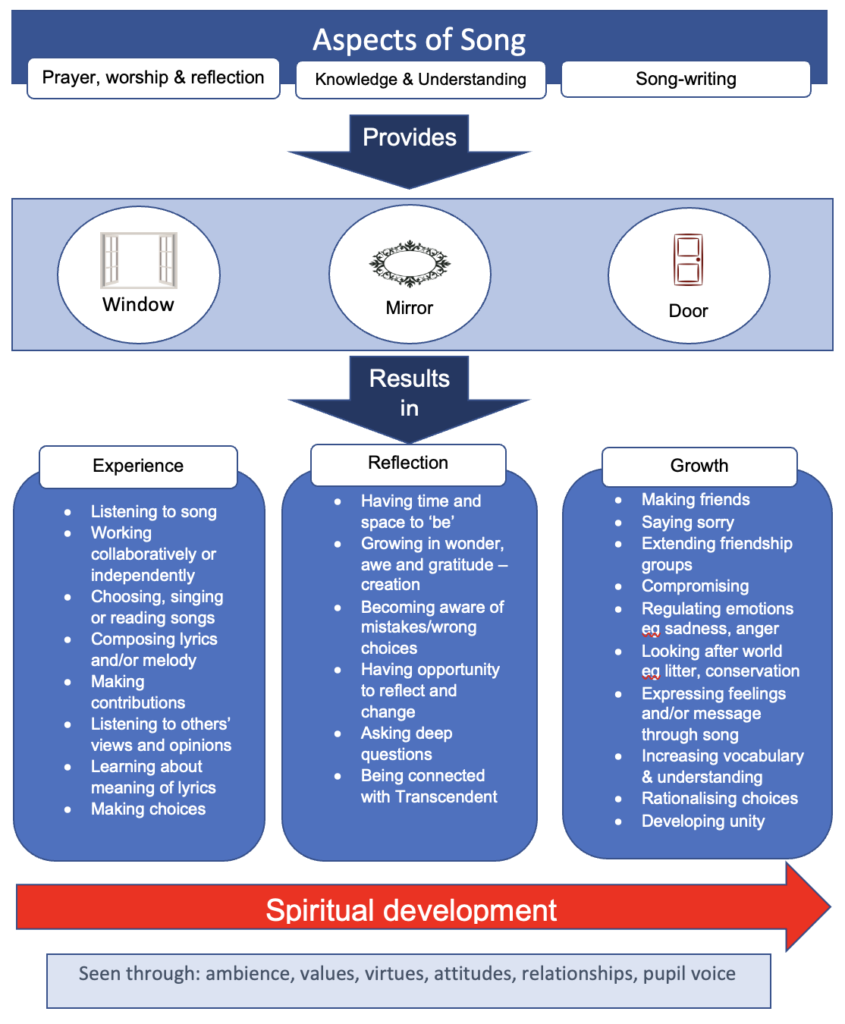
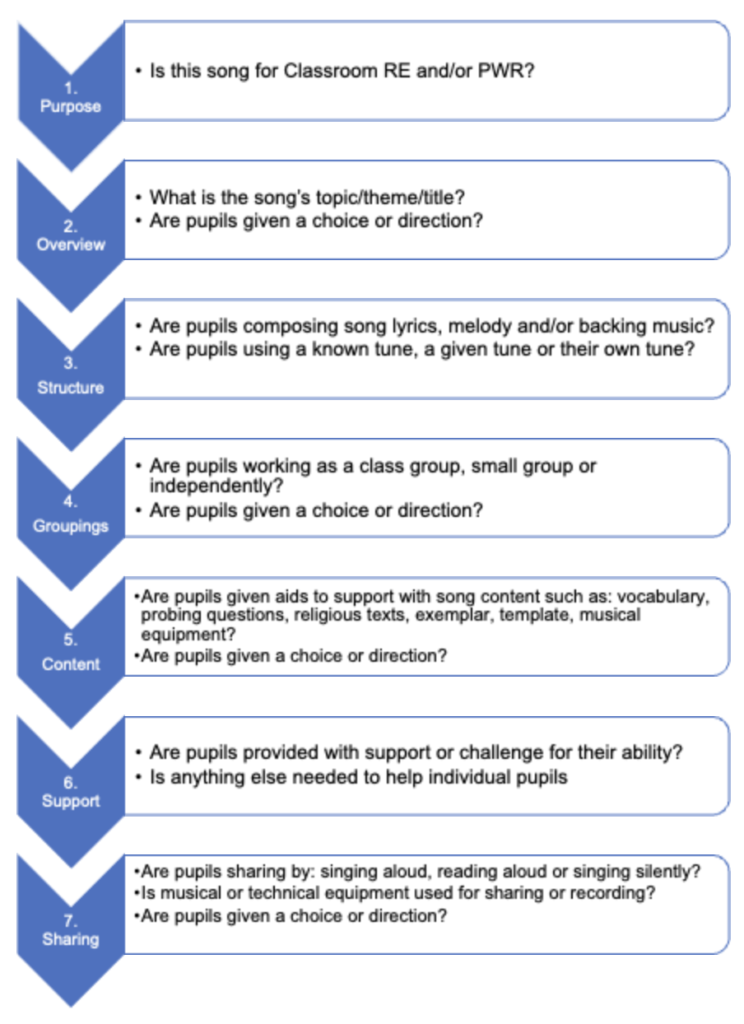
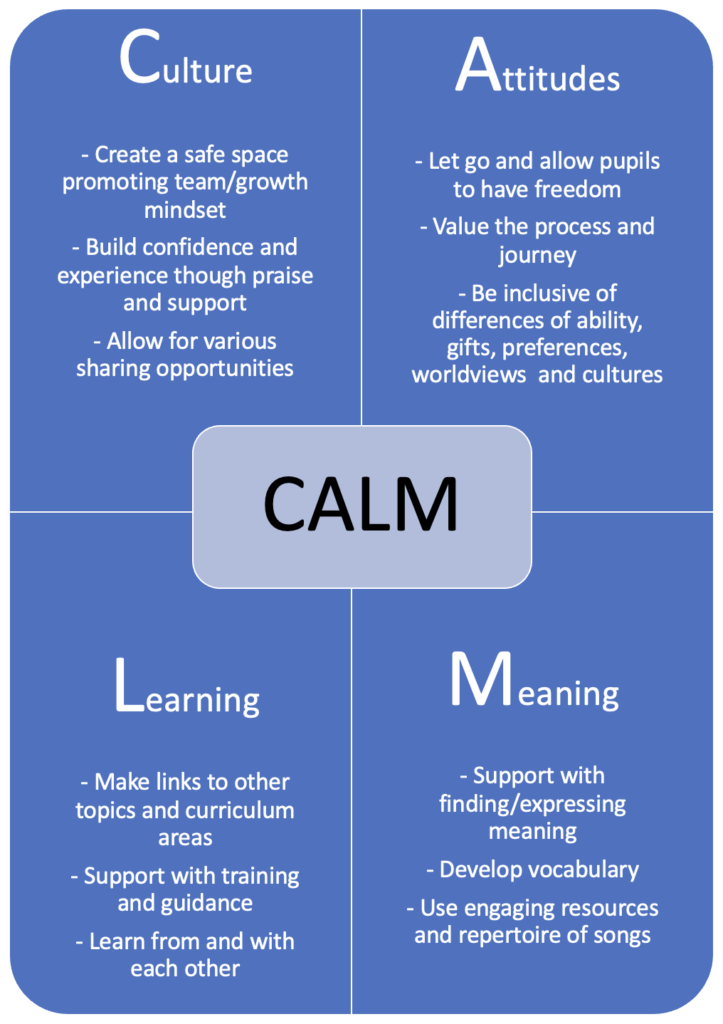
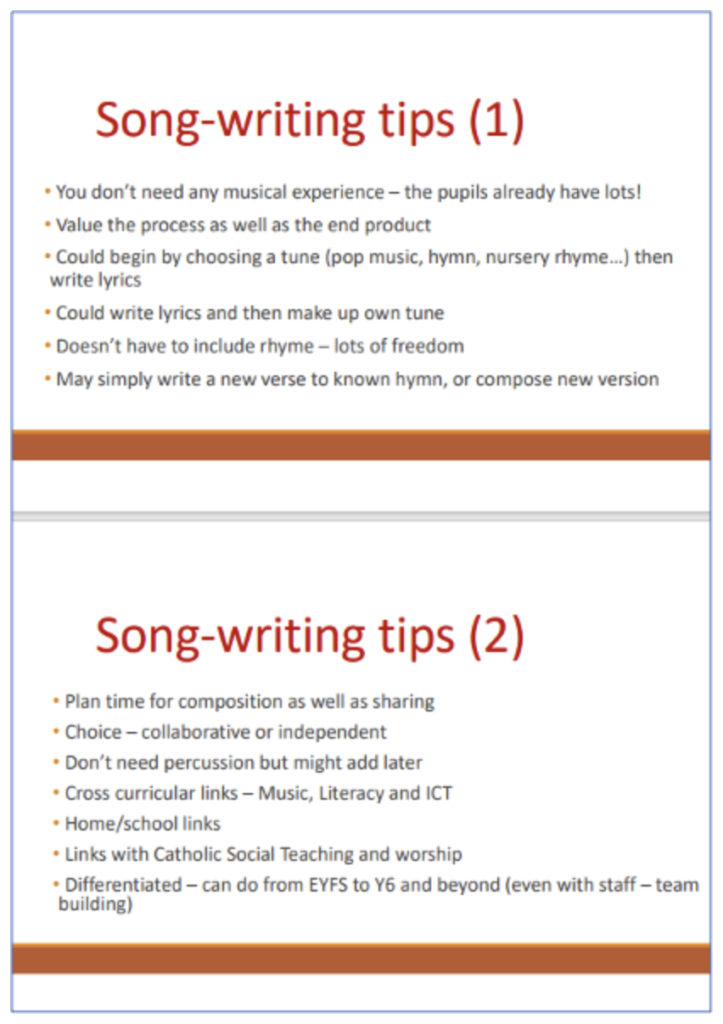
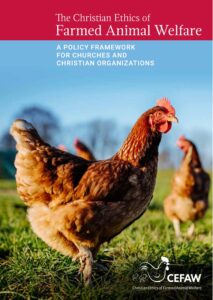
 Professor David Clough, School of Divinity, University of Aberdeen
 Dr Margaret B. Adam, School of Divinity, University of Aberdeen
 Nadia Nadeem, teacher
 Scarlett Hayward, teacher
 Simon Archer, teacher