Global terms: Teaching & Classroom Practice

Nadia Nadeem | 04 April, 2023

British Religion in Numbers is an online source of data about religion and belief in Britain. It is gathered and presented by academics for the purposes of investigating both religious diversity in Britain, and of the extent and impact of religious commitment in Britain. The data can support an understanding of how far religious groups and beliefs have an impact on policy or other public decision-making.

I am a Year 6 Primary teacher and together with two other teachers, Primary and Secondary, we experimented with bringing this data to our classrooms. We wanted our children to have the opportunity to engage in a statistical analysis of numerical data about religion and belief as part of their richer understanding of the world.

We focused on two sets of findings from the overall data set, which is large. These were, firstly, the ways Jesus is depicted among Christians in Britain, and secondly, the representations of Muslims in the British media. We helped pupils to explore the data through pie charts and tables, as well as written reports. We thought carefully about scaffolding the questions children would engage with so they could make sense of and evaluate what the data is telling them.

My class were surprised to see so many images of Jesus existed, depicting him from all sorts of cultural backgrounds. However the data shows some interesting findings- that while Jesus, a Middle- Eastern man, is often represented as white, as well as black or Asian, most people in Britain viewed Jesus as a Middle Easterner. For myself I was surprised. My pupils had a mixed response, especially those for whom the image of Jesus is sacred. They were not sure if anything other than his actual ethnicity should be portrayed.

When it came to reading a report of how Muslims are portrayed in the British media, this was upsetting for the class. The data hows us clearly the discrimination against Muslims in the British press. As an adult I was surprised to find Islamophobia in broadsheet as well as tabloid newspapers. While this raised some difficult emotions, it is important for pupils to be able to explore and make sense of our complex society as it is in a safe space like school.

Pupils had the chance to reflect on the implications of their learning. Myself and the other teachers all teach in different regions, so we had geographical and demographic variations to compare. It was clear that life experiences and social exposure determined pupils’ interpretation of the data and the conclusions they arrived at.

As teachers we found that the use of statistical data in RE serves to contextualise religious diversity and provide pupils with tangible material for comparison and analysis. Pupils could evaluate the impact of past events on current trends. Across all three schools we felt that pupils were making connections and encountering ideas they hadn’t considered before – their world had expanded beyond what they knew to be true or thought to be true.

There is always the danger that a data-informed analysis of the world brings pupils into contact with how the world is, not just the ideal worlds described in religious traditions. While this can raise controversial questions, this is a chance to help our young people to make sense of the world as it is. As teachers we can model curiosity, as we show our pupils how to examine complex information, and confidence in an open attitude to knowledge and understanding of the world.
Visit the website at British Religion in Numbers

About

Nadia Nadeem works in Primary education whilst supporting RE in Barking and Dagenham as an Advisory Teacher.

See all posts by Nadia Nadeem

Amber Ainsley | 21 February, 2023

Within my school there are a number of pupils who, across the past year, have had their entire lives uprooted in order to seek out what many may take for granted; safety and stability. As a result of the war in Ukraine, pupils fleeing from all areas of the country have found themselves within the British education system.

As a Year 2 Early Career Teacher, I had a plethora of concerns when I found out that I would be teaching these pupils. A completely new experience for me. My concerns included, but were not limited to, ‘will I be able to communicate in a way the students can understand’, ‘have they ever studied Religious Education before’ and ‘in a class of 30 students already, where will they sit?’.

Pupils were introduced to RE immediately, along with all core subjects, in their first week. Slowly I realised that this demanded no more of me as a practitioner than what I currently aim to do; to teach in a way that allows every child to experience success. The sense of collaboration between Ukrainian and British pupils has inspired me. I have witnessed countless pupils translating for each other, scribing work when the person next to them couldn’t keep up, volunteering to read in front of the class despite limited English and even helping at school mass for the first time. It has also highlighted the crucial role that technology has to play within education. Within a few seconds information from the board can be quickly translated into any language, with the ‘Say Hi’ app allowing for verbal feedback to be given almost instantly. This is something which would not have been possible previously without a multitude of translation errors or significantly more teaching time.

There was also a lot that I had to pick up quickly, for instance, getting to understand the prior knowledge of pupils. I was unaware that religious education was not a commonplace subject in Ukraine and many pupils had never been taught this before. However, I believe that there is a unique advantage when teaching RE to any student, as it is a subject which values and encourages the thoughts and experiences of all to be shared. The curriculum lends itself to accessibility as it is shaped by an individual’s own worldview.

As such, I have watched as pupils’ eyes light up when given the opportunity to express themselves on new topics, confidently sharing that they love RE as they ‘have never had to think about these questions before’. The subject has given students a new way to express themselves without fear of judgement – something they can be confident to do in any language.

In short, this new dimension to my job has reminded me of why I originally fell in love with teaching RE; helping young people to develop their character and in turn, having the pupils shape mine.

About

Amber Ainsley, Secondary Teacher of RE studying a Masters in Education

See all posts by Amber Ainsley

Laura Thomas | 24 January, 2023

As a Beginner Teacher about to embark on my PGCE, I decided to take one of Culham St Gabriel’s self-study modules. I wanted to gain a greater depth of subject knowledge in preparation for my PGCE as well as keep up my studies over the summer after achieving my undergraduate degree. I chose a course which would develop my subject knowledge because it required me to produce a PowerPoint reflecting the new information I had acquired. I wanted both the new learning the course offered, as well as the product, which I might be able to repurpose for the classroom one day.

I enjoyed creating the PowerPoint, finding the process of putting my new learning into practice satisfying. I also enjoyed reading around and gaining more knowledge of religions that I had not previously studied in great depth. The resources available on RE:ONLINE were very helpful and easy to access and related well to the specific information which I needed to learn about each of the religions in order to complete the course. They were not too long or difficult to read, whilst also offering depth. The team behind RE:ONLINE were quick to respond to my questions, and happy to help.

There are benefits to a self-study course. With self-study I can go at my own pace and fit the work around my other commitments. I completed the course over a fortnight in the summer, for part of which I was away on holiday. This would not have been possible if it were not a self-study course, however, given that it was, I was able to complete the course anywhere with a laptop and internet access.

I got a lot out of the course, especially practice in creating a lesson ahead of my PGCE. It gave me confidence to gain some knowledge about religions that I had not previously studied in great depth. While a mixture of self-study and taught learning is ideal, the big advantage of self-study is that it can fit around your life and you can spread the work out over a longer period, or complete it in a shorter time, depending on what suits you best.

I would suggest it can be incredibly beneficial for teachers to pursue their own professional development, as well as receiving support from taught courses, mentors, or their school. Self-study can allow teachers to address weaker areas which are individual to them. Teachers should probably expect to do at least some of their own professional development through the course of their career. Schools also have a responsibility to accommodate teachers’ CPD, as well as to provide additional professional development which aligns with the values and needs of the institution. I enjoyed my experience of self-study and would consider it again in future.

About

Laura Thomas is an RE PGCE student at Homerton College, Cambridge, with a background in Religion, Philosophy and Ethics.

See all posts by Laura Thomas

Chris Hewer | 10 January, 2023

After studying Christian theology and a PGCE, I became a secondary RE teacher in the 1980s. That brought me to the study of Islam in order to facilitate a syllabus on the Abrahamic religions. Without knowing it at the time, that initial MA set me on the path for the rest of my life, studying different aspects of Islam and helping other people to understand it in its richness and diversity. Over fifteen years I delivered more than one hundred twenty-hour adult popular education courses on Understanding Islam around Birmingham and London. Since charitable funding dried up with the banking crash, I have concentrated on developing written and electronic resources for teachers and others who want to understand Islam and the theological interaction between Christianity and Islam.

The vehicle to deliver the electronic resources is my own website (chrishewer.org). A Muslim satellite TV channel asked me to deliver a weekly thirty-minute programme on Understanding Islam. This formed the basis for a comprehensive course in forty-six parts, which can be found on my website with the video recordings, each accompanied by a written article. Similarly, electronic material developed for an online distance learning course was incorporated alongside written resources tailored to fit the GCSE RS Islam syllabus. All these resources are made available without charge to be downloaded from my website. Together with in-service days delivered on request, the web-based materials comprise the principal means for assisting teachers in the classroom.

Few teachers have had the privilege of years of concentrated study of different strands within the complex web that is Islam. This can lead to a restricted menu in our teaching. To augment this, I have contributed material on the website on both Twelver and Sevener Shi’a traditions, the different schools of Sunni law, theological schools and the continuum between reason and tradition. Shi’a Islam is often less well resourced, so there is a new section on the website, ‘Hussain&Justice,’ exploring the circumstances leading up to the massacre at Karbala; which, in Shi’a understanding, is the most significant event in Muslim history after the life of Muhammad. This provides material not only for the discrete topic of Karbala and Ashura but also gives insights for reflection on many aspects of human living.

Islam understands itself to be something more than a religion or set of practices and beliefs. It speaks of itself using the Arabic word din, meaning a complete way of life both individually and collectively. The guidance of the Qur’an, embodied in the life of the Prophet Muhammad, is meant to speak to the human condition for everyone. This affects the way that I teach Islam. It should be presented in such a way that it resonates empathetically with students; whether they follow it or not. Material on the website on modesty, or economics, provides plenty for discussion at KS3 and thought-provoking content on relieving the sufferings of others is provided for KS2. Teachers often ask me how they can make Islam come alive; by putting the human condition at the centre, Islam provides relevant grounds for lively reflection.

About

Chris Hewer studied Christian and Islamic theology and taught in schools and universities. Specialist in adult popular education about both faiths for the last 25 years.

See all posts by Chris Hewer

Jennifer Jenkins | 03 January, 2023

Theological Art: Stained Glass Windows

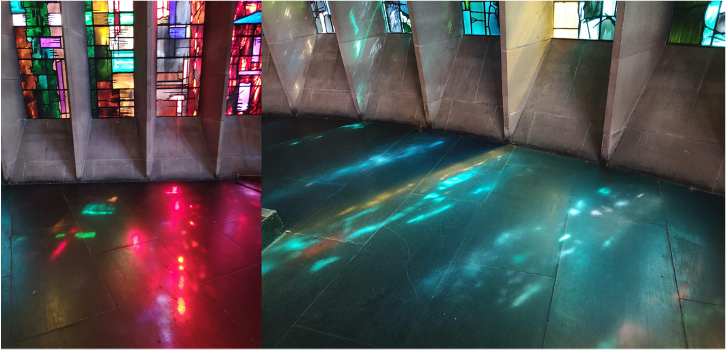
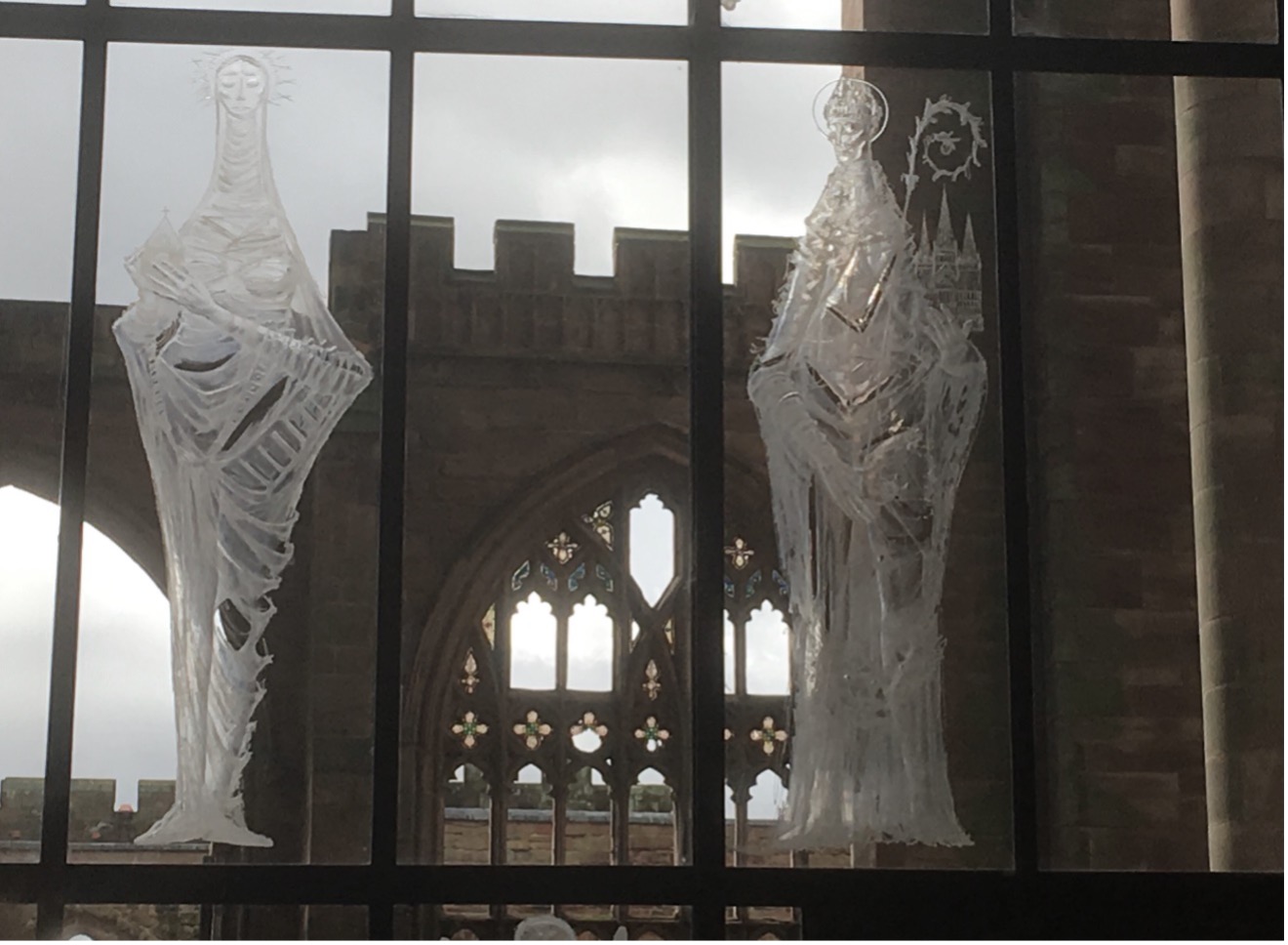
Stained glass windows have been part of church architecture from Medieval times. The technique originates in 10th Century Assyria and was used extensively by ancient Egyptian and Roman artists and architects. Mosques and synagogues make use of stained glass with geometric or decorative motifs rather than the human figures found in Christian churches. The oldest glass remaining in situ is found in Canterbury Cathedral, where it was first set in place in 1184. By the 15th century, stained glass windows had developed in complexity. York Minster provides a good example in the East window. Designed by John Thornton of Coventry, the window depicts the beginning and end of all things from the book of Genesis to the book of Revelation, essentially capturing what was known in the Middle Ages as the ‘Apocalypse’. By the 19th century this art form was finding its way into non- religious spaces, through the work of William Morris, Charles Rennie Macintosh and others. In the 20th century, stained glass took on a modern, abstract perspective within sacred space. A good example of abstract, Christian stained glass is the Piper baptistery window in Coventry Cathedral, which symbolises baptism through light. The vibrant colours stream around the Cathedral’s font, a scallop shell carved from rock outside Bethlehem.
Images by Mary Courtney, used with permission, August 2022
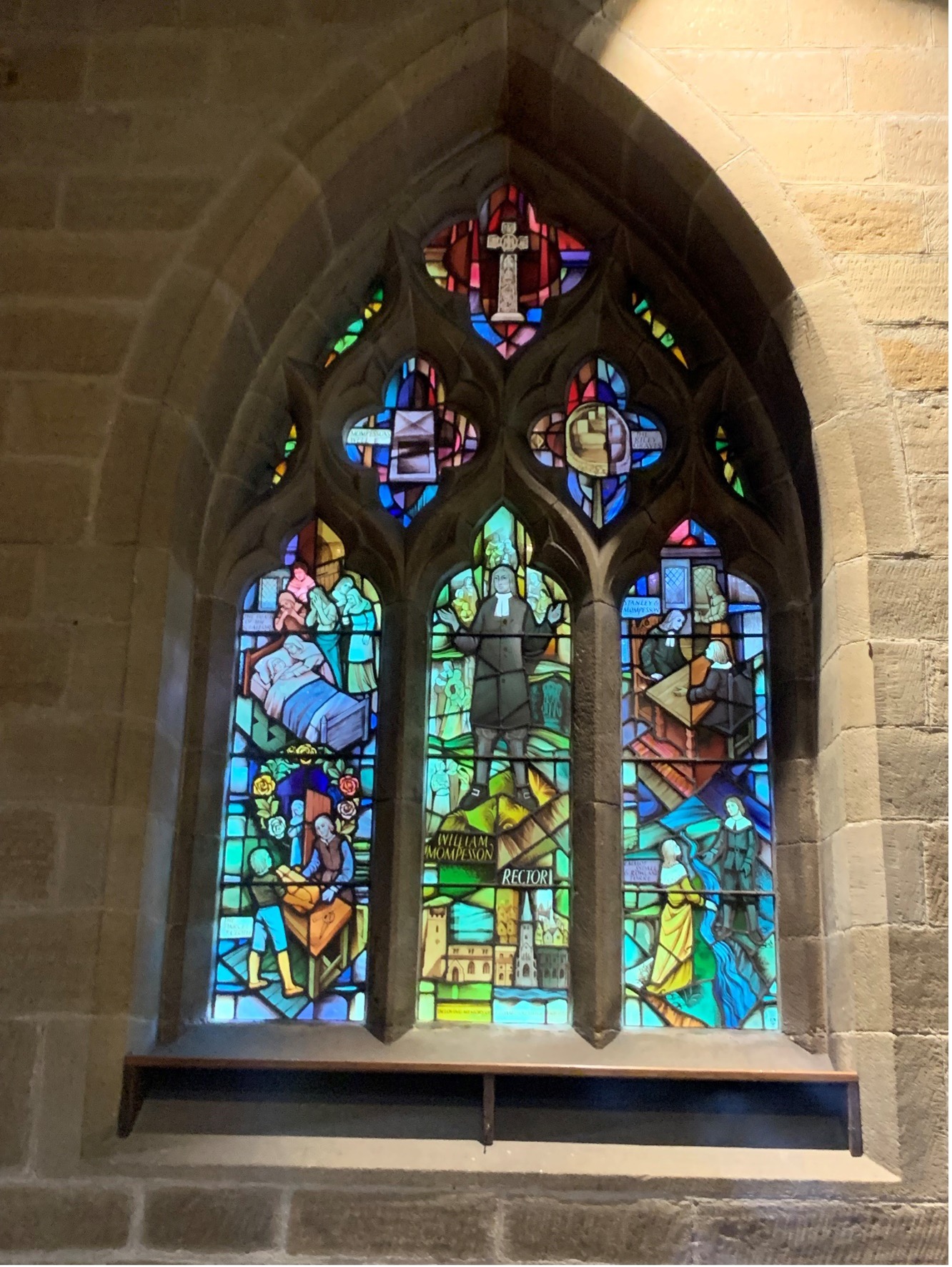
What was the early purpose of stained glass windows? One medieval Abbot of Saint Denis, in the northern suburbs of Paris, used the wealth of the abbey to create lavish stained glass windows, believing light to be a manifestation of God himself. He wanted Parisians to be bathed in God’s light. In the Old Testament light represents good and is symbolic of God’s protection. Stained glass windows in the Medieval era provided education through depicting biblical stories to an illiterate population. Educating the masses in religion in the medieval ages was crucial because the church was the highest authority in society, and in order to achieve salvation one must follow the word of God; a significant challenge for those who could not read. Scholars speculate that the stained glass windows may have had more profound impact on the Medieval laity than the sermons told by clergy. The depictions in glass were, after all, their only means of unmediated theological thinking. Over time, the opulence of stained glass began to represent the wealth of church patrons, and the complex relationship of religion and power was exemplified in increasingly ornate windows. Stained glass windows became a powerful medium to communicate a message of both spiritual and temporal authority. Windows often featured monarchs alongside saints to reinforce the idea of divine kingship. Patrons who had paid for the production of the windows were also featured, alongside their family coat of arms. A modern window is the Plague Window in the church of St Lawrence in Eyam, Derbyshire. Designed by Alfred Fisher and installed in 1985, it tells the story of the plague’s arrival in 1665 and village’s response. Reverends William Mompesson and Thomas Stanley convinced their fellow villagers that quarantining was the most Christian course of action, inspired by Jesus words in John 15: ‘greater love has no man….’. Their actions did spare the towns and villages surrounding Eyam, saving thousands of lives, but at a great cost to themselves; three quarters of the village died. Today, their sacrifice is memorialised in the window of the village church:
Eyam window, picture with permission by Jen Jenkins 2022
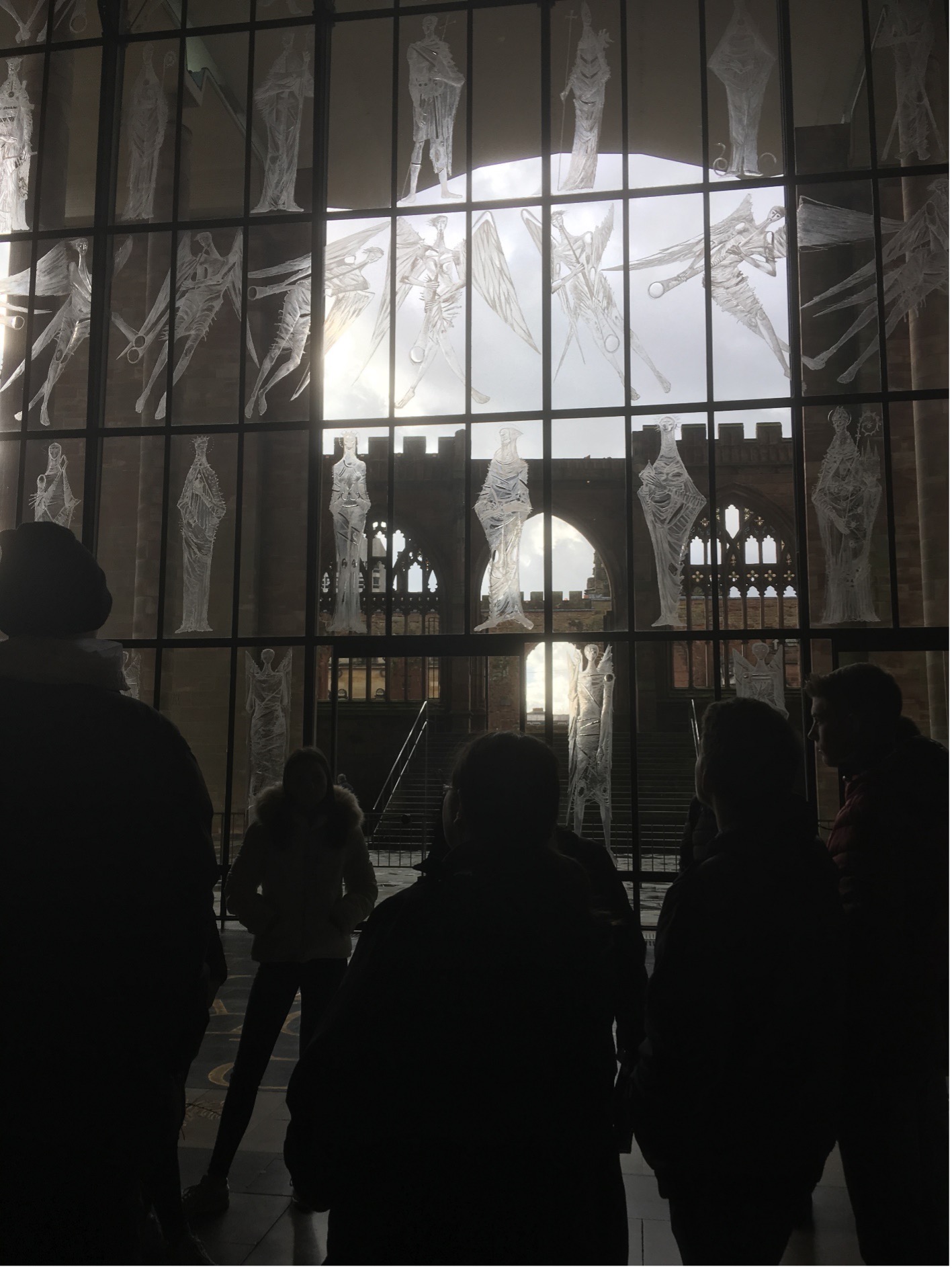
Stained windows of antiquity frequently depicted saints whose relics were interred in the church. In the fourteenth century, stained glass windows evolved to be much more like paintings, changing the narrative style of stained glass windows. Whereas prior to the thirteenth century, windows often showed dozens of scenes from the life of a particular saint or martyr, the fourteenth century saw windows concentrating more on a single important event of the saint of martyr’s life in each window, demonstrated on a larger scale and telling the life of the saint over a large stretch of the church’s external walls. During the seventeenth century English Civil War (1642-43), Puritans smashed stained glass windows, considering them to be idolatrous. Likewise, during the French Revolution, windows were also smashed or removed because of their symbolism of the authoritarian power of both the monarchy and the Catholic Church. Protestants in England rejected ornate decoration in church. By 1640, stained glass windows were rare. The English Parliament decreed that all images of the Virgin Mary and the Trinity be removed from churches, resulting in some vandalism of medieval windows. When one of the Angel windows was broken by an act of vandalism in 2020, Coventry City of Culture established a completion titled ‘Broken Angel’ which led to a series of temporary installations: https://coventry2021.co.uk/what-s- on/broken-angel/ Sacred windows are still of great value and importance in our own times it seems.
Coventry Cathedral West Screen, with permission from Jen Jenkins 2022
So, next time you take pupils on a trip to a church for RE, it may be worth researching the stained glass windows there so that you are better positioned to explore the theological and historical-social significance with pupils.

About

Jennifer is a former Assistant Head Teacher and RE Subject Leader from Coventry, is RE and Spirituality Officer for Coventry DBE and RE Facilitator for Coventry and Warwickshire. She is excited to be championing RE locally. @kairosbutterfly

See all posts by Jennifer Jenkins

Jennifer Jenkins | 27 December, 2022

Religion and Science in Alice Roberts’ Ancestors

In Ancestors by Alice Roberts we accompany 19th Century geologist Reverend William Buckland as he makes room in his Christian worldview for the arrival of new scientific knowledge. This knowledge challenges a literal reading of creation and Noah’s flood, as Genesis was typically read in the Victorian era. Roberts suggests that for Buckland, a theologian and scientist, ‘studying the Earth meant studying the work of God: geology was a devoutly religious pursuit’ (p. 21). However, the discovery of a Paleolithic burial site on the Gower peninsula, alongside emerging theories of glaciation and evolution, presented Buckland with a challenge. At first he tried to resist what science was presenting, as Roberts explains, ‘He wanted to be able to reconcile the origin myth in Genesis with the scientific evidence. He noted that ‘geographical investigations…may seem at first sight to be inconsistent with the literal interpretation of the Mosaic records.’ But he went on to insist that the ‘apparent nonconformity’ of the science with the Bible was most likely to stem from problems with ‘the yet imperfect science of Geology’- rather than with the biblical version of events’ (p. 21, citing Buckland’s inaugural lecture as a Reader in Geology at Oxford, ‘Vindiciae Geologiae; or the Connexion of Geology with Religion explained’). We can see a fascinating hermeneutic in action here, as Buckland reads the biblical text through his own scientific lens. Before long his twin lenses, a literal biblical reading and a scientific reading of the physical world, needed resolution. As Roberts notes, Buckland played around with time frames to allow scientific evidence fit with the biblical account of our origins, but eventually came to the conclusion that Noah’s flood was not scientific fact. Buckland expanded his reconstruction of the past and made room in his Christian worldview for what science had revealed. This account raises the fascinating question of how possible it is for any of us to see things in a different way, how our worldviews shift and change over time. It is interesting to consider the religious faith of scientists today. 2009 data collected by the Pew Research Centre shows that 33% of American scientists polled believe in God, 18% believe in a spirit or higher power, and 41% do not believe in God. There is a small amount of variation between the type of science and belief in God, with 29% of physicists and astronomers, 30% of geoscientists, 32% of biomedical scientists and 41% of chemists believing in God. In the general population, according to the same data, 83% of Americans believe in God and 4% do not (reference: https://www.pewresearch.org/religion/ 2009/11/05/scientists-and-belief). We know from the recent census data that figures for religious belief in the UK general population are significantly different. It would be interesting to conduct a survey in a school among staff, especially to compare science subject specialists with non-science specialists, or even RE specialists. Buckland’s story is a great example where an evolution of worldview is visible. This example illustrates how worldviews change and expand, and assimilate and accommodate different ideas, even those that on the surface might appear to be incompatible. Reference: Ancestors by Alice Roberts Published by Simon & Schuster, 2021

About

Jennifer is a former Assistant Head Teacher and RE Subject Leader from Coventry, is RE and Spirituality Officer for Coventry DBE and RE Facilitator for Coventry and Warwickshire. She is excited to be championing RE locally. @kairosbutterfly

See all posts by Jennifer Jenkins

Jennifer Jenkins | 20 December, 2022

Religion & Science in The Essex Serpent by Sarah Perry

Can faith and science co-exist happily in someone’s worldview, and if so, how? We start this series with these questions in The Essex Serpent by Sarah Perry (2016). Set in the Victorian era, the conversations between amateur paleontologist Cora Seaborne and Reverend William Ransome, in the Essex village of Aldwinter where the superstitious villagers fear an ancient sea creature is haunting their shores. Cora appreciates science and reason, finding it a reference point in a confusing world. At a time when devotion to Christianity was assumed, Cora prefers the promises of rationality and logic. William finds the suspicions of his flock concerning. He is affronted by a serpent carved into the end of one of the pews, finding its presence threatening to the sanctity of the church as a place of worship. Cora finds William’s inability to make room for the presence of the creature alongside his Christian faith perplexing for, as Perry puts it, ‘the best minds can hold two opposing thoughts at once’ (p. 31). In this era of Darwin’s theories of evolution, many at the time faced the question of how these new discoveries were to fit with the Christian faith, if at all. Charles fears an interest in science could pull people away from God. Cora cheerfully finds her growing scientific knowledge and interest does indeed pull her away from God. However Charles’s distaste with his villagers’ superstitions suggests he too is influenced by a rational outlook, rejecting supernatural answers to problems. William doubts the longevity of scientific discoveries, but not the abiding truth of the Christian faith. Cora sees the alignment of Christianity and scientific discovery, arguing that modern faith is of a rational sort, seeking enlightenment and clarity. Through the novel they challenge each other, recognising their ultimate differences and yet finding the other enlightening: ‘We both speak of illuminating the world, but we have different sources of light, you and I…Then we shall see who first blows out the other’s candle’ (p. 124). Far from enmity, they draw closer to each other. Through Cora the reader glimpses the challenge for women who wished for a wider existence than was socially permitted. Cora stands out through her exercise of reason and intellect, as she tramps around the fields and shores in man’s overcoat and large, muddy boots. Cora is widowed and she further confounds social expectations by finding this a liberating state. Cora and William become ever closer entwined. William asks, ‘Do you think everything can be accounted for by equations and soil deposits? I am looking up, not down’ (p. 166). Cora confesses her ongoing struggle to find her own way: ‘I am never sure of the difference between thinking and believing: you can teach me, one day’ (p. 169). Their deepening friendship, the pairing of faith and science, is an unlikely one from the start but through it they challenge and shape each other, and in the words of the author, ‘They sharpen themselves on each other..’ (p. 180). Over time, Cora and William shift to accommodate each other and find room for both science and faith in their widening worldviews. Cora acknowledges the shift in her thinking when she says, ‘I’ve always said there are no mysteries, only things we don’t yet know; but lately I’ve thought not even knowledge takes all strangeness from the world’ (p. 127). She challenges Charles to admit that institutional religion does not get at the mysteries at the heart of existence, saying, ‘- but if you insist on your faith you ought at least to concede it’s a strange business and very little to do with well-ironed cassocks and the order of service’ (p. 127). However she maintains her vision of science and religion as logical companions rather than opposing forces, proposing that ‘If a reasoned creator set the stars in their place then we must be capable of understanding them – we must also be creatures of reason, of order!’ (p. 258). The Essex Serpent personalizes the debate around faith and science and the co-existence of worldviews. Modern readers will recognize a debate that has never gone away. Reference: The Essex Serpent by Sarah Perry Published by Serpent’s Tail 27 May 2016 Kindle Edition

About

Jennifer is a former Assistant Head Teacher and RE Subject Leader from Coventry, is RE and Spirituality Officer for Coventry DBE and RE Facilitator for Coventry and Warwickshire. She is excited to be championing RE locally. @kairosbutterfly

See all posts by Jennifer Jenkins

Matthew Lane | 05 December, 2022

Working with sacred texts in the Primary classroom can open up vistas of understanding for pupils. Teaching with sacred texts can support a multidisciplinary approach as we develop towards a religion and worldviews paradigm. Some of the ideas are inspired by Jenifer Jenkins’s excellent writing and CPD on hermeneutics – for links to Jennifer’s work see below.

I presented this as part of Norfolk SACRE’s 2022 conference. You can access this presentation below.

Sacred texts are beneficial for teachers of RE because they are an approved part of a religion’s “substantive knowledge”. Using sacred texts also facilitates a multi-disciplinary pedagogy, or the “ways of knowing” as Ofsted terms it (Research Review 2021, see link below).

How do we use sacred texts in our lessons? How do we help children to read, understand and interpret these ancient words? As Primary teachers, approaching the reading and study of a sacred text can be daunting. However, what we are doing at its core is reading, and we all teach guided reading and English. Therefore, we can transfer those skills.

Following the approach presented here involves reading the text three times, with a different viewpoint each time: the viewpoint of the writer, of the reader and then the believer.

Reading as the writer

Approaching the text from the perspective of the writer involves an exploration of when and where the text was written, who the intended audience is and what is the purpose of the writing?

Reading as a writer is quintessential guided reading. We think about the ideas that author is trying to communicate, what features have been used and how the writer draws the reader in. We might also consider the tone or emotion of the text. The aim is to make sense of what the writer is trying to communicate.

Reading as a Reader

Reading as a Reader is to become aware of pupils’ (and teachers’) own reactions to the text, or what Ofsted terms the development of ‘personal knowledge’ (Ofsted Research Review 2021).

You will recognise this approach from guided reading and there are further questions we can explore when Reading as a Reader. You might identify the genre, purpose or emotional tone of the sacred text, but as a way of more deliberately exploring readers’ own responses. For example, identifying the heroine and major plot points can pave the way for conversation about how readers interpret these structures. Does the pupil’s view of the situation colour their judgment; do they have further puzzling questions; do they feel for the heroine, and so on?

Reading as a reader is to make explicit both how our own perspective influences our interpretation, but also how we can be changed when plunged into another world through reading.

Reading as a Believer

In this last stage of reading, we step out of the text to consider it from the perspective of another reader: the believer.

This is the transition from looking through a theological lens to a social sciences lens. You might repeat questions already considered but with a change of focus. These are questions that ask us to postulate and empathise. You might talk about what a believer would take from this story, what we can say about believers at the time the story was written or how might this story inform a believer today.

Conclusion

Theology might be the lens through which we are used to viewing sacred texts, as we uncover a tradition’s beliefs, principles and values. As I have shown there are other lenses through which to view sacred texts, which add a richness and complexity to learning. These can be accessed by deliberately shifting the focus and purpose of reading.


Read more about ‘Theologies of Reading’ and hermeneutics in the Primary classroom with the support of Jennifer Jenkins: https://www.reonline.org.uk/teaching-resources/theologies-of-reading/

Presentation created to share this idea with colleagues

Check out Matt’s other writing and ideas on his website: www.theteachinglane.co.uk

OFSTED research review: https://www.gov.uk/government/publications/research-review-series-religious-education/research-review-series-religious-education

About

Matthew is RE Lead at Hethersett CEVC Primary School in Norfolk. He tweets about Religious Education and leadership @MrMJLane and on his website www.theteachinglane.co.uk

See all posts by Matthew Lane

| 01 November, 2022

Dr Kate Gibson, Social historian of the eighteenth century

I am social historian of eighteenth century Britain and I was part of a team of researchers at the Universities of Manchester and Nottingham from 2018 to 2021. We spent three years going through dozens of archives and local record offices looking for diaries, letters and objects like pottery or needlework samplers which people would have displayed in their houses. We ended with over 200 case studies of families or individuals.

We aimed to uncover the experiences of a large range of people. We have items written or made by people of all ages, including young children, business owners who made fortunes in the cotton industry, grocers and shopkeepers, as well as people living in quite severe poverty. For example we found the diary of a man called John Burnthwaite from Cumbria. In the early 1830s he walked around the country selling religious pamphlets, partly because he had no settled home and very little money. For him, his religion was a source of comfort, so when he experienced bad weather or his boots fell apart he prayed to God for guidance, and then gave thanks to providence if he was able to sell enough pamphlets in a particular day. It is through examples such as John Burnthwaite that we can see both the changing economic and physical landscape, as well as deep roots of peoples’ Christian faith.

As part of this research project we have worked with Kate Christopher and graphic designer David Caunce to produce a range of free resources for schools. The lessons are based on the archive documents including maps, needlework samplers, letters and diaries.

Our aim has been to encourage pupils to ask what was it like to grow up, live and work in a growing industrial town. How did the upheavals affect daily life, how did it change how people thought about their place in the world, and did it change their Christian faith? These questions tie in with broader themes such as the economic and social impact of industrialisation, as well as the growing diversity of Christian belief in the eighteenth century.

The resources are designed for KS2 and 3 pupils and arranged around 7 lessons. Each lesson contains background notes and ideas for teaching. Resource packs are given with each lesson so they are ready to be taught. The themes in the lessons are flexible so Primary teachers could apply them across History, Geography and English as well as RE.

Dr Kate Christopher, Teacher and adviser

As a teacher this has been a wonderful opportunity to create resources based on new historical research. This allows teachers to experiment with looking through a historical lens and how it feels in the classroom. I have presented this project to several groups of Primary teachers who have all responded positively to the idea that children can think as historians in RE. They can look at the sources and make sense of them in their own way.

Through these resources pupils will engage with rich, sometimes complex ideas and sources. They gain a glimpse into a past age that illuminates the present. They hear different voices and listen to peoples’ hopes and fears and their daily lives. It is a fascinating glimpse into an era experiencing rapid technological, social and physical change.

These resources support a multidisciplinary approach to Religion and Worldviews in that they provide an excellent example of historical thinking.

Please access the resources through this link: https://www.library.manchester.ac.uk/rylands/research/projects/current/faith-in-the-town/

We would be very grateful for any feedback.

Check out the main website here, including blogs about the artefacts and sources for your wider interest: https://faithinthetown.wordpress.com/

  Dr Kate Gibson is a researcher at the University of Manchester, specialising in the social history of eighteenth-century Britain. Dr Kate Christopher teaches part-time in a secondary school in inner London, is an RE Advisor and is Culham St Gabriel’s Lead Consultant for Professional Development. Email: kate@cstg.org.uk

About

| 20 October, 2022

Did you know that people in West Africa had developed inoculation against smallpox long before people in America and Europe? In this blog, which you could share with pupils during Black History Month, you will find a podcast, some articles and suggestions for teaching (KS2 and KS3).

We find Cotton Mather, a Christian priest and slave owner in Boston, whose slave, a man from West Africa, was able to tell him about a technique to innoculate people against smallpox. However it took another 100 years for scientists in Europe and America to apply the technology. Why did it take so long? Have a look at this resource to find out and explore the worldviews that led to this situation.


Kate is a Secondary teacher and Saima is a Primary teacher. We both listened to a podcast called Cautionary Tales by Tim Hartford and found it extremely interesting. The episode that got us talking is called ‘How to end a pandemic’. We have created a padlet containing the episode and suggested teaching ideas, this is referenced at the end of the blog.

The episode opens in Boston Massachusetts where smallpox pandemics ravaged the population every 10 or 15 years between the 1600s and early 1700s. We are introduced to Cotton Mather, a priest and amateur scientist. Mather is also a slave owner, who received a slave from his church congregation as a gift. He named this man, originally from West Africa, ‘Onesimus’.

Mather was anxious about the constant threat of a smallpox outbreak. He asked Onesimus if he had ever had smallpox in Africa. Onesimus described a strange procedure: a person with smallpox had a blister cut open; the skin of a heathy person was cut and some blister fluid was rubbed into the wound. The recipient fell ill after some days, but not fatally so. When they recovered they never contracted smallpox. Mather began to interview many other Africans in Boston and found that this practice was widespread in West Africa.

The following year Mather read in the Royal Society’s scientific journal the report of a Greek doctor in Turkey documenting an almost identical procedure.

As a modern listener it is fascinating to recognize the science of inoculation as a common practice in West Africa and Turkey long before Europe and North America. But what really grabbed our attention was the wall of indifference and outright disbelief with which Mather was received. As Hartford suggests, the white Bostonian, and wider American, scientific community simply could not believe that Africa or Turkey could teach America anything. Years passed before the benefits of inoculation could be brought to America and Europe, years in which many more people died. What this story reveals is the impact of a white view of the world.

Saima:

On listening to this story, I was grabbed by the fact that a church congregation bought a slave for the priest. I knew that my year 6 class would be horrified that this happened. The social injustice would have stood out to them and made them question what they had just heard. In schools, we teach pupils about the Christian religion as peace-loving and caring: this part of the story would make children want to use a critical lens to examine the content of what they were hearing. The question to be explored being “What right did the Christians have to buy someone to be used as a slave?” Then, they would dig deeper to explore the racial injustice of white people buying black people. Why did the Christian, white people think they were doing the right thing by buying their priest a black slave?

Kate:

I was particularly interested in the way white racism, or whiteness, was revealed by this story. A life-saving treatment was ignored for years not because of scientific limitations, but because of a negative view of non-white people. For me this provides a case study that reveals racialized thinking. We usually look at its results, but not the structures of the thinking itself. If whiteness is a worldview it can be taught and students can be assisted to make sense of it.

Saima:

With a view to planning for teaching around black history, I would certainly use this story in the classroom with my year 6 pupils. There’s nothing better that eleven year olds like than to get into a really ‘meaty’ subject matter. I know my pupils would want to talk about this discrimination and ask questions themselves.

Kate:

We agree that the wider context is crucial in exploring this sequence of events. Learning more about African innovation alone is not the whole story. It is some of the story, but not the whole story. The whole story includes context. The context is whiteness, or a white view of black people. It is the view that stopped men of science, desperate to protect their communities from this devastating disease, from seeing what was before their eyes. It is not so much about black achievement, as the blindness that stops the world appreciating black achievement. The blindness is what I am more interested in exploring. This seems to me to be the unlocking understanding.

Saima:

Within the context of the Primary phase, we do already study positive black role models. However, we need to move on from there if we want change to happen. Why must we continue to see white people treat non-white people in such a discriminatory manner? We need to take a deep breath and explore whiteness itself. Our curriculum must reflect this need for change if our future generations are to end this cycle of hate and inequality. It’s time to step up and move forward. We must stop being ‘non-racist’ and become anti-racist instead.


Access the padlet to find the podcast episode plus teaching suggestions and resources: https://padlet.com/REth1nk/dx3b2iou5otywfsk


Dr Kate Christopher teaches part-time in a secondary school in inner London, is an RE Advisor and is Culham St Gabriel’s Lead Consultant for Professional Development.

Saima Saleh is RE SLE, Year 6 teacher and member of the NATRE Executive.

About